Bromus, Genus, tectorum, Species,
- Genus & species
cheat grass
Native to Europe, western Asia, and northern Africa, where the species grows in Mediterranean climates and temperate grasslands; accidentally introduced to North America in the late 1800s and now ranks among the more widespread invasive grasses across western rangelands — the Great Basin, Columbia Plateau, and northern Rocky Mountain ecosystems together carry the heaviest infestation density; fall-germinating annual life cycle lets the species extract soil moisture earlier than native perennial bunchgrasses, which lets dense stands carry grass-sized fuel that changes wildfire return intervals in invaded rangelands
Overview
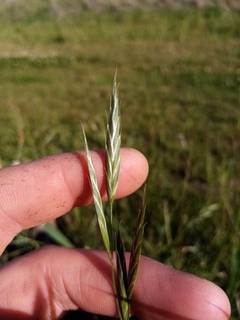
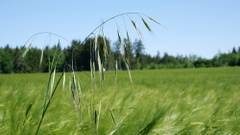
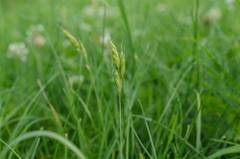
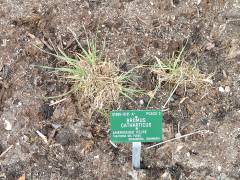
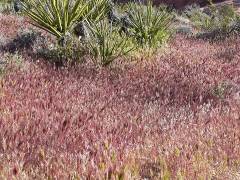
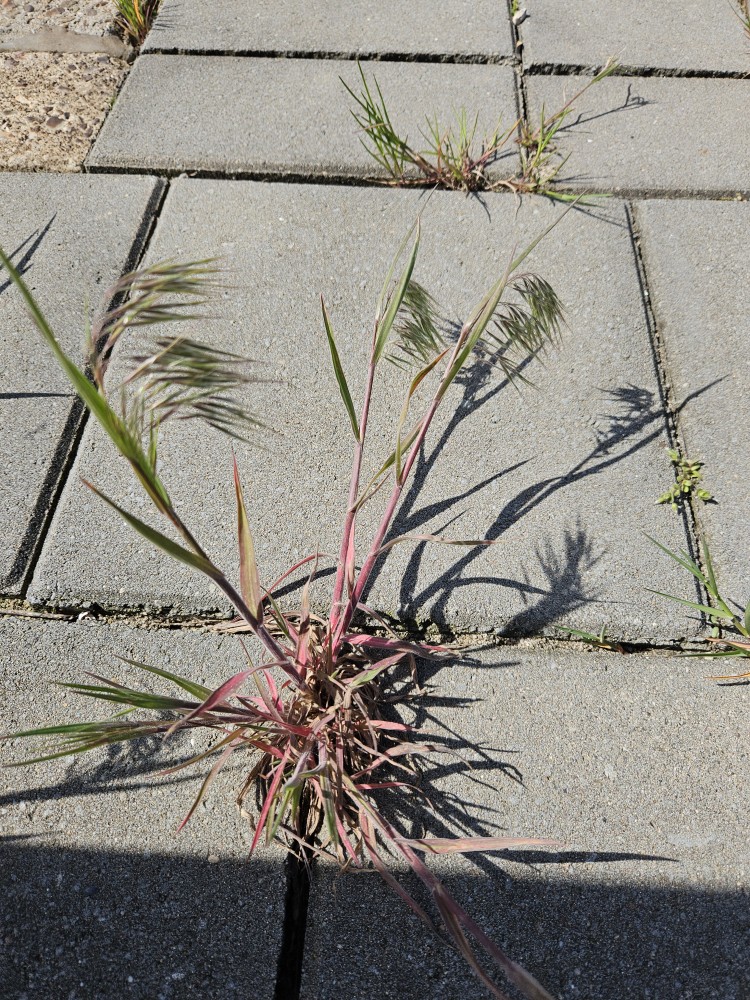
Bromus tectorum is an invasive annual grass in the grass family (Poaceae) that forms reddish-purple patches across landscapes when mature. This cool-season grass typically grows 6-24 inches (15-60 cm) tall with slender erect stems rising from a fibrous root system. Narrow linear leaves are pale green to blue-green, 2-6 inches (5-15 cm) long, and covered with short hairs that give them a soft texture to the touch. The inflorescence is a drooping panicle 2-8 inches (5-20 cm) long, initially green but turning reddish-purple to bronze as seeds mature. Each spikelet carries 3-8 florets with prominent awns (bristle-like extensions) 10-15 mm long. The whole plant takes on a purplish-red color at maturity, which makes Bromus tectorum recognizable in late spring and early summer landscapes even from a distance. The species ranks among the more widespread invasive grasses across western rangelands — western North America in particular carries the densest infestations, where the fall-germinating life cycle extracts soil moisture earlier in the season than native perennial bunchgrasses can, creating a competitive advantage that displaces native vegetation and carries grass-sized fuel that alters wildfire return intervals.
Native Range
Bromus tectorum is native to Europe, western Asia, and northern Africa, where the species grows in Mediterranean climates and temperate grasslands. Accidentally introduced to North America in the late 1800s and now naturalized across western rangelands.Suggested Uses
Not used in ornamental or landscape horticulture. Studied as a model species in invasion ecology and rangeland fire ecology research. The annual life cycle, early soil-moisture extraction, and grass-sized fuel production combine into a textbook case of an invasive species that changes ecosystem processes beyond simple competitive displacement. Included in weed identification training for range managers, fire ecologists, and public-lands field staff.How to Identify
Appearance
Size & Dimensions
Height6" - 2'
Width/Spread4" - 8"
Bloom Information
Flowers from April through June across an 8-week bloom window in most of the naturalized North American range. Individual panicles complete seed set within 2-3 weeks of first flowering. In the Pacific Northwest and northern Rocky Mountain rangelands, peak flowering is in May. Plants are self-pollinating (cleistogamous in most populations), so seed set does not depend on insect visitation.
Detailed Descriptions
Flower Description
Green turning to reddish-purple or bronze at maturity; inflorescence is a drooping panicle 2-8 inches (5-20 cm) long carrying spikelets with 3-8 florets each; prominent awns (bristle-like extensions) 10-15 mm long project from each floretFoliage Description
Pale green to blue-green narrow linear leaves 2-6 inches (5-15 cm) long covered in short hairs that give a soft texture to the touch; foliage turns reddish-purple to bronze as plants mature and dry in late springGrowing Conditions
Sun Requirements
Requires 6-12 hours of direct sunlight daily
• Full Sun: 6+ hours of direct sunlight
• Partial Shade: 3-6 hours of direct sunlight
• Full Shade: Less than 3 hours of direct sunlight