Bromus, Genus, inermis, Species,
- Genus & species
smooth brome
Native to Eurasia, from central Europe (Hungary, Austria) east through Russia, Central Asia, and into China where the species occurs in meadows, steppe grasslands, and disturbed ground from lowlands to approximately 6,500 ft (2,000 m); introduced to North America from Eurasia in the late 1800s as a forage and erosion-control grass and now naturalized across the northern United States and southern Canada; classified as invasive in prairies, meadows, and roadsides where the species displaces native grasses through aggressive rhizome expansion and early-season growth that begins 2-3 weeks before most native warm-season grasses break dormancy
Overview
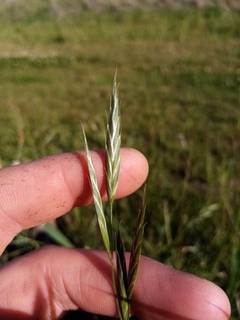
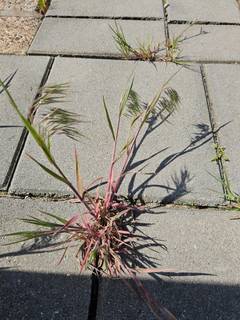
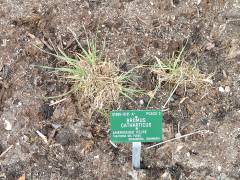
Bromus inermis is a vigorous rhizomatous perennial grass in the grass family (Poaceae), growing 24-48 inches (60-120 cm) tall and spreading aggressively by creeping rhizomes to form dense sod-like colonies of indefinite extent. Stems (culms) are erect, smooth, hollow, with 4-6 nodes. Leaves are flat, 0.3-0.5 inch (8-12 mm) wide and 6-12 inches (15-30 cm) long, smooth on both surfaces, with a prominent W-shaped constriction (watermark) visible across the blade when held to light — a key identification feature for the species. Leaf sheaths are smooth and closed (fused) for most of their length. The inflorescence is an open nodding panicle 4-8 inches (10-20 cm) long with whorled branches carrying spikelets 0.6-1 inch (15-25 mm) long containing 7-11 florets. Spikelets are awnless (inermis = unarmed) or carry awns less than 2 mm long. The species was introduced to North America from Eurasia in the late 1800s as a forage and erosion-control grass and is now naturalized across the northern United States and southern Canada. The species is invasive in prairies, meadows, and roadsides, where it displaces native grasses through aggressive rhizome expansion and early-season growth. In agricultural settings, the species is a valued hay and pasture grass, palatable to livestock. Growth begins early in spring, 2-3 weeks before most native warm-season grasses.
Native Range
Bromus inermis is native to Eurasia, from central Europe (Hungary, Austria) east through Russia, Central Asia, and into China. The species occurs in meadows, steppe grasslands, and disturbed ground from lowlands to approximately 6,500 ft (2,000 m).Suggested Uses
Used in agricultural settings as a hay crop, pasture grass, and for erosion control on slopes, roadside embankments, and waterways. Tolerates cold climates and moderate drought. Not recommended for native plant restoration, prairie plantings, or ornamental gardens because the aggressive rhizomatous spread displaces native species. In the Pacific Northwest, the species is a common component of rural roadsides and field margins.How to Identify
Appearance
Size & Dimensions
Height2' - 4'
Width/Spread2' - 4'
Bloom Information
Detailed Descriptions
Flower Description
Green opening to golden-brown at maturity; the inflorescence is an open nodding panicle 4-8 inches (10-20 cm) long with whorled branches carrying spikelets 0.6-1 inch (15-25 mm) longFoliage Description
Medium green flat smooth blades 0.3-0.5 inch (8-12 mm) wide and 6-12 inches (15-30 cm) long with a prominent W-shaped constriction (watermark) across the blade visible when held to light — a key identification feature for the speciesGrowing Conditions
Sun Requirements
Requires 6-12 hours of direct sunlight daily
• Full Sun: 6+ hours of direct sunlight
• Partial Shade: 3-6 hours of direct sunlight
• Full Shade: Less than 3 hours of direct sunlight