Image 1 of 9
1 / 9
© Andrey Zharkikh from Salt Lake City, USA, some rights reserved (CC-BY) · Wikimedia Commons
Overview
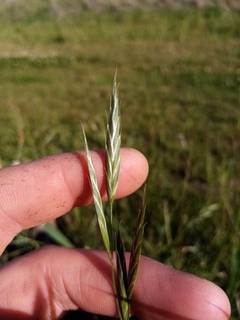
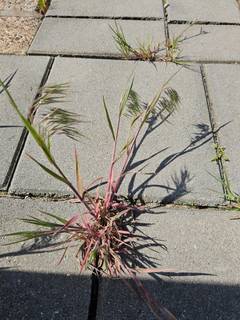
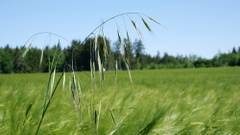
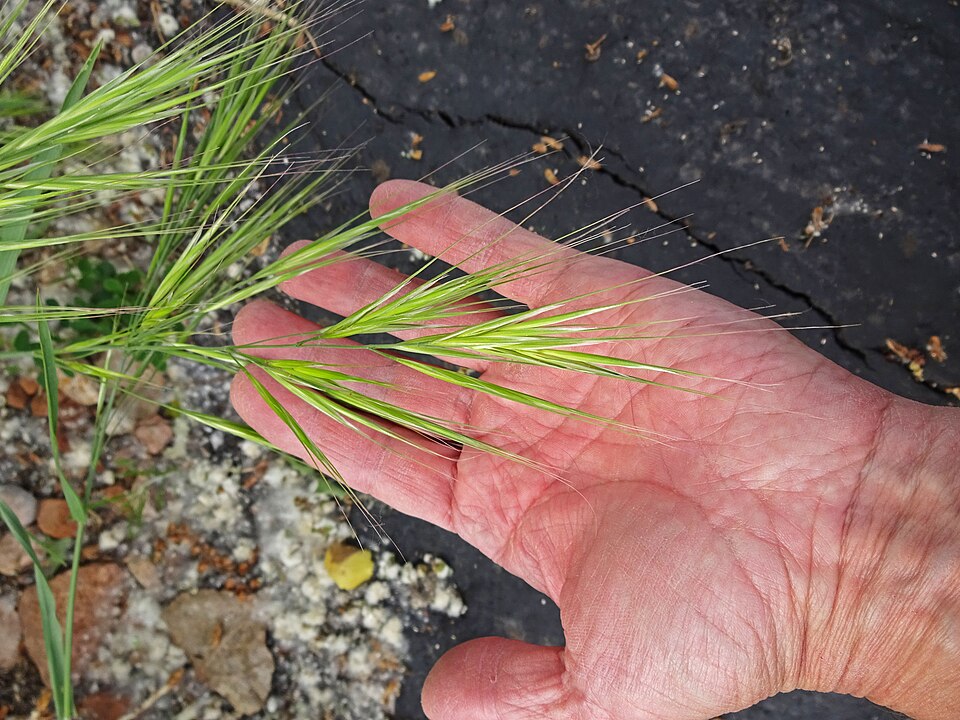
Bromus diandrus is a winter annual grass growing 12-36 inches (30-90 cm) tall on erect, sparsely branched culms. The leaf blades and sheaths are softly hairy and green, drying to pale straw. Each stem ends in an open, nodding panicle 4-8 inches (10-20 cm) long bearing large spikelets, every floret tipped with a straight rough awn 1.2-2.4 inches (3-6 cm) long. At maturity the sharp-pointed florets break apart with a hardened, needle-like callus that can drive into the mouths, eyes, and hides of grazing animals, the trait behind the common name ripgut brome. Germination follows autumn and winter rains, flowering runs through spring, and the plant dies by early summer. In western North America and Australia B. diandrus forms dense stands on roadsides, fallow fields, and overgrazed range, where the cured biomass adds to summer fire load. It resembles the smaller B. rubens, which has shorter awns and a compact reddish head, and B. sterilis, which has narrower spikelets. One limitation is that its tall litter shades and suppresses low-growing native annuals. Stand density swings widely with winter rainfall.
Native Range
Bromus diandrus is native to southern and western Europe, North Africa, and southwest Asia around the Mediterranean Basin. It has naturalized across western North America, temperate Australia, New Zealand, and South America, and is a widespread weed of grain crops and rangeland in those regions.Suggested Uses
Bromus diandrus is not cultivated and has no ornamental or forage value once the awns harden. It occurs as a weed of cereal crops, fallow land, and rangeland and is studied for its effect on crop yield and fire fuel. Young plants are sometimes grazed before flowering.How to Identify
Appearance
Size & Dimensions
Height1' - 3'
Width/Spread4" - 8"
Bloom Information
Flowering runs from April to June in its naturalized range, after autumn and winter germination. The wind-pollinated florets are green, drying to straw as the awns stiffen. Seed shatters in early summer and the plant dies back.
Detailed Descriptions
Flower Description
green drying to strawFoliage Description
green drying to strawGrowing Conditions
Sun Requirements
Requires 6-12 hours of direct sunlight daily
• Full Sun: 6+ hours of direct sunlight
• Partial Shade: 3-6 hours of direct sunlight
• Full Shade: Less than 3 hours of direct sunlight
Water & Climate
Water Needs
Drought Tolerance
Drought tolerant when established