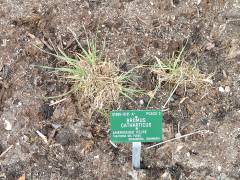
Bromus, Genus, hordeaceus, Species,
- Genus & species
common soft brome
Europe, North Africa, and western Asia
SunFull Sun
Overview
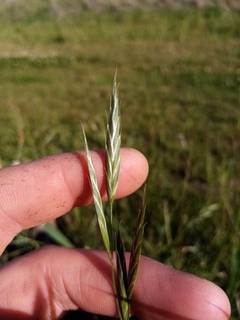
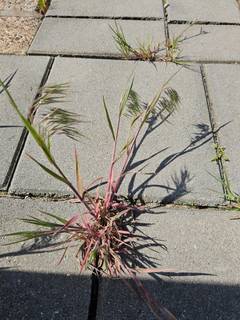
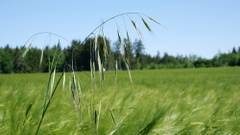
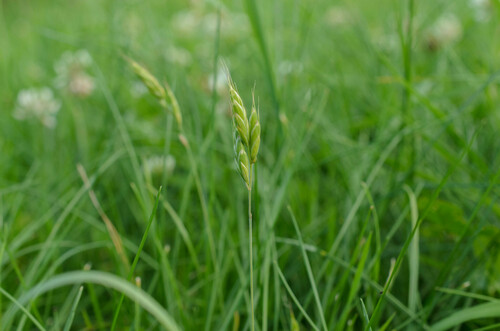
Bromus hordeaceus is an annual or short-lived grass in the family Poaceae, forming loose tufts 4-40 inches (10-100 cm) tall and 4-10 inches (10-25 cm) wide. The whole plant is softly hairy, with greyish-green leaves and flat blades up to 0.2 inch (5 mm) wide. From May to July it carries an erect, fairly dense panicle 1-4 inches (2.5-10 cm) long of plump, softly downy spikelets 0.4-0.9 inch (10-22 mm) long, each with several florets ending in straight awns. The spikelets are green at first, ageing to straw-brown. The grass germinates in autumn or spring, flowers in early summer, and dies after seeding the same year. The species grows in meadows, pastures, arable fields, roadsides, dunes, and waste ground across Europe, North Africa, and western Asia, and is naturalised widely elsewhere. It tolerates drought and poor, disturbed soils but is short-lived and depends on yearly seeding, so it does not form lasting cover and can become weedy on cultivated land. The ripe seeds are eaten by birds and small mammals.
Native Range
Native to Europe, North Africa, and western Asia, and naturalised across much of the temperate world. It grows in meadows, pastures, arable margins, roadside verges, dunes, and waste ground, on a wide range of well-drained soils.Suggested Uses
Used in wildflower-meadow and conservation seed mixes for fast first-year cover, and as a nurse grass while slower perennials establish. The seed heads feed seed-eating birds, and the dry stems add texture to naturalistic plantings. In gardens and on farmland it is more often managed as a weed than sown deliberately.How to Identify
Appearance
Size & Dimensions
Height4" - 3'4"
Width/Spread4" - 10"
Bloom Information
The panicles emerge from May to July, opening green and ripening through early summer to straw-brown. The grass is wind-pollinated, with inconspicuous flowers, and sheds its seed soon after ripening. Plants are usually dead by late summer, leaving dry stems behind.
Detailed Descriptions
Flower Description
green to strawFoliage Description
greyish-greenGrowing Conditions
Sun Requirements
Requires 6-12 hours of direct sunlight daily
• Full Sun: 6+ hours of direct sunlight
• Partial Shade: 3-6 hours of direct sunlight
• Full Shade: Less than 3 hours of direct sunlight
Water & Climate
Water Needs
Drought Tolerance
Drought tolerant when established
Care & Maintenance
Care Guide
Bromus hordeaceus grows in full sun on well-drained soils of low to moderate fertility and tolerates drought and disturbance, which suits it to meadows and rough grassland. It is an annual grown only from seed, sown in autumn or spring, and needs no feeding or watering once established. Because it self-seeds freely and lives only a year, it can spread into cultivated ground and lawns where it is not wanted. On rich or undisturbed ground it is gradually replaced by longer-lived perennial grasses. It is included in some wildflower-meadow and conservation seed mixes for quick early cover. Cutting or grazing before the seed sets limits its spread.Toxicity
Non-toxicPlanting Guide
Planting Methods & Timing
Planting Method
direct sow
Direct Sow Timing
Autumn or spring
Plant Spacing
6 inches