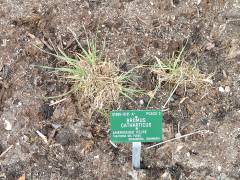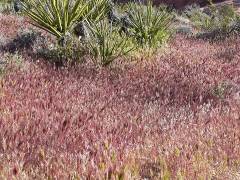
Bromus, Genus, sitchensis, Species,
- Genus & species
Alaska brome
Pacific Coast endemic from Alaska south through British Columbia, Washington, and Oregon; coastal bluffs, forest edges, moist wooded slopes, and stream banks at low to mid elevations
Overview
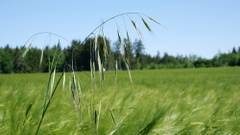
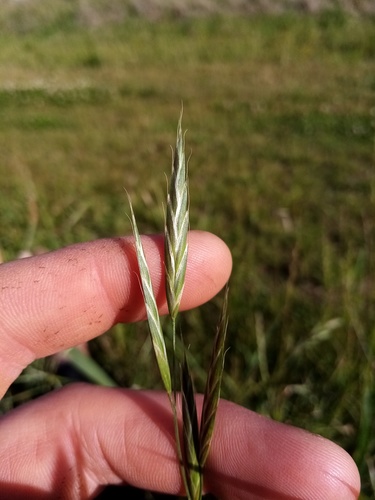
Bromus sitchensis is a cool-season bunchgrass of the family Poaceae, forming dense clumps of arching foliage 18-30 inches (45-75 cm) tall with flowering culms reaching 3-6 feet (90-180 cm). Leaf blades are flat, medium to dark green, 0.25-0.5 inch (6-12 mm) wide, with sparsely hairy sheaths. Inflorescences are open nodding panicles 6-12 inches (15-30 cm) long bearing flattened spikelets 0.6-1.2 inches (15-30 mm) long, each containing 5-9 florets that turn from green to purplish at maturity. The species is short-lived as a perennial, persisting 3-5 years in cultivation before clumps decline; it self-seeds modestly to maintain populations. Foliage greens up in March, flowers from June into July, and goes dormant by late summer in dry sites. Native populations occur in coastal forest openings, bluffs, and streamside meadows from Alaska through Oregon, where it tolerates summer drought after establishment.
Native Range
A Pacific Coast endemic restricted to Alaska, British Columbia, Washington, and Oregon. Populations occur in coastal forest edges, open woodlands, bluffs, and streamside meadows from sea level to 3,500 feet (1,070 m).Suggested Uses
Used in coastal native plant gardens, forest-edge restoration plantings, and meadows mixed with Festuca rubra and Elymus glaucus. Spaced 18-24 inches (45-60 cm) apart in restoration installations. Suited to naturalistic plantings and slope stabilization on sites within 50 miles (80 km) of the Pacific Coast.How to Identify
Appearance
Size & Dimensions
Height3' - 6'
Width/Spread1'6" - 2'6"
Bloom Information
Panicles emerge in early June and continue producing through mid-July, with each clump in active flower for 4-6 weeks. Spikelets ripen from green to straw-tan by August and persist on the stems into September before shattering and reseeding.
Detailed Descriptions
Flower Description
green to purplish spikelets in open nodding paniclesFoliage Description
medium to dark green; flat blades 0.25-0.5 inch (6-12 mm) wide, droopingGrowing Conditions
Sun Requirements
Requires 4-8 hours of direct sunlight daily
• Full Sun: 6+ hours of direct sunlight
• Partial Shade: 3-6 hours of direct sunlight
• Full Shade: Less than 3 hours of direct sunlight
Care & Maintenance
Care Guide
Plant in well-drained loam, sandy loam, or rocky soils in the pH range 5.5-7.0, in part shade to morning sun with afternoon shade in inland sites. Coastal plantings tolerate full sun where summer fog moderates temperatures. Water needs are moderate during establishment in the first year; the species is summer-drought tolerant once roots reach 12-18 inches (30-45 cm) deep. No fertilizer is required in mineral soils. Clumps decline after 3-5 years and the species self-sows to maintain populations; thin volunteer seedlings in spring to maintain spacing of 18-24 inches (45-60 cm) between mature clumps.Pruning
Cut spent culms and dormant foliage to 4 inches (10 cm) from the crown in late winter (February-March) before new growth emerges. No deadheading is required; allow seed heads to mature for self-sowing. Remove declining clumps after 3-5 years and rely on volunteer seedlings.Pruning Schedule
Prune: February–March
late spring