Bromus, Genus, sterilis, Species,
- Genus & species
barren brome
Europe, western Asia, North Africa (species origin); naturalized in temperate North America, Australia, New Zealand
Overview
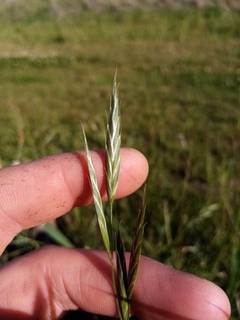
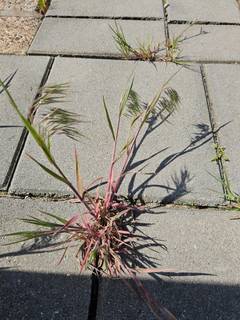
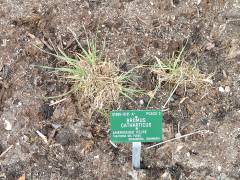
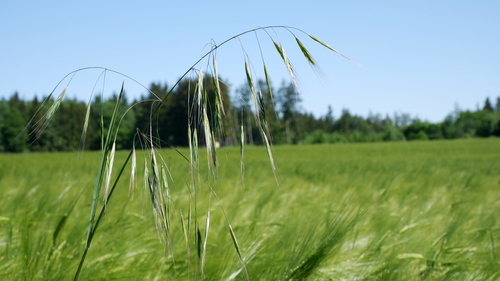
Bromus sterilis (syn. Anisantha sterilis) is a winter annual grass in the family Poaceae growing 12-36 inches (30-90 cm) tall in loose tufts. Stems are erect to ascending, slender, smooth, with 3-5 nodes. Leaves are flat, 2-5 mm wide, softly hairy on both surfaces, and bright green. Leaf sheaths are closed at the base and softly pubescent. The inflorescence is an open nodding panicle 4-8 inches (10-20 cm) long with long drooping branches bearing large spikelets 1-2 inches (2.5-5 cm) long (excluding awns). Each spikelet contains 4-8 florets with long straight awns 0.6-1 inch (15-25 mm) long; the long-awned drooping spikelets are the primary identification character. The epithet sterilis refers not to the plant's fertility (it produces abundant seed) but to its perceived worthlessness as a forage grass since livestock avoid it once the awns harden. The species is native to Europe, western Asia, and North Africa, occurring abundantly as a weed of arable field margins, roadsides, railway embankments, and disturbed urban ground in temperate regions. It germinates in autumn, overwinters as a small tuft, and flowers the following spring-summer. In the Pacific Northwest, the species is abundant on roadsides and in urban waste ground. The hard retrorsely barbed awns can cause eye, skin, and mouth injuries in dogs and livestock.
Native Range
Bromus sterilis is native across Europe, from the British Isles and Scandinavia south to the Mediterranean, and east through the Caucasus, western Asia, and North Africa. Widely naturalized in temperate North America, Australia, and New Zealand.Suggested Uses
Not recommended for intentional garden planting. The species is an ecological component of ruderal and disturbed-ground communities in its native European range. Used occasionally in ecological research and in seed mixes for temporary cover on construction sites, where rapid establishment stabilizes bare soil during the first winter. In habitat restoration, the species is replaced by perennial native grasses as the site matures. The hard barbed awns can cause eye, skin, and mouth injuries in dogs and livestock, and the species is removed from areas grazed by livestock or used by dogs.How to Identify
Appearance
Size & Dimensions
Height1' - 3'
Width/Spread4" - 8"
Bloom Information
Panicles emerge from May through June. The open drooping panicle sheds pollen by wind over a 2-3 week period. Spikelets ripen from green to straw-colored by late June through July. Awned seed is dispersed by wind, animal attachment, and gravity. The plant dies after seed set.
Detailed Descriptions
Flower Description
Green aging to straw-colored; in open nodding panicle 4-8 inches (10-20 cm); large spikelets 1-2 inches with awns 0.6-1 inch (15-25 mm)Foliage Description
Bright green; flat 2-5 mm wide; softly hairy on both surfaces; sheaths closed at the base and softly pubescentGrowing Conditions
Sun Requirements
Requires 4-10 hours of direct sunlight daily
• Full Sun: 6+ hours of direct sunlight
• Partial Shade: 3-6 hours of direct sunlight
• Full Shade: Less than 3 hours of direct sunlight
Care & Maintenance
Care Guide
Not cultivated intentionally. Where the species occurs as a weed, management involves preventing seed set by mowing or hand-pulling before panicles ripen in June. Autumn-germinating seedlings can be controlled by shallow cultivation or targeted herbicide application. Improving soil fertility and establishing competitive perennial groundcover reduces establishment. In ecological study areas, the species is sometimes maintained as a component of ruderal plant communities.Pruning
Pruning does not apply in a horticultural context. For weed management, plants are mowed or pulled before seed maturity in June.Toxicity
Non-toxic by ingestion. The hard retrorsely barbed awns can cause physical injuries (eye, skin, and mouth) in dogs and livestock when seed heads are mature.Planting Guide
Planting Methods & Timing
Planting Method
direct sow
Days to Maturity
180–240 days