Berberis, Genus, ×, Hybrid, hortensis, Species,
- Genus & species
- Hybrid
hybrid mahonia
Overview
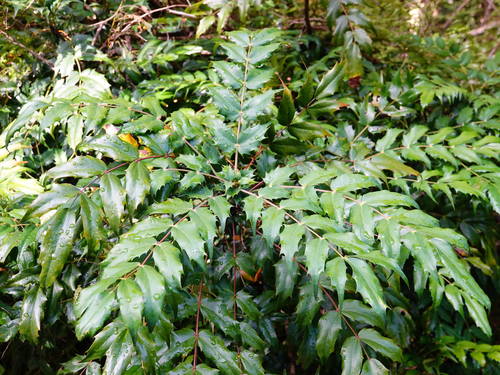
Berberis × hortensis is a hybrid in the mahonia group of Berberis, grown as an evergreen shrub. It reaches 3–6 feet (90–180 cm) tall with an upright, somewhat suckering habit and stiff, sparsely branched stems. The leaves are pinnately compound, 6–12 inches (15–30 cm) long, with several pairs of leathery, glossy leaflets edged with spiny teeth, holly-like in texture. New growth often emerges bronze before turning deep green, and the foliage persists through winter. Yellow flowers form in dense upright to arching racemes in late winter to spring, each cluster 2–4 inches (5–10 cm) long. Bloom is followed by clusters of rounded berries 0.3–0.4 inch (8–10 mm) across that ripen blue-black with a waxy coating. The spiny foliage makes pruning and handling awkward in tight spaces. It grows in sun to part shade and tolerates a range of soils, holding its form in cool-temperate gardens.
Native Range
Berberis × hortensis is a hybrid of garden origin rather than a wild species, raised in cultivation within the mahonia group of Berberis. Its parent species derive from the evergreen mahonias of western North America and eastern Asia.Suggested Uses
Used as an evergreen hedge, in shrub borders, and in shaded foundation plantings. The spiny foliage forms a barrier along boundaries. Flowers draw early bees and the berries feed birds, with plants spaced 3–4 feet (90–120 cm) apart.How to Identify
Appearance
Size & Dimensions
Height3' - 6'
Width/Spread3' - 5'
Bloom Information
Detailed Descriptions
Foliage Description
greenGrowing Conditions
Sun Requirements
Requires 3-8 hours of direct sunlight daily
• Full Sun: 6+ hours of direct sunlight
• Partial Shade: 3-6 hours of direct sunlight
• Full Shade: Less than 3 hours of direct sunlight
Care & Maintenance
Care Guide
Grows in full sun to part shade in moist, well-drained soil. It tolerates a soil pH from 5.5 to 7.5 and adapts to loam, clay, and sandy ground. Water needs are medium, with even moisture during establishment, after which it tolerates short dry spells. Hardy in USDA zones 6–9, it withstands winter frost. The suckering habit can extend the clump outward over time, so it spreads beyond its original footprint in open beds. On exposed sites, harsh drying wind can cause winter leaf scorch.Pruning
Older stems can be cut back to the base after flowering to control height and renew growth. Spent flower clusters may be removed before berries set where self-seeding is unwanted. The spiny leaves make handling awkward, so thick gloves are commonly used.Pruning Schedule
Prune: April–May
late spring
Container Growing
Suitable for container growing
Minimum container size: 5 gallons
Toxicity Warning
Toxic to petsRelated Berberis species
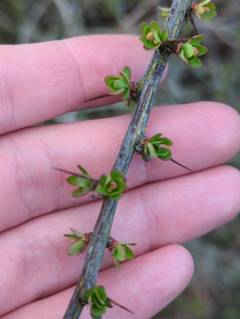 Japanese barberryBerberis thunbergii
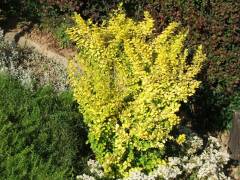 Golden Japanese barberryBerberis thunbergii 'Aurea'
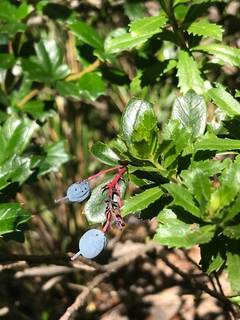 Darwin's barberryBerberis darwinii
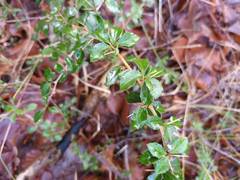 Warty barberryBerberis verruculosa
- Purpleleaf or redleaf Japanese barberryBerberis thunbergii f. atropurpurea
- Helmond Pillar Japanese barberryBerberis thunbergii f. atropurpurea 'Helmond Pillar'