Asclepias, Genus, humistrata, Species,
- Genus & species
Sandhill milkweed
Overview
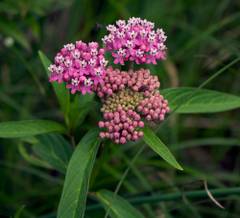
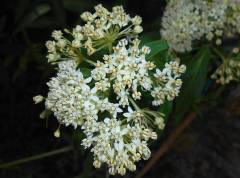
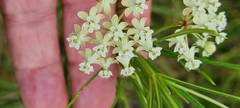
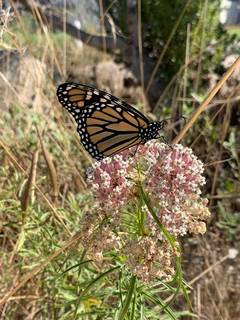
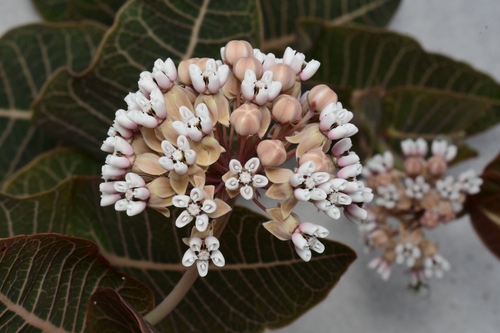
Asclepias humistrata is a herbaceous perennial milkweed with sprawling, decumbent stems 1–2 feet (30–60 cm) long that radiate along the ground from a deep taproot. The paired, broadly oval leaves are 2–4 inches (5–10 cm) long, thick and waxy with a pale blue-grey cast and contrasting pink to rose veins, clasping the stem at their bases. Flat-topped clusters of pink and white star-shaped flowers, each about 0.4 inch (10 mm) across, open at the stem tips and along the upper stem. The flowers are followed by erect seed pods 3–5 inches (8–13 cm) long that split to release silk-tufted seeds. All parts exude a milky latex when cut. It grows in deep, dry, sandy soils of pine sandhills and scrub across the southeastern United States, in full sun. The leaves serve as food for monarch butterfly caterpillars, and the flowers draw a range of bees and butterflies. The latex and foliage contain cardiac glycosides that are toxic to mammals if eaten. It requires sharp drainage and declines in rich, moist, or shaded ground.
Native Range
Asclepias humistrata is native to the southeastern United States, from North Carolina south through Florida and west to Louisiana, where it occurs on deep sandy soils.Suggested Uses
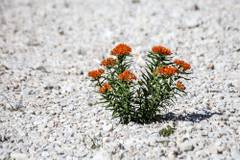
It is used in sandhill restoration, pollinator and monarch butterfly gardens, and dry sandy borders in full sun. It grows in xeric, low-water plantings where drainage is sharp.How to Identify
Appearance
Size & Dimensions
Height1' - 2'
Width/Spread2' - 3'
Colors
Foliage Colors
Bloom Information
Detailed Descriptions
Foliage Description
blue-grey with pink to rose veinsGrowing Conditions
Sun Requirements
Requires 6-12 hours of direct sunlight daily
• Full Sun: 6+ hours of direct sunlight
• Partial Shade: 3-6 hours of direct sunlight
• Full Shade: Less than 3 hours of direct sunlight