Asclepias, Genus, cordifolia, Species,
- Genus & species
heart-leaf milkweed
Overview
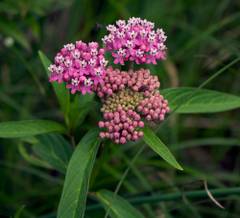
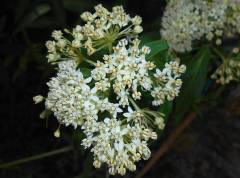
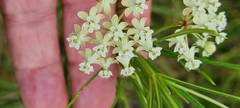
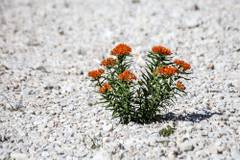
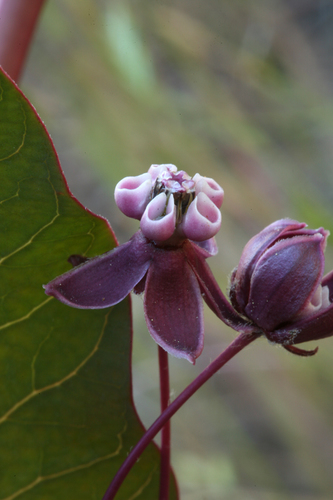
Asclepias cordifolia is an herbaceous perennial of the western United States, growing 1-3 feet (30-90 cm) tall from a deep root, often with reddish stems. The leaves are blue-green, waxy, and heart-shaped, 2-5 inches (5-13 cm) long, clasping the stem in opposite pairs. From May to July the stems carry drooping clusters of dark reddish-purple to maroon flowers, each with reflexed petals and a paler central crown, in the star-shaped form typical of milkweeds. The plant exudes white milky sap when cut. Asclepias cordifolia grows on dry, rocky slopes, open woodland, and chaparral in California, Oregon, and Nevada, often in volcanic or serpentine soils. It tolerates drought and poor soil once established and dies back in summer at the driest sites. The flowers draw bees and butterflies, and the foliage serves as a larval host for monarch butterflies. All parts contain cardiac glycosides that are toxic if eaten in quantity. Plants are slow to establish and reach full size in 2 to 3 years.
Native Range
Asclepias cordifolia is native to the western United States, in California, Oregon, and Nevada. It grows on dry rocky slopes, open woodland, and chaparral, often in volcanic or serpentine soils.Suggested Uses
Asclepias cordifolia is used in dry native plantings, rock gardens, and pollinator and monarch habitat, spaced 18-24 inches (45-60 cm) apart. Its drought tolerance suits sunny, rocky slopes. It is grown as a larval host for monarch butterflies in western gardens.How to Identify
Appearance
Size & Dimensions
Height1' - 3'
Width/Spread1' - 2'
Bloom Information
Detailed Descriptions
Flower Description
dark reddish-purple to maroonFoliage Description
blue-greenGrowing Conditions
Sun Requirements
Requires 5-10 hours of direct sunlight daily
• Full Sun: 6+ hours of direct sunlight
• Partial Shade: 3-6 hours of direct sunlight
• Full Shade: Less than 3 hours of direct sunlight
Care & Maintenance
Care Guide
Asclepias cordifolia grows in full sun to part shade and dry, sharply drained rocky or gravelly soil. It tolerates drought and poor soil once the deep root is established and rots in wet, rich ground. Water is given through spring growth and reduced as the plant goes dormant in summer. The deep root makes transplanting of established plants difficult, so propagation is from seed. Seed needs a cold, moist period before it germinates. No fertilizer is needed in lean soils.Pruning
No routine pruning is needed. Spent stems are left until seed pods ripen if seed is wanted, or cut back after bloom. Dry stems are removed once the plant goes dormant in summer.Pruning Schedule
Prune: July–August
summer