Corylus, Genus, americana, Species,
- Genus & species
American hazelnut
Overview
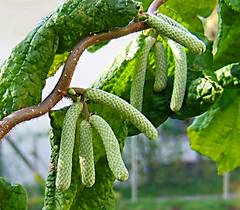
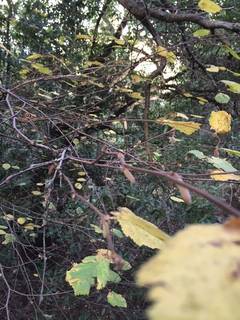
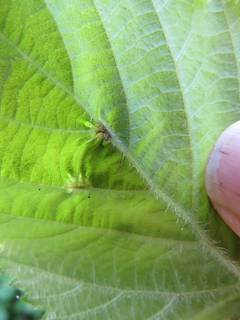
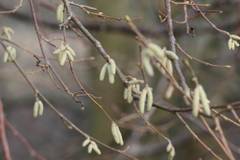
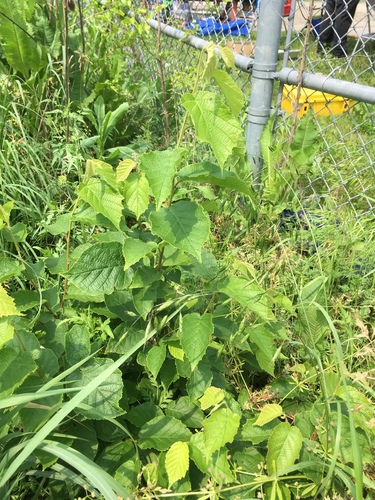
Corylus americana is a multi-stemmed deciduous shrub native to eastern and central North America, growing 96-192 inches (240-480 cm) tall and 96-156 inches (240-390 cm) wide as a clonal thicket spread by root suckers. Pendulous male catkins 1.5-3 inches (4-7.5 cm) long form in autumn and elongate in late winter, releasing pollen in February to April before leaves emerge; female flowers are tiny clusters of red styles protruding from terminal buds on the same plant. Nuts develop in clusters of 2-6, each enclosed in a leafy frilled involucre 1.5-3 inches (4-7.5 cm) long, ripening in August to September. Edible kernels 0.4-0.6 inch (10-15 mm) are smaller than C. avellana but with comparable flavor. Self-incompatible — fruit set requires a second plant within 50 feet (15 m) for cross-pollination. Medium green ovate leaves 3-5 inches (7.5-13 cm) long with doubly serrate margins; foliage turns yellow, orange, and copper in autumn. Hardy to USDA zone 4 (-30°F / -34°C). Resistance to Eastern filbert blight (Anisogramma anomala) varies among wild populations and is higher than typical C. avellana cultivars. Growth rate moderate to fast at 12-24 inches (30-60 cm) per year. Nut production begins 3-4 years after planting. Lifespan 30-50 years per stem; clonal colonies persist longer. Zones 4-9.
Native Range
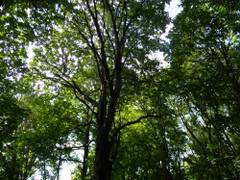
C. americana is native to eastern and central North America from southeastern Saskatchewan and Maine south to Georgia and west to Oklahoma. Found in woodland edges, oak savannas, and open forest understory in well-drained soils.Suggested Uses
Grown in home nut orchards, hedgerows, and wildlife plantings in zones 4-9 with spacing of 96-156 inches (240-390 cm) between plants. Multi-stemmed habit and root suckering produce thicket-forming hedges. Two seedlings or unrelated clones within 50 feet (15 m) are required for nut production. Nuts and catkins feed deer, squirrels, blue jays, and turkeys. Not commonly grown in containers due to suckering habit.How to Identify
Appearance
Size & Dimensions
Height8' - 16'
Width/Spread8' - 13'
Bloom Information
Wind-pollinated catkins shed pollen February to April before leaf emergence — male catkins 1.5-3 inches (4-7.5 cm) elongate from autumn-formed buds; female flowers are tiny clusters of red styles emerging from terminal buds on the same shrub. Bloom timing precedes hardwood leaf-out by 2-4 weeks.
Detailed Descriptions
Flower Description
Yellow-brown male catkins; red female stylesFoliage Description
Medium green, ovate, doubly serrateGrowing Conditions
Sun Requirements
Requires 4-8 hours of direct sunlight daily
• Full Sun: 6+ hours of direct sunlight
• Partial Shade: 3-6 hours of direct sunlight
• Full Shade: Less than 3 hours of direct sunlight
Care & Maintenance
Care Guide
Full sun to part shade (4-8 hours). Adapts to clay, loam, and sandy loam, pH 5.5-7.5. Moderate water during establishment; once established, tolerates 2-4 weeks without rain. Susceptible to Eastern filbert blight (Anisogramma anomala); resistance varies among populations. Big bud mites and filbertworm reduce nut yields in some regions. Hardy to USDA zone 4 (-30°F / -34°C). Two seedlings or unrelated clones within 50 feet (15 m) are required for nut production. Lifespan 30-50 years per stem.Pruning
Cut oldest stems to ground level every 4-6 years in late winter to renew the colony. Remove root suckers annually in spring to limit spread; leave suckers if a thicket is the target form. Heading cuts on bearing wood reduce nut production for 1-2 years.Pruning Schedule
Prune: February–March
winter