Agave, Genus, parryi, Species, var., Variety, couesii, Variety,
- Genus & species
- Variety
coues agave
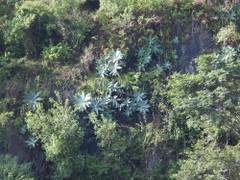
Native to central Arizona in the United States, on rocky slopes and in open woodlands across the Mogollon Rim, Sierra Ancha, and Mazatzal Mountains at elevations of 3,500-7,000 ft (1,070-2,130 m); among the more cold-hardy agaves available, tolerating temperatures to -20°F (-29°C) in well-drained conditions, but crown rot develops rapidly in wet winter soils
Overview
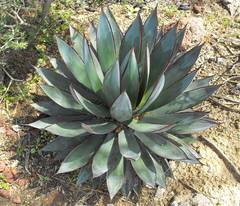
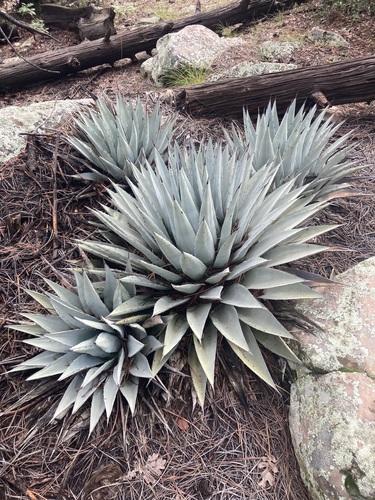
Agave parryi var. couesii is a compact rosette-forming succulent in the asparagus family (Asparagaceae) reaching 12-18 inches (30-45 cm) tall and 18-24 inches (45-60 cm) wide. Compared to the type variety A. parryi var. parryi, this variety has narrower more elongated leaves and a slightly smaller overall rosette. Blue-gray leaves are thick and rigid, each tipped with a dark brown to black terminal spine 0.5-1 inch (1.3-2.5 cm) long and lined with small marginal teeth. The rosette holds a tight symmetrical form for many years before producing a single flower stalk 8-15 ft (2.4-4.5 m) tall bearing clusters of yellow flowers with red-tipped buds. As a monocarpic species, the parent rosette dies after flowering, which typically occurs after 10-20 years. Offsets produced at the base prior to flowering continue the colony. This variety is among the more cold-hardy agaves, tolerating temperatures to -20°F (-29°C) in well-drained conditions, but crown rot develops rapidly in wet winter soils. The sharp terminal spine and leaf tips pose an injury hazard near paths and seating areas. Sap causes skin irritation, and all parts are toxic if ingested.
Native Range
Agave parryi var. couesii is native to central Arizona in the United States, on rocky slopes and in open woodlands across the Mogollon Rim, Sierra Ancha, and Mazatzal Mountains at elevations of 3,500-7,000 ft (1,070-2,130 m).Suggested Uses
Used as a specimen in xeriscape gardens, rock gardens, and desert-style landscapes. The cold hardiness suits the variety to arid gardens in USDA zones 5-10 where other agaves cannot survive. Container culture in pots of 5 gallons (19 L) or more with mineral substrate allows cultivation in wetter climates with winter protection. Sited away from paths and seating due to the sharp terminal spines.How to Identify
Appearance
Size & Dimensions
Height1' - 1'6"
Width/Spread1'6" - 2'
Bloom Information
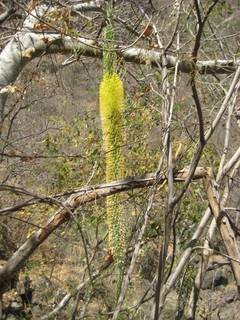
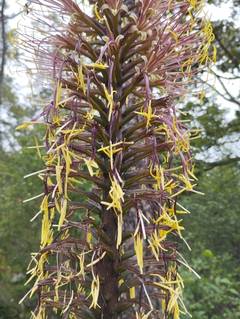
As a monocarpic species, A. parryi var. couesii flowers once after 10-20 years of vegetative growth. The flower stalk rises 8-15 ft (2.4-4.5 m) in late spring, bearing paniculate clusters of yellow flowers with red-tipped buds over approximately 4 weeks in summer. Hummingbirds and bats visit the flowers. The parent rosette dies after seed set.
Detailed Descriptions
Flower Description
Yellow flowers with red-tipped buds carried on a tall stalk 8-15 ft (2.4-4.5 m) tall in late spring after 10-20 years of vegetative growth — the species is monocarpic and the parent rosette dies after seed setFoliage Description
Blue-gray with a dark brown to black terminal spine 0.5-1 inch (1.3-2.5 cm) long; small evenly spaced marginal teeth line the leaf edgesGrowing Conditions
Sun Requirements
Requires 6-12 hours of direct sunlight daily
• Full Sun: 6+ hours of direct sunlight
• Partial Shade: 3-6 hours of direct sunlight
• Full Shade: Less than 3 hours of direct sunlight
Care & Maintenance
Care Guide
Plant in full sun with at least 6 hours of direct light. Sharply drained mineral-based soil is essential; amend clay or loam with 50% or more coarse sand, pumice, or gravel. Water sparingly, allowing soil to dry completely between irrigations. In regions with wet winters, plant on slopes or in raised beds to prevent crown rot, which is the primary cause of loss. No fertilization is needed. This variety tolerates cold to -20°F (-29°C) when soil drainage is adequate, but wet-cold conditions are lethal. Remove offsets periodically if a single-rosette specimen is desired.Pruning
Remove dead or damaged outer leaves by cutting cleanly at the base with a sharp blade. After the monocarpic bloom event, cut the dried flower stalk at ground level. No routine pruning is needed. Thick gloves and eye protection are advisable when working around the sharp terminal spines.Container Growing
Suitable for container growing
Minimum container size: 5 gallons