Agave, Genus, spp., Multiple species,
- Genus
- Multiple species
century plants
Overview
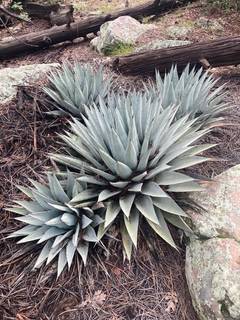
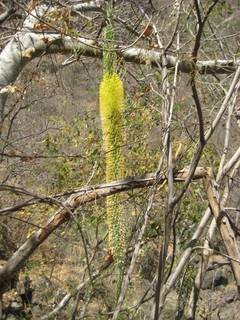
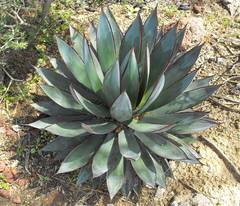
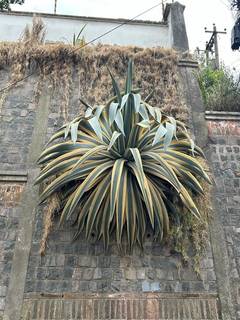
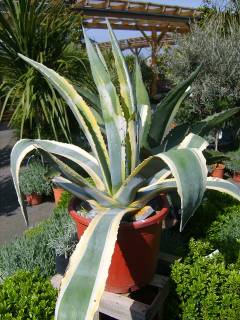
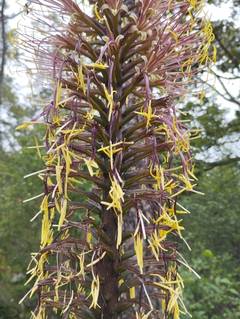
Agave is a genus of about 270 species of evergreen, succulent, rosette-forming plants in the family Asparagaceae, native to the Americas and centered in Mexico. The plants form symmetrical rosettes of thick, fibrous, water-storing leaves 1 to 6 feet (0.3 to 1.8 m) tall and wide, with most species edged in sharp marginal teeth and tipped with a stiff terminal spine. Leaf color spans gray-green, blue-green, and forms with variegated cream or yellow margins. Agaves are monocarpic: a rosette grows for 8 to 30 years, then sends up a tall flowering stalk 10 to 40 feet (3 to 12 m) high bearing yellow to greenish panicles, after which that rosette dies while offsets at its base continue. Agave grows in USDA zones 8 to 11, with a few species hardier, and tolerates intense heat, drought, and poor soil. The terminal spines and toothed margins make placement near walkways hazardous, and the sap can irritate skin.
Native Range
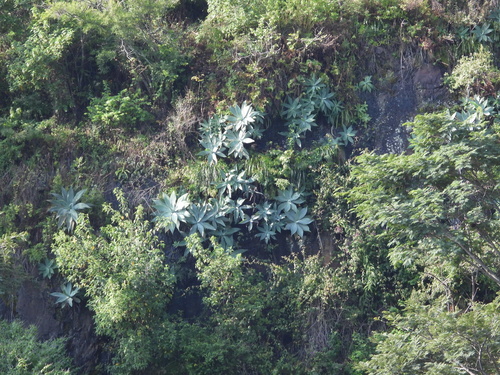
Native to the Americas, with the greatest diversity in Mexico and additional species in the southwestern United States, Central America, the Caribbean, and northern South America. Agaves grow in deserts, scrub, and on rocky slopes.Suggested Uses
Used in xeriscape and gravel gardens, rockeries, coastal plantings, and large containers, and grown as architectural specimens in arid landscapes. Smaller species are kept as houseplants in bright light. The spines limit placement near paths, seating, and play areas.How to Identify
Appearance
Size & Dimensions
Height1' - 6'
Width/Spread1' - 10'
Bloom Information
Each rosette flowers only once, after 8 to 30 years of growth depending on the species, sending up a tall stalk in summer. The flowering stalk and its panicles persist for several weeks before the rosette declines. Offsets around the base flower in later years.
Detailed Descriptions
Flower Description
yellow to greenishFoliage Description
gray-green to blue-green, sometimes variegatedGrowing Conditions
Sun Requirements
Requires 6-12 hours of direct sunlight daily
• Full Sun: 6+ hours of direct sunlight
• Partial Shade: 3-6 hours of direct sunlight
• Full Shade: Less than 3 hours of direct sunlight
Water & Climate
Water Needs
Drought Tolerance
Drought tolerant when established
Care & Maintenance
Care Guide
Grows in full sun in sharply drained sandy or rocky soil, and tolerates heat, drought, and salt. Wet soil and shade cause rot and weak growth, so drainage is the main requirement. Watering is needed only during establishment and in extended drought, and most species survive on rainfall in arid and semi-arid climates. Cold tolerance varies by species, from USDA zone 8 for many to colder limits for a few. No fertilizer is needed in lean soils. Offsets can be removed to control spread and to propagate new plants.Pruning
Pruning is limited to removing dead lower leaves and the spent flowering stalk after a rosette finishes blooming. Offsets are cut or dug from the base to manage clump size. The terminal spines and toothed margins make this work hazardous, and the sap can irritate skin.Container Growing
Suitable for container growing
Minimum container size: 3 gallons