Agave, Genus, americana, Species, 'Variegata', Cultivar,
- Genus & species
- Cultivar
variegated century plant
Garden selection; species native to Mexico and southwestern United States
Overview
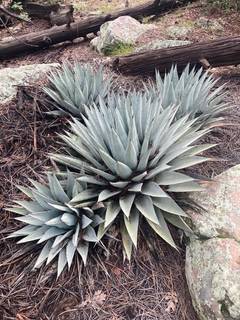
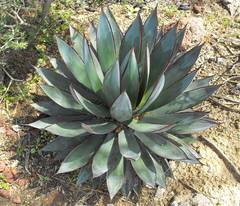
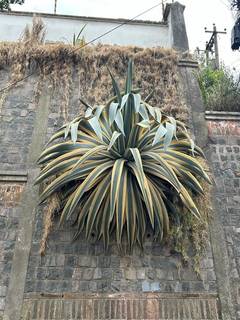
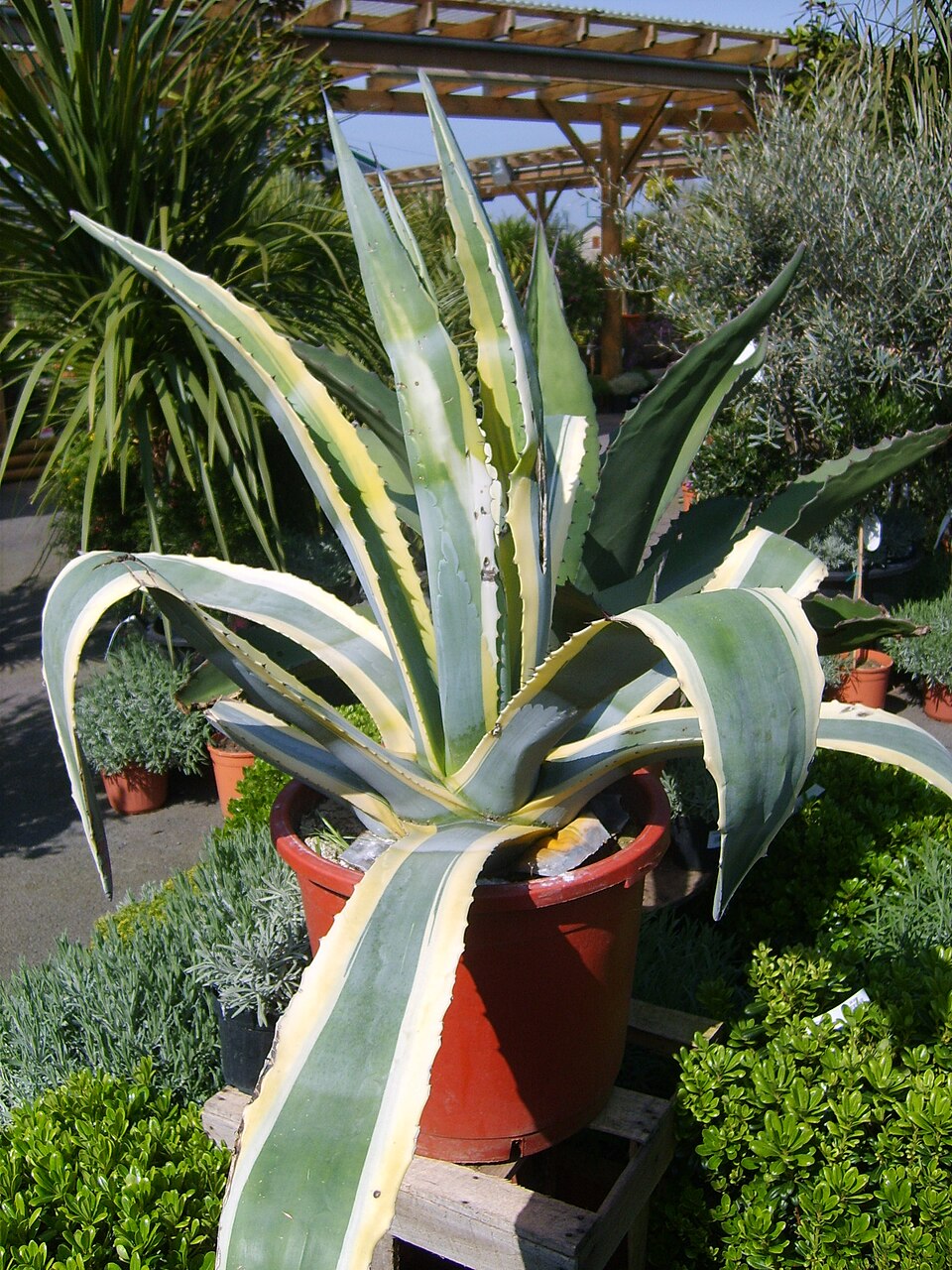
Agave americana 'Variegata' is a yellow-margined variegated century plant forming a rosette 3-5 feet (90-150 cm) tall and 5-8 feet (150-240 cm) wide. Sword-shaped blue-green leaves 24-48 inches (60-120 cm) long carry wide creamy-yellow margins along each edge. The variegation pattern — colored margins with green centers — distinguishes this cultivar from A. americana 'Mediopicta Alba', which has a white center stripe and green margins. Each leaf terminates in a sharp 1-1.5 inch (2.5-4 cm) spine, with serrated brown teeth along the margins. The plant is monocarpic: after 10-25 years of vegetative growth, a single flower stalk 10-25 feet (300-750 cm) tall emerges, produces yellow-green flowers, and the parent rosette dies. Offsets form at the base before flowering and continue the colony. Mature size runs smaller than the all-green species at 6-10 feet (1.8-3 m) wide due to reduced chlorophyll. Sap from cut leaves contains calcium oxalate raphides and saponins; skin contact causes contact dermatitis and mucous-membrane irritation in many individuals. Drought-tolerant once established, with very low water requirements. Full sun and well-draining soil are required. Hardy in zones 8-11 and tolerant of temperatures to 15°F (-9°C). Slow growth at 2-4 inches (5-10 cm) of new leaf per year.
Native Range
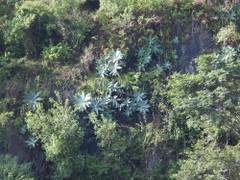
The species Agave americana is native to Mexico and the southwestern United States, including Texas, New Mexico, and Arizona. It has naturalized in Mediterranean and arid regions worldwide.Suggested Uses
Grown as a specimen in xeriscape and Mediterranean-style gardens in zones 8-11, spaced 8-10 feet (2.4-3 m) from walkways and seating. Container culture uses 10-15 gallon (40-60 L) terracotta pots in colder climates, moved indoors when temperatures drop below 15°F (-9°C). The terminal spines and sap restrict use in spaces shared with children, pets, or barefoot foot traffic.How to Identify
Appearance
Size & Dimensions
Height3' - 5'
Width/Spread5' - 8'
Colors
Bloom Information
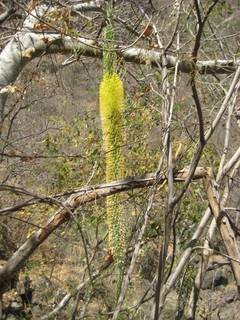
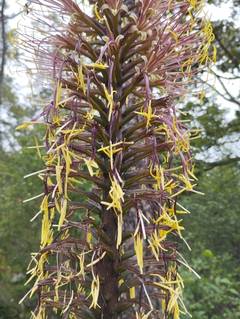
Monocarpic flowering occurs once after 10-25 years of vegetative growth. A single panicle 10-25 feet (300-750 cm) tall emerges in late spring to summer, bearing yellow-green flowers that draw bees and hummingbirds. The parent rosette dies after seed set, while offsets produced earlier continue the clump.
Detailed Descriptions
Flower Description
Yellow-green on a tall panicle (monocarpic)Foliage Description
Blue-green with wide creamy-yellow margins and brown serrated teethGrowing Conditions
Sun Requirements
Requires 6-12 hours of direct sunlight daily
• Full Sun: 6+ hours of direct sunlight
• Partial Shade: 3-6 hours of direct sunlight
• Full Shade: Less than 3 hours of direct sunlight
Care & Maintenance
Care Guide
Full sun and sharply draining soil are required; rosettes rot in waterlogged conditions, especially in winter. Water deeply once every 3-4 weeks during the growing season; water monthly or less in winter. The sap causes contact dermatitis and mucous-membrane irritation; skin and eye coverage during pruning is standard practice in commercial production. Terminal spines puncture skin; placement at distance from foot traffic reduces injury risk. Cold below 15°F (-9°C) damages leaf tips and can kill the rosette in zones 7 and colder. Agave snout weevil (Scyphophorus acupunctatus) bores into the crown and is a lethal pest in the southwestern United States.Pruning
Remove dead or damaged lower leaves with a sharp knife or pruning saw at the leaf base. Terminal spine tips can be trimmed with pruners to blunt the puncture hazard near walkways. After monocarpic flowering, the spent rosette must be cut out at ground level; offsets left in place continue the colony.Pruning Schedule
Prune: April–May
late spring
Container Growing
Suitable for container growing
Minimum container size: 10 gallons