Agave, Genus, attenuata, Species,
- Genus & species
fox tail agave
Jalisco and Mexico states, central Mexico
Overview
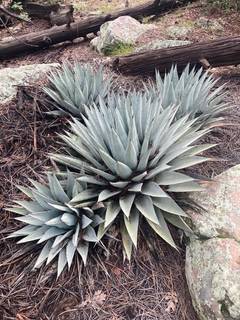
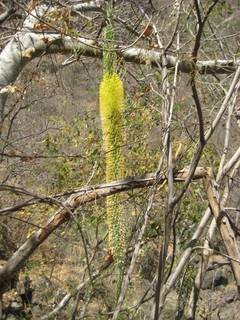
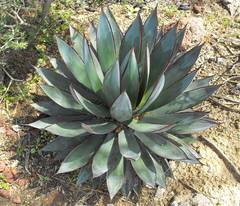
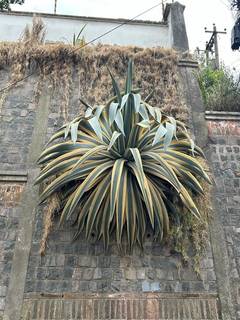
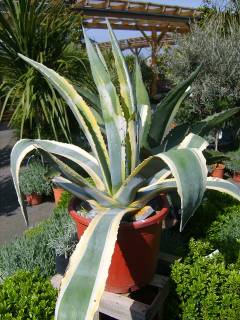
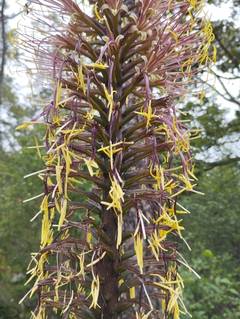
Agave attenuata is an evergreen succulent rosette plant in the asparagus family (Asparagaceae), reaching 36-60 inches (90-150 cm) tall and 48-72 inches (120-180 cm) wide. The rosette of soft pale green to silver-green leaves measures 24-48 inches (60-120 cm) across, with each leaf 18-30 inches (45-75 cm) long, broadly lanceolate, and lacking the terminal spine and marginal teeth typical of other agave species. With age, a stout trunk 24-60 inches (60-150 cm) tall develops, lifting the rosette above ground level. Mature rosettes flower once after 10-15 years on a 60-180 inch (150-450 cm) curving and downward-arching flower spike densely set with pale green to creamy yellow flowers; the curved form gives the species its common names fox tail agave and lion tail agave. The flowering rosette dies after seed set but produces basal pups before and during flowering that continue the colony. Native to dry rocky slopes of Jalisco and Mexico states in central Mexico at 6,000-8,500 feet (1,800-2,600 m) elevation. Hardy outdoors in zones 9-11 with foliage damage below 28°F (-2°C); leaves crystallize and the plant rots below 25°F (-4°C). Sap is a mild irritant; ingestion causes gastrointestinal upset in dogs, cats, and humans. Drought-tolerant and tolerant of seaside salt spray.
Native Range
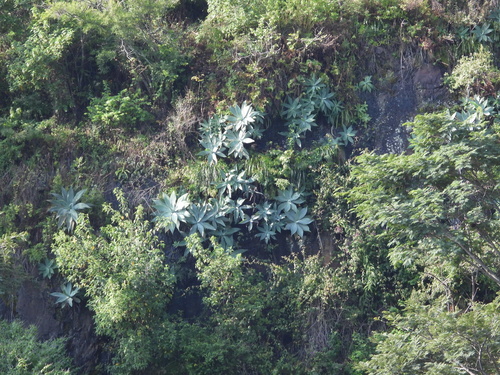
A. attenuata is native to dry rocky slopes and cliffs of Jalisco and Mexico states in central Mexico at 6,000-8,500 feet (1,800-2,600 m) elevation, where it grows in open sun and partial shade.Suggested Uses
Grown as a free-standing landscape specimen at 60-90 inch (150-225 cm) spacing in zones 9-11, in coastal Mediterranean gardens, and in containers of 5-15 gallons (19-57 L) for patio culture in any zone. Toxic to humans and pets if ingested.How to Identify
Appearance
Size & Dimensions
Height3' - 5'
Width/Spread4' - 6'
Bloom Information
Mature rosettes flower once after 10-15 years on a curving downward-arching flower spike 60-180 inches (150-450 cm) long densely set with pale green to creamy yellow flowers in late spring to summer. Bloom period lasts 3-6 weeks. The flowering rosette dies after seed set; basal pups continue the colony.
Detailed Descriptions
Flower Description
Pale green to creamy yellow on arching spikeFoliage Description
Soft pale green to silver-green; broadly lanceolate; no terminal spineGrowing Conditions
Sun Requirements
Requires 6-10 hours of direct sunlight daily
• Full Sun: 6+ hours of direct sunlight
• Partial Shade: 3-6 hours of direct sunlight
• Full Shade: Less than 3 hours of direct sunlight
Care & Maintenance
Care Guide
Full sun outdoors in coastal zones 9-11; part shade in hot inland and desert climates where afternoon sun bleaches and burns leaves. Soil pH 6.0-7.5, fast-draining sandy or rocky mix; root rot follows persistent saturation. Drought-tolerant once established; supplemental water in summer maintains the silver-green color. Foliage damage below 28°F (-2°C). Snout weevil (Scyphophorus acupunctatus) is the principal pest in California and Mexico, hollowing the central stem and killing rosettes. Sap is a mild skin and eye irritant; ingestion causes gastrointestinal upset in dogs, cats, and humans.Pruning
Cut basal pups at the base with a clean knife to control colony spread, or detach and replant 2-4 inch (5-10 cm) pups for propagation. Remove dead leaves at the base of the rosette as they shrivel; live green leaves are part of the active leaf area. Cut the spent flower spike to ground level after the parent rosette dies; the dead rosette can be removed separately.Container Growing
Suitable for container growing
Minimum container size: 5 gallons