Agave, Genus, vilmoriniana, Species,
- Genus & species
octopus agave
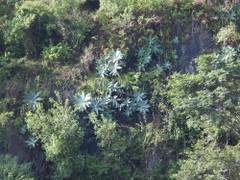
Native to western Mexico, primarily in the states of Sonora and Sinaloa, on rocky cliff faces and canyon walls at elevations of 1,500-5,000 ft (450-1,525 m); the species often clings to vertical rock surfaces in the wild, which is one reason the flexible unarmed leaves and the bulbil reproduction strategy evolved — the bulbils detach and roll downslope to colonize new sites where seed dispersal would not reach
Overview
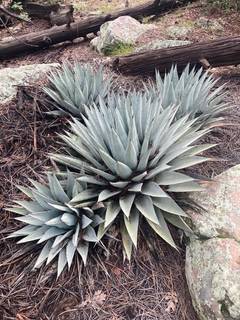
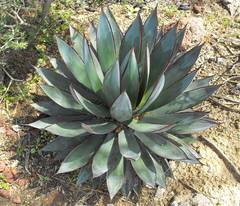
Agave vilmoriniana is a large single-rosette succulent in the asparagus family (Asparagaceae) reaching 36-48 inches (90-120 cm) tall and 48-72 inches (120-180 cm) wide. Unlike most agaves, the species' leaves are flexible and unarmed, lacking marginal teeth and bearing only a soft pliable terminal point rather than a rigid spine — this leaf character is specific to this species among commonly cultivated agaves. Thick gray-green leaves arch outward and twist slightly, giving the rosette an octopus-like silhouette. The absence of sharp spines makes the species safer than most agaves to plant near walkways, though the sap still causes skin irritation. The species is monocarpic, flowering once after 10-15 years by sending up a branched stalk 10-20 ft (3-6 m) tall bearing yellow flowers. Rather than producing basal offsets, A. vilmoriniana generates hundreds of small bulbils on the flower stalk, which drop and root in surrounding soil. Crown rot develops in any soil that holds moisture; sharply drained mineral substrates are essential. Hardy only in USDA zones 9-11 and damaged by temperatures below 28°F (-2°C). The large spread requires substantial growing space; mature rosettes cannot be moved easily due to their size and weight.
Native Range
Agave vilmoriniana is native to western Mexico, primarily in the states of Sonora and Sinaloa. The species grows on rocky cliff faces and canyon walls at elevations of 1,500-5,000 ft (450-1,525 m), often clinging to vertical rock surfaces.Suggested Uses
Used as a large-scale feature in desert and Mediterranean-climate gardens where space permits. The arching unarmed leaves make the species safer than spined agaves for placement near walkways and patios. Suited to rocky slopes, raised planters, and xeriscaped commercial landscapes. Container culture requires pots of 10 gallons (38 L) or more with mineral substrate; plants eventually outgrow all but the largest containers.How to Identify
Appearance
Size & Dimensions
Height3' - 4'
Width/Spread4' - 6'
Colors
Bloom Information
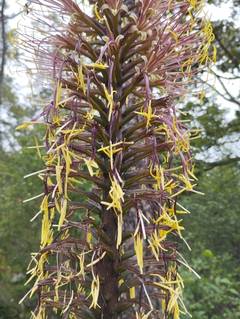
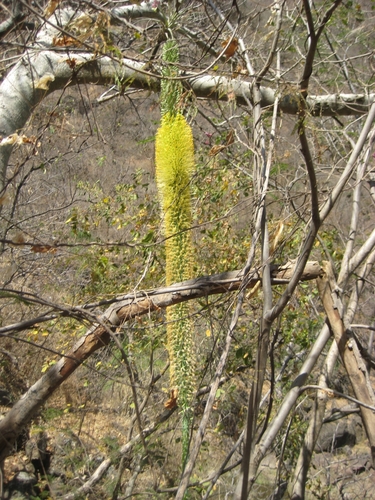
Agave vilmoriniana flowers once after 10-15 years of vegetative growth. The branched flower stalk rises 10-20 ft (3-6 m) in spring, bearing clusters of yellow tubular flowers over approximately 4 weeks. Instead of basal offsets, hundreds of small bulbils form on the stalk and drop to the ground after the parent rosette dies.
Detailed Descriptions
Flower Description
Yellow tubular flowers carried on a branched stalk 10-20 ft (3-6 m) tall in spring after 10-15 years of vegetative growth; the species is monocarpic and the parent rosette dies after seed set, but the flower stalk produces hundreds of small bulbils that drop and root in surrounding soil — the bulbil reproduction strategy separates this species from most other agavesFoliage Description
Gray-green to pale green; thick flexible leaves arch outward and twist slightly, giving the rosette an octopus-like silhouette; leaves lack marginal teeth and bear only a soft pliable terminal point rather than a rigid spineGrowing Conditions
Sun Requirements
Requires 6-12 hours of direct sunlight daily
• Full Sun: 6+ hours of direct sunlight
• Partial Shade: 3-6 hours of direct sunlight
• Full Shade: Less than 3 hours of direct sunlight
Care & Maintenance
Care Guide
Plant in full sun or light afternoon shade with at least 6 hours of direct light. Sharply drained soil is critical; amend heavy ground with at least 50% coarse mineral material such as pumice, decomposed granite, or coarse sand. Water deeply but infrequently, allowing the soil to dry completely between irrigations. In humid or rainy climates, plant on slopes or raised beds to prevent water from pooling around the crown. Damaged by temperatures below 28°F (-2°C); in zones below 9, container culture with indoor winter storage is required. No fertilization is typically necessary. Allow ample space for the 4-6 ft (120-180 cm) spread of mature plants.Pruning
Remove dead or damaged outer leaves by cutting cleanly at the leaf base. After the monocarpic bloom event, cut the dried flower stalk at ground level and remove the spent parent rosette. Collect bulbils from the stalk for propagation if desired. No routine pruning is required. Gloves are advisable when handling to avoid skin irritation from sap.Container Growing
Suitable for container growing
Minimum container size: 10 gallons