Agave, Genus, ×, Hybrid, 'Blue Glow', Cultivar,
- Genus
- Hybrid
- Cultivar
blue glow agave
Garden hybrid bred by Kelly Griffin from a cross between {A. attenuata} (native to the highlands of central Mexico) and {A. ocahui} (native to the Sierra Madre Occidental in Sonora, Mexico); the cross combines the smooth leaf surface of {A. attenuata} with the compact form and hardiness of {A. ocahui}, producing a cultivar with a tighter rosette than either parent and the colored leaf margins that {A. ocahui} contributes
Overview
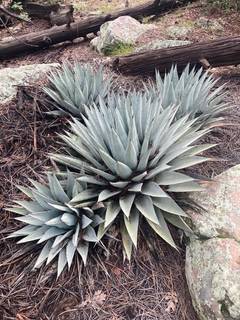
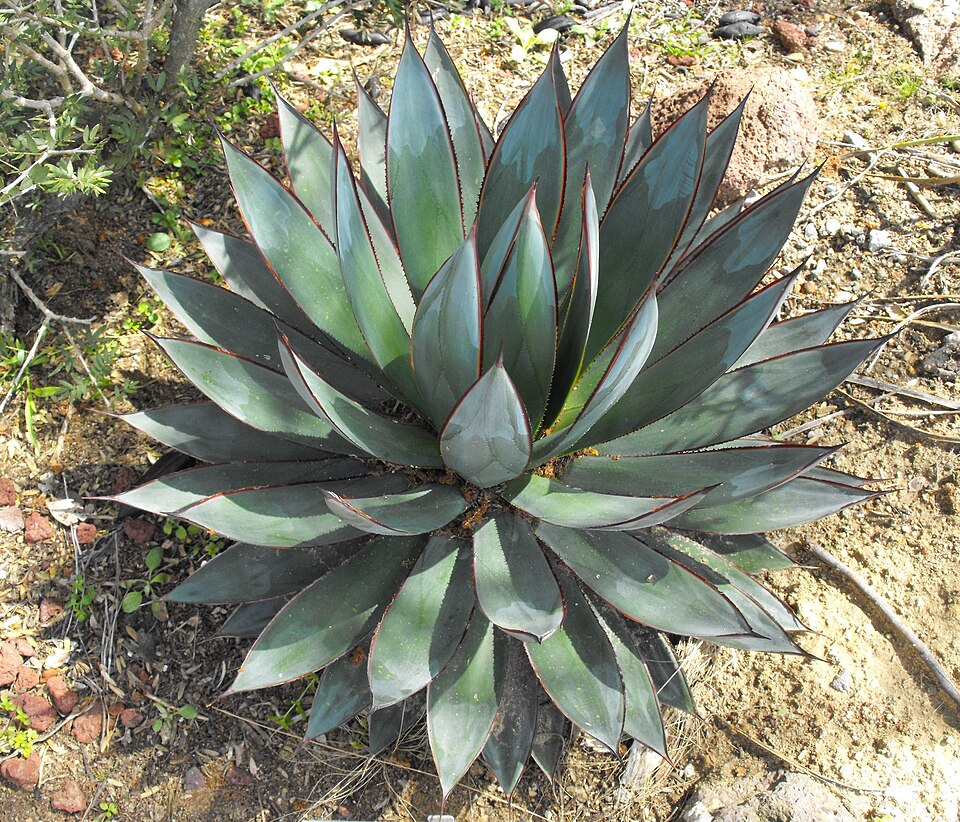
Agave × 'Blue Glow' is a solitary slow-growing succulent hybrid in the asparagus family (Asparagaceae) forming a symmetrical rosette 18-24 inches (45-60 cm) tall and 24-30 inches (60-75 cm) wide. Bred by Kelly Griffin from a cross between A. attenuata and A. ocahui, the cultivar combines the smooth leaf surface of the former with the compact form and hardiness of the latter. Leaves are rigid, smooth, and blue-green with a translucent red-burgundy margin that intensifies when the plant is grown in bright light. Each leaf terminates in a dark sharp spine 0.5 inch (1.3 cm) long. The rosette remains solitary; unlike many agaves, this hybrid rarely produces basal offsets, which means replacement after the monocarpic bloom event (typically after 8-15 years) depends on seed or tissue-culture propagation. Flower stalks reach 8-12 ft (2.4-3.7 m) tall and bear yellow-green tubular flowers over approximately 4 weeks in summer. Hardy in USDA zones 8-11; temperatures below 25°F (-4°C) cause leaf damage, and sustained frost below 20°F (-7°C) is typically lethal. Crown rot occurs rapidly in poorly drained soils. Sap irritates skin; all parts are toxic if ingested.
Native Range
Agave × 'Blue Glow' is a nursery-bred hybrid created by Kelly Griffin. The parent species A. attenuata is native to the highlands of central Mexico, and A. ocahui is native to the Sierra Madre Occidental in Sonora, Mexico.Suggested Uses
Used as a specimen or feature in xeriscape gardens, Mediterranean-climate landscapes, and succulent collections. The compact size and symmetrical form suit container culture in pots of 5 gallons (19 L) or more with mineral substrate. Pairs with other agaves, cacti, and drought-tolerant ground covers. Sited away from high-traffic areas due to the terminal spine.How to Identify
Appearance
Size & Dimensions
Height1'6" - 2'
Width/Spread2' - 2'6"
Bloom Information
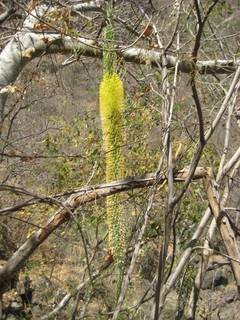
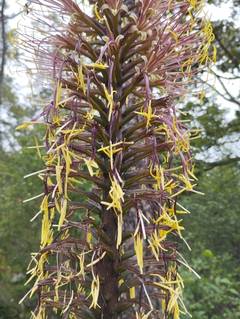
As a monocarpic hybrid, Agave × 'Blue Glow' flowers once, typically after 8-15 years. The flower stalk rises 8-12 ft (2.4-3.7 m), bearing yellow-green tubular flowers in a branched panicle over approximately 4 weeks in summer. The parent rosette dies after flowering; replacement requires seed or tissue culture since offsets are rarely produced.
Detailed Descriptions
Flower Description
Yellow-green tubular flowers carried in a branched panicle on a stalk 8-12 ft (2.4-3.7 m) tall after 8-15 years of vegetative growth — the cultivar is monocarpic and the parent rosette dies after seed set; replacement requires seed or tissue culture since offsets are rarely producedFoliage Description
Blue-green with translucent red-burgundy margin and dark terminal spine 0.5 inch (1.3 cm) long; the red margin intensifies in bright lightGrowing Conditions
Sun Requirements
Requires 6-12 hours of direct sunlight daily
• Full Sun: 6+ hours of direct sunlight
• Partial Shade: 3-6 hours of direct sunlight
• Full Shade: Less than 3 hours of direct sunlight
Care & Maintenance
Care Guide
Plant in full sun or light afternoon shade with at least 6 hours of direct light for the most vivid leaf color. Sharply drained mineral soil is essential; incorporate 50% or more coarse sand, pumice, or decomposed granite into heavy ground. Water deeply but infrequently, allowing the soil to dry thoroughly between irrigations. In areas with wet winters, plant on slopes or in raised beds to prevent standing water at the crown. Damaged by temperatures below 25°F (-4°C); in zones colder than 8, grow in containers and move indoors before frost. No fertilization is typically needed; a light application of balanced fertilizer in spring is optional.Pruning
Remove dead or damaged outer leaves by cutting cleanly at the base. After the monocarpic bloom event, cut the dried flower stalk at ground level and remove the spent rosette. No routine pruning is needed. Thick gloves are advisable when handling to avoid the terminal spine and skin-irritating sap.Container Growing
Suitable for container growing
Minimum container size: 5 gallons