Acer, Genus, truncatum, Species,
- Genus & species
shantung maple
Northern and northeastern China, Korea, Japan
Overview
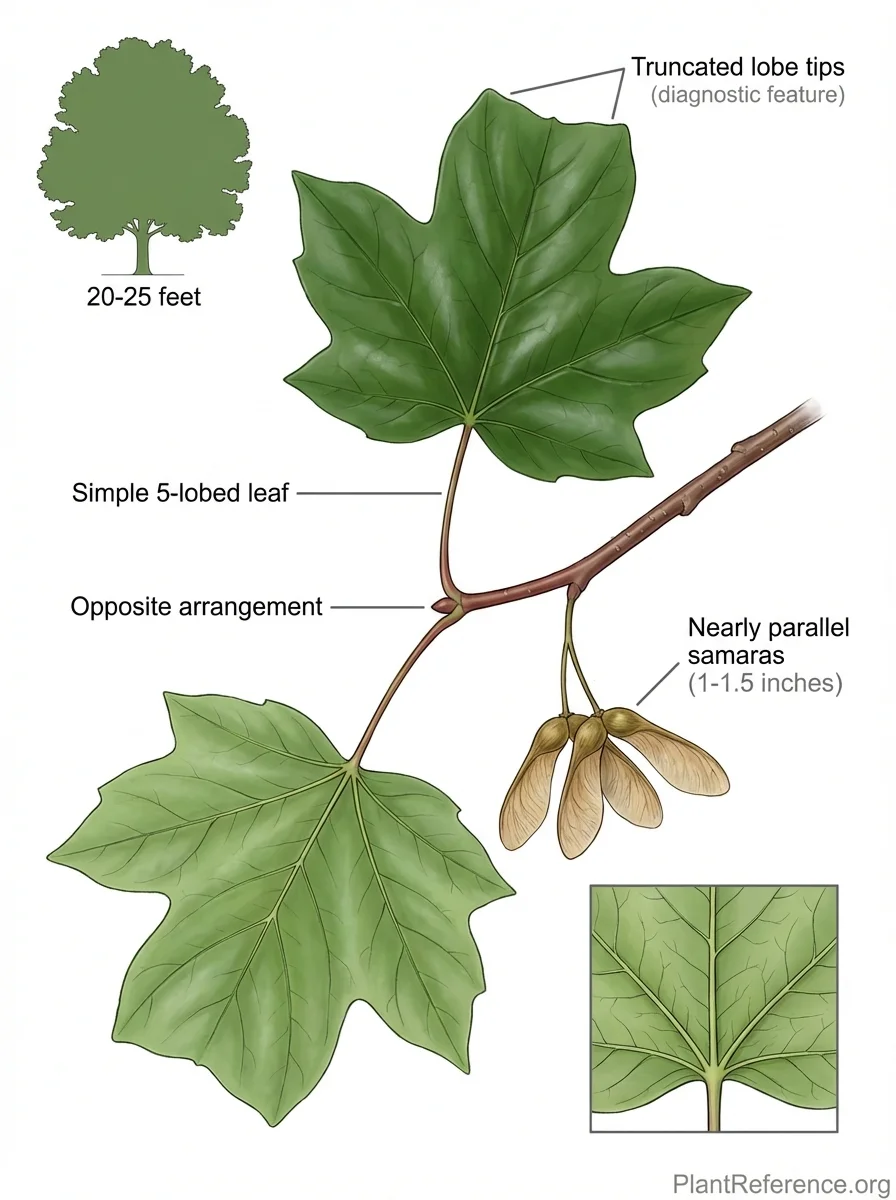
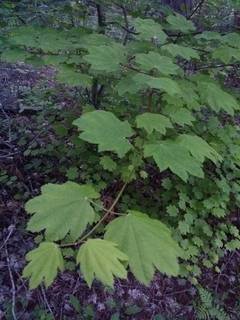
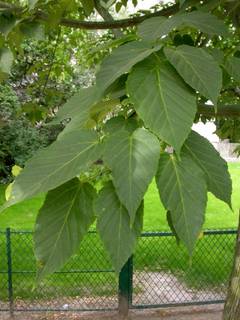
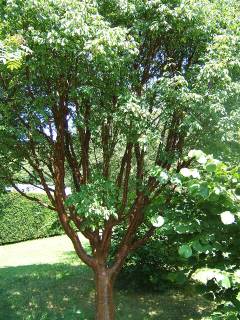
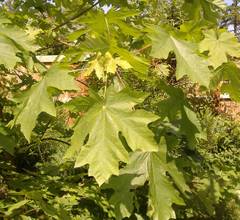
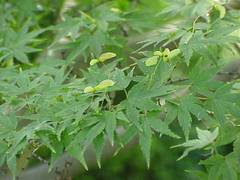
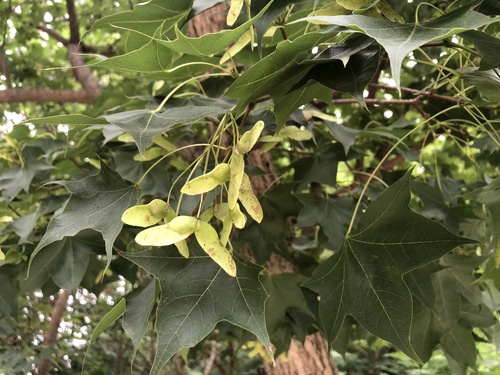
Acer truncatum is a deciduous tree reaching 20–25 feet (6–7.5 m) tall with a spread of 15–20 feet (4.5–6 m), forming a rounded to broadly oval crown. Leaves are five- to seven-lobed, 3–5 inches (7.5–13 cm) wide, with a truncate (flat) base — the blade cut straight across at the junction with the petiole rather than cordate — the trait from which the species epithet derives. New foliage emerges purple-red in spring before maturing to dark glossy green. Fall color is orange-red to scarlet and lasts 2–3 weeks. Small yellowish-green flowers appear in erect corymbs in April–May. Paired samaras, 0.75–1.25 inches (2–3 cm) long, ripen in August–September, earlier than most maples. Bark is gray and smooth on young stems, developing shallow ridges on older trunks. Growth rate is 12–18 inches (30–45 cm) per year. A. truncatum tolerates compacted urban soils, reflected heat, drought after establishment, and alkaline conditions to pH 7.5. Heat tolerance extends to zone 8; the species performs where A. saccharum and A. palmatum fail in hot urban sites.
Native Range
Acer truncatum is native to northern and northeastern China, Korea, and Japan, occurring in mixed deciduous forests and scrubby woodland margins at low to middle elevations on well-drained soils. The species is native to regions with hot summers and cold winters.Suggested Uses
Planted as a shade tree, street tree, or specimen at 15–20 foot (4.5–6 m) spacing. Urban site tolerance extends use to boulevard plantings, parking lot edges, and commercial sites where A. saccharum typically fails. The purple-red spring new growth and orange-red to scarlet fall color are the primary seasonal features. Suited to zones 4–8 including hot and dry climates. Not suited to waterlogged sites.How to Identify
Appearance
Size & Dimensions
Height20' - 25'
Width/Spread15' - 20'
Bloom Information
Small yellowish-green flowers appear in erect corymbs in April–May with or just after the emerging leaves, lasting about 2 weeks. The upright inflorescence orientation produces more visual presence than the pendant flower clusters of most maples. Paired samaras, 0.75–1.25 inches (2–3 cm) long, ripen in August–September.
Detailed Descriptions
Foliage Description
purple-red on emergence, maturing to dark glossy green; orange-red to scarlet in fallGrowing Conditions
Sun Requirements
Requires 4-12 hours of direct sunlight daily
• Full Sun: 6+ hours of direct sunlight
• Partial Shade: 3-6 hours of direct sunlight
• Full Shade: Less than 3 hours of direct sunlight
Care & Maintenance
Care Guide
Plant in well-drained to average soil with a pH of 6.0–7.5 in full sun to partial shade. Water weekly during the first two growing seasons; established trees tolerate dry intervals of 3–4 weeks, a broader drought tolerance than most maples in the genus. The species grows in compacted urban soils, reflected heat, and alkaline conditions to pH 7.5 — conditions under which A. saccharum or A. palmatum typically decline. Performs in zones 4–8. Not suited to waterlogged or persistently wet soils. No routine fertilization is required in average soils.Pruning
Prune in late spring to early summer (May–June) after leaf-out to minimize sap bleeding. A strong central leader and well-spaced scaffold branches are established in the first 5 years. Dead or crossing branches are removed as they develop. The rounded crown is largely self-maintaining at maturity. Late summer and fall pruning causes sap bleeding.Pruning Schedule
Prune: May–June
late spring
Toxicity
Non-toxicBotanical Flashcard