Image 1 of 12
1 / 12
Plant Reference
Acer, Genus, triflorum, Species,
- Genus & species
three-flower maple
Northeastern China (Manchuria) and Korea; mixed deciduous forests at 1,000-4,000 feet (300-1,200 m)
Overview
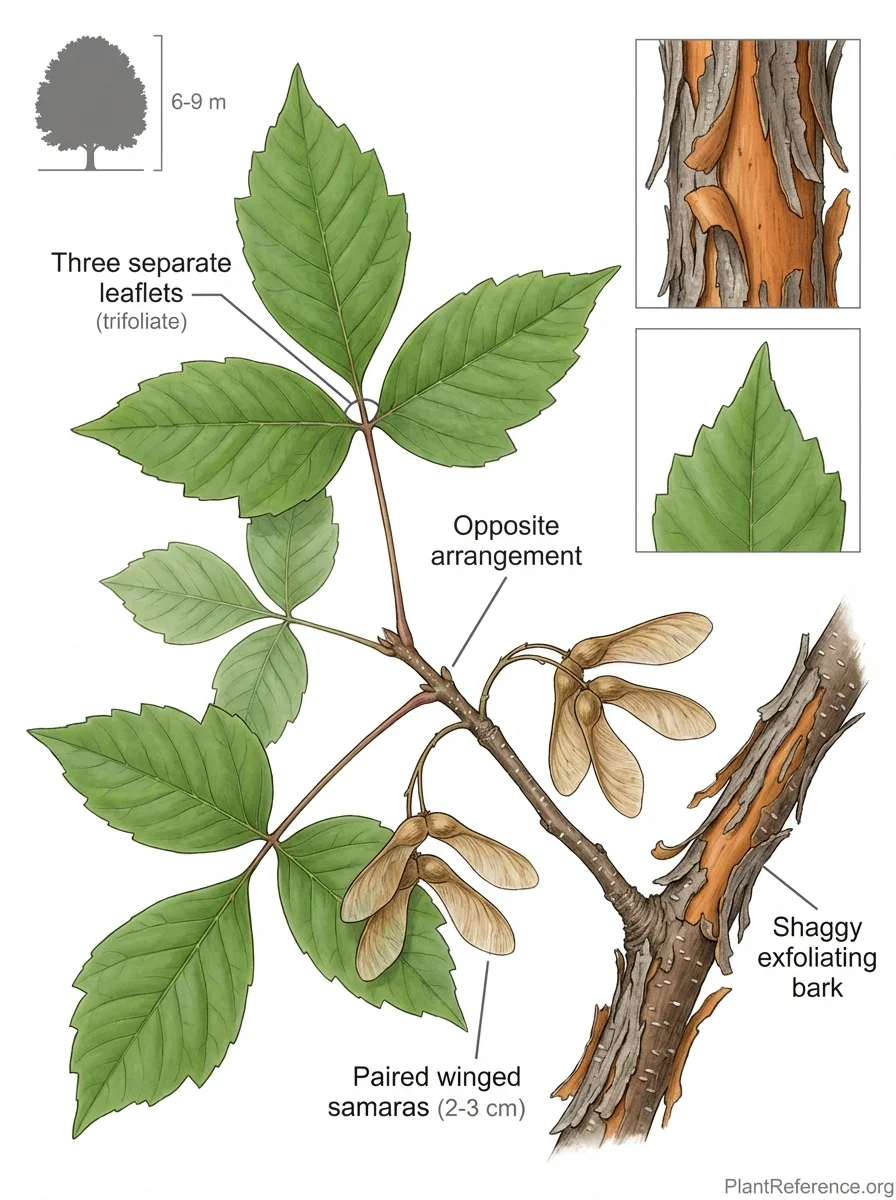
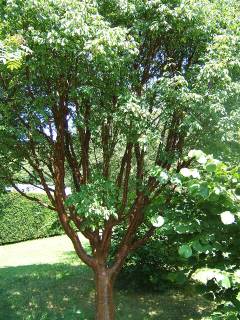
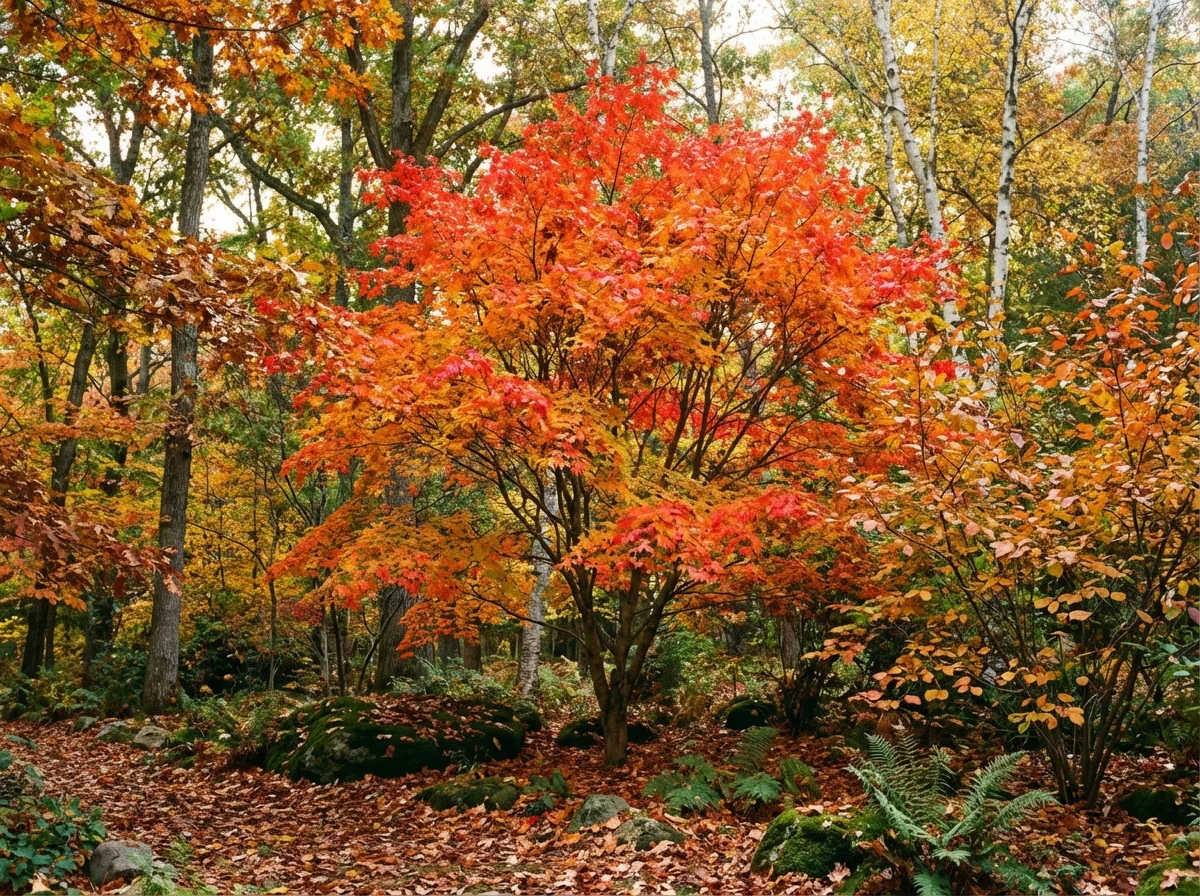
Acer triflorum is a deciduous tree in the family Sapindaceae native to northeastern China and Korea, reaching 20-30 feet (6-9 m) tall with a spread of 15-25 feet (4.5-7.5 m) at maturity and forming a rounded to oval crown. It is placed in section Trifoliata and is one of a small group of maples with trifoliate leaves — each leaf composed of three separate leaflets 2-4 inches (5-10 cm) long with doubly serrated margins and pronounced veining, resembling Fraxinus (ash) more than a typical palmate maple. Bark exfoliates in thin papery strips to reveal orange-brown and cinnamon-colored underbark, similar to A. griseum but coarser in texture and less papery. Fall color ranges from orange through scarlet and develops reliably across a wide range of fall temperatures. Small yellowish-green flowers open in clusters of three in April, matching the species epithet. Paired samaras 1-1.5 inches (2.5-4 cm) long ripen in September and October. Growth averages 8-12 inches (20-30 cm) per year. Establishment is slow in poor soils, and sustained summer temperatures above 90°F (32°C) cause leaf scorch and dieback.
Native Range
Acer triflorum is native to northeastern China (Manchuria) and Korea, occurring in mixed deciduous forests at 1,000-4,000 feet (300-1,200 m) elevation on well-drained slopes and rocky ridges. It is closely related to A. griseum and A. mandshuricum, sharing the trifoliate leaf character within section Trifoliata.Suggested Uses
Planted as a specimen tree at 15-20 foot (4.5-6 m) spacing in residential gardens, woodland margins, and mixed shrub borders. The trifoliate leaf, exfoliating orange-brown bark, and orange-to-scarlet fall color provide year-round interest at a scale comparable to A. griseum and A. pseudosieboldianum on smaller properties. Not suited to extended drought, waterlogged soils, or hot-summer climates above zone 7.How to Identify
Appearance
Size & Dimensions
Height20' - 30'
Width/Spread15' - 25'
Bloom Information
Small yellowish-green flowers open in pendant clusters of three in April before or with the emerging leaves — the three-flower arrangement matches the species epithet. Individual flowers are small and not a primary display feature. Paired samaras 1-1.5 inches (2.5-4 cm) long ripen to tan-brown in September and October. Total bloom period averages 2 weeks.
Detailed Descriptions
Flower Description
yellowish-green; pendant clusters of three in AprilFoliage Description
medium green through spring and summer; orange to scarlet in fall; trifoliate leaflets 2-4 inches (5-10 cm) long with doubly serrated marginsGrowing Conditions
Sun Requirements
Requires 4-12 hours of direct sunlight daily
• Full Sun: 6+ hours of direct sunlight
• Partial Shade: 3-6 hours of direct sunlight
• Full Shade: Less than 3 hours of direct sunlight
Care & Maintenance
Care Guide
Plant in moist, well-drained, fertile soil with a pH of 6.0-7.0 in full sun to part shade; tolerated soil types include loam and sand. Water weekly during the first two growing seasons. Established trees tolerate dry intervals of 10-14 days and show leaf scorch under prolonged drought. Full sun supports saturated fall color and bark color development. Zone-4 to zone-7 conditions support consistent growth; sustained summer temperatures above 90°F (32°C) cause leaf scorch and dieback. Establishment is slow in poor soils. No routine fertilization is required in adequate soils.Pruning
No routine pruning is required. The rounded crown is self-maintaining. Dead or crossing branches are removed in late spring to early summer (May-June) after leaf-out to limit sap bleeding. A strong central leader is established in young trees. Late-season pruning is avoided because wounds close slowly before dormancy.Pruning Schedule
Prune: May–June
late spring
Toxicity
Non-toxicBotanical Flashcard