Acer, Genus, pseudoplatanus, Species, 'Atropurpureum', Cultivar,
- Genus & species
- Cultivar
purple sycamore maple
Overview
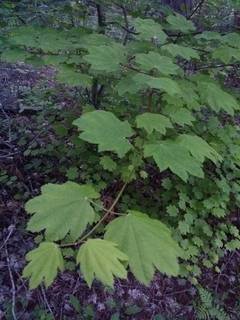
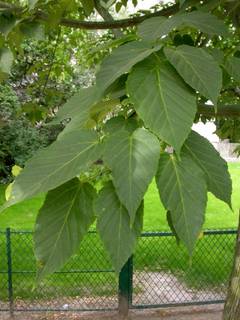
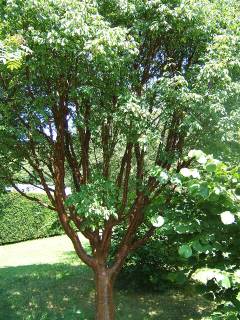
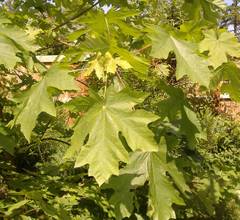
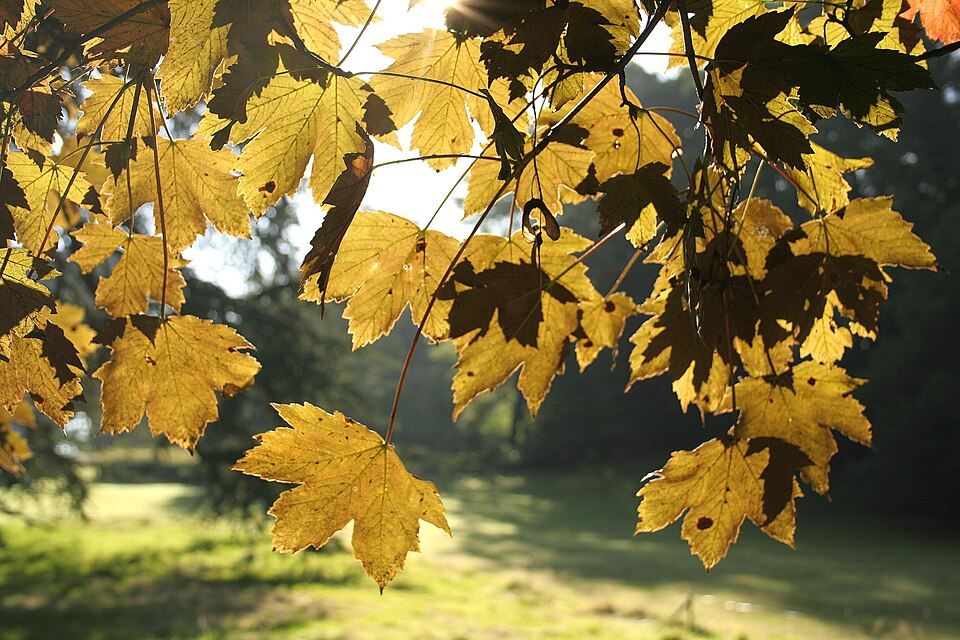
Acer pseudoplatanus 'Atropurpureum' is a deciduous tree reaching 40–60 feet (12–18 m) tall with a spread of 30–40 feet (9–12 m), forming a broadly rounded to domed crown. Leaves are palmate, five-lobed, 3–6 inches (7.5–15 cm) wide, with coarsely toothed margins. The upper leaf surface is dark green; the underside is deep purple-red to burgundy, producing a two-toned effect visible when wind moves through the canopy. Fall color is yellow to yellow-brown and lasts 1–2 weeks. Yellow-green flowers appear in pendant corymbs, 2–4 inches (5–10 cm) long, in April–May. Paired samaras, 1–1.5 inches (2.5–4 cm) long with wings angled at 60–90°, ripen in August–September. Growth rate is 12–24 inches (30–60 cm) per year when young, slowing at maturity. The species tolerates alkaline soils, coastal winds, salt spray, and urban pollution. Seeds contain hypoglycin A, which causes atypical myopathy in horses; the species self-sows readily and is listed as invasive in parts of the Pacific Northwest, New England, and several Canadian provinces.
Native Range
Acer pseudoplatanus is native to central and southern Europe, from France and Germany east through the Alps, Carpathians, and Balkans into Turkey. It grows in mixed broadleaf forests at elevations up to 6,000 feet (1,800 m) and has naturalized in northwestern Europe, the Pacific Northwest, New England, and parts of Canada. The 'Atropurpureum' cultivar was selected from European populations for its purple leaf underside.Suggested Uses
Planted as a specimen or shade tree in large landscapes, parks, and coastal sites at 30–40 foot (9–12 m) spacing. The two-toned purple-green foliage and tolerance of alkaline, coastal, and exposed conditions are the primary site-selection features. Not suited to small residential lots, pastures where horses graze, or regions where A. pseudoplatanus is listed as invasive.How to Identify
Appearance
Size & Dimensions
Height40' - 60'
Width/Spread30' - 40'
Colors
Bloom Information
Yellow-green flowers appear in pendant corymbs, 2–4 inches (5–10 cm) long, in April–May as leaves emerge. Individual flowers are small and not individually conspicuous. Paired samaras, 1–1.5 inches (2.5–4 cm) long with wings angled at 60–90°, ripen in August–September.
Detailed Descriptions
Foliage Description
dark green above, deep purple-red to burgundy below; yellow to yellow-brown in fallGrowing Conditions
Sun Requirements
Requires 4-12 hours of direct sunlight daily
• Full Sun: 6+ hours of direct sunlight
• Partial Shade: 3-6 hours of direct sunlight
• Full Shade: Less than 3 hours of direct sunlight
Care & Maintenance
Care Guide
Plant in well-drained to average soil with a pH of 6.0–8.0; the species tolerates alkaline and calcareous conditions. Water weekly during the first two growing seasons; established trees tolerate dry spells of 2–3 weeks. The species tolerates coastal exposure, salt spray, wind, and urban pollution better than most large maples. Seeds are produced in large quantities and germinate readily, producing seedlings at densities of 50–100 per square meter under mature trees in moist sites. Seeds contain hypoglycin A, which causes atypical myopathy in horses, and the species is listed as invasive in parts of the Pacific Northwest, New England, and several Canadian provinces. No routine fertilization is required.Pruning
Prune in late fall to early winter (November–January) when dormant to minimize sap bleeding. A strong central leader and well-spaced scaffold branches are established in the first 5–7 years. Dead, crossing, or rubbing branches are removed as they develop. Water sprouts and basal suckers are cut as they appear. The broadly rounded crown is self-maintaining at maturity.Pruning Schedule
Prune: November–January
winter