Acer, Genus, pictum, Species,
- Genus & species
painted maple
East Asia: Japan, Korea, northeastern China, and the Russian Far East; mixed deciduous and coniferous forests at 1,000-6,500 feet (300-2,000 m)
Overview
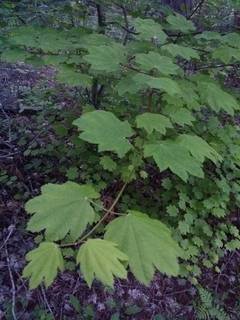
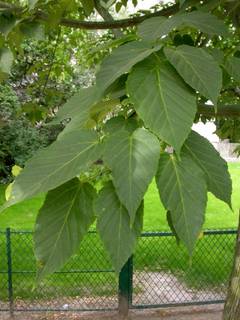
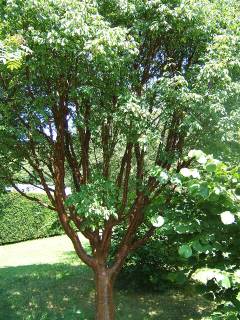
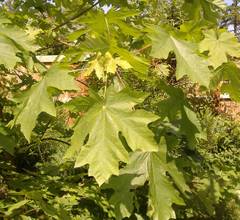
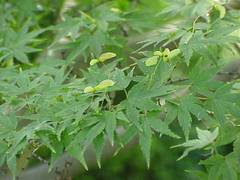
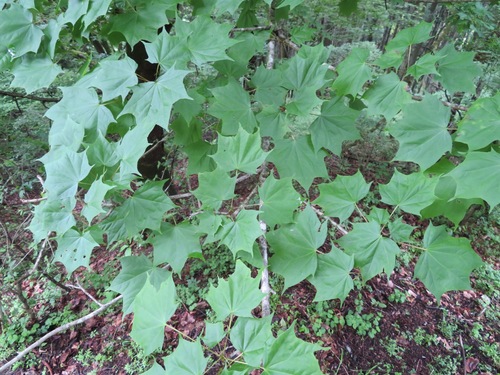
Acer pictum is a deciduous tree in the family Sapindaceae native to East Asia, reaching 25-40 feet (7.5-12 m) tall with a spread of 20-30 feet (6-9 m) at maturity and forming a broadly rounded to oval crown. Leaves are palmate and five- to seven-lobed, 3-5 inches (7.5-12.5 cm) wide, with pointed lobes, serrated margins, and prominent venation; summer color is medium to dark green. Fall color ranges from yellow to orange to red, and multiple colors commonly occur on the same tree. Bark is gray and develops shallow furrows with age, and some specimens show faint green-white striping on younger branches. Small yellow-green flowers form in corymbs in April and May. Paired samaras 1-1.5 inches (2.5-4 cm) long ripen in September and October. Growth averages 12-18 inches (30-45 cm) per year. A. pictum is closely allied to A. mono and the two are sometimes treated as conspecific. Performance in climates with sustained summer temperatures above 85°F (29°C) is reduced and leaf scorch occurs under prolonged heat or drought, which limits the species to cool-to-moderate summer regions.
Native Range
Acer pictum is native to East Asia — Japan, Korea, northeastern China, and the Russian Far East — where it grows in mixed deciduous and coniferous forests at 1,000-6,500 feet (300-2,000 m) elevation on moist well-drained slopes and valley floors in association with oak, beech, and other broadleaf species.Suggested Uses
Planted as a specimen or shade tree in woodland gardens, parks, and larger residential landscapes at 20-25 foot (6-7.5 m) spacing. The variable fall color ranging through yellow, orange, and red is the primary seasonal feature. Combined with other broadleaf species in cool-summer mixed plantings. Not suited to hot-summer climates, alkaline soils above pH 7.5, or sites with restricted moisture.How to Identify
Appearance
Size & Dimensions
Height25' - 40'
Width/Spread20' - 30'
Colors
Bloom Information
Small yellow-green flowers open in corymbs in April and May as the leaves emerge. Individual flowers are not conspicuous and the inflorescence is not a primary display feature. Paired samaras 1-1.5 inches (2.5-4 cm) long develop through summer and ripen to tan-brown in September and October. Total bloom period averages 2 weeks.
Detailed Descriptions
Flower Description
yellow-green; borne in corymbs in April-May; flowers not individually conspicuousFoliage Description
medium to dark green in spring and summer; variable yellow, orange, and red in fall, often combining on the same treeGrowing Conditions
Sun Requirements
Requires 4-8 hours of direct sunlight daily
• Full Sun: 6+ hours of direct sunlight
• Partial Shade: 3-6 hours of direct sunlight
• Full Shade: Less than 3 hours of direct sunlight
Care & Maintenance
Care Guide
Plant in moist, well-drained soil with a pH of 6.0-7.5 in full sun to part shade; tolerated soil types include loam, clay, and sand. Water weekly during the first two growing seasons. Established trees tolerate dry intervals of 10-14 days but show leaf scorch under prolonged heat or drought. Performance in zones 7-8 hot-summer climates is reduced, and the species performs consistently in zones 4-7 with cool to moderate summers. Late-winter and early-spring pruning causes sap bleeding, so pruning is done in late spring to early summer to limit it. No routine fertilization is required in adequate soils.Pruning
Pruning is done in late spring to early summer (May-June) after leaf-out to limit sap bleeding from winter cuts. A central leader and well-spaced scaffold branches are established in the first 5-7 years. Dead or crossing branches are removed at the same time. The broadly rounded crown is self-maintaining at maturity and requires minimal structural intervention. Late-season pruning is avoided because wounds close slowly before dormancy.Pruning Schedule
Prune: May–June
late spring