Acer, Genus, glabrum, Species,
- Genus & species
douglas maple
Overview
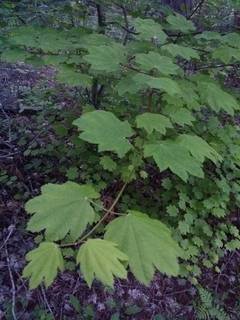
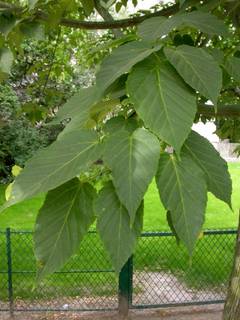
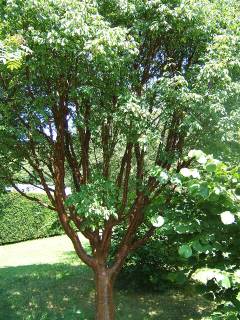
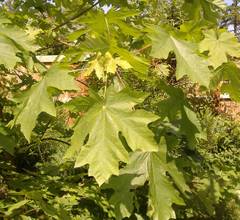
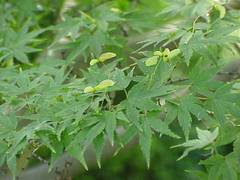
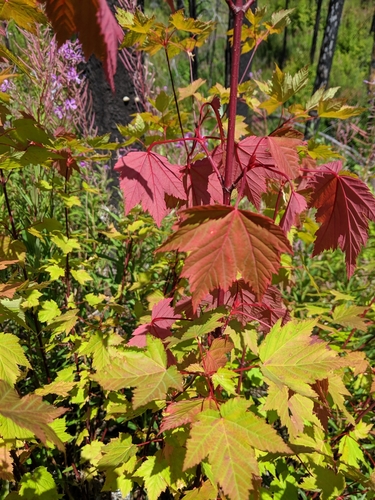
Acer glabrum is a deciduous small tree or large multi-stemmed shrub native to western North America, reaching 15-30 feet (4.5-9 m) tall and 10-20 feet (3-6 m) wide at maturity over 20-30 years. Bark is smooth and reddish-gray on young stems, aging to gray-brown with shallow furrows on mature trunks. Leaves are opposite, palmately 3- to 5-lobed, 1-4 inches (2.5-10 cm) across, with serrated margins, mid-green above and paler below; foliage turns yellow to yellow-orange in autumn. Inconspicuous yellowish-green flowers appear in pendulous clusters with the emerging leaves in April-May. Plants are typically dioecious with male and female flowers on separate trees. Fruit is a paired samara 0.5-1 inch (1.3-2.5 cm) long with widely diverging wings, ripening from green to red-tinged in summer and brown by autumn. Compared with Acer circinatum (vine maple), which carries 7-9-lobed leaves and a more sprawling habit, A. glabrum carries fewer leaf lobes and a more upright form. Plants are intolerant of urban heat and pollution; performance declines in zones 8-9 and at low elevations in zones 6-7.
Native Range
Acer glabrum is native to western North America, occurring from southeast Alaska and Yukon south through British Columbia, Washington, Oregon, and California to New Mexico, and east to South Dakota and Nebraska. The species grows in mountain woodlands, riparian zones, and rocky slopes from sea level to 9,500 feet (2,900 m) elevation.Suggested Uses
Used as a small specimen tree in native plant gardens, woodland edges, and montane landscapes at 15-20 foot (4.5-6 m) spacing from larger trees. Planted in restoration projects across western North American watersheds where the species is locally native. Container culture is uncommon due to slow growth and deep taproot; small specimens may be grown in containers of at least 25 gallons (95 L) for 4-5 years before transplanting.How to Identify
Appearance
Size & Dimensions
Height15' - 30'
Width/Spread10' - 20'
Bloom Information
Yellowish-green flowers appear in pendulous clusters with emerging leaves from late April through mid-May in zones 5-7, typically 2-3 weeks of pollen release. Bloom timing shifts to mid- to late May in zones 3-4 and to early April in zone 8 at low elevations. Flowers are wind-pollinated and produce minimal nectar; honeybees may visit during pollen collection.
Detailed Descriptions
Flower Description
Yellowish-green in pendulous clustersFoliage Description
Mid-green above, paler beneath; palmately 3- to 5-lobedGrowing Conditions
Sun Requirements
Requires 4-10 hours of direct sunlight daily
• Full Sun: 6+ hours of direct sunlight
• Partial Shade: 3-6 hours of direct sunlight
• Full Shade: Less than 3 hours of direct sunlight
Care & Maintenance
Care Guide
Establish in moist, well-drained loam or rocky soil at pH 5.5-7.5 in full sun to part shade. Water weekly during the first 2 growing seasons; established plants tolerate 4-6 weeks without rain in cool climates but show drought stress in zones 7-9. Apply 2-3 inches (5-7.5 cm) of organic mulch in early spring, kept 4 inches (10 cm) clear of the trunk. Maple bladder gall and verticillium wilt are uncommon problems; aphids may colonize new growth in spring without significant long-term damage. Plants are slow-growing in cultivation: 6-12 inches (15-30 cm) per year for the first decade, slowing thereafter. Transplanting from containers in early spring or autumn is more successful than mid-summer transplanting.Pruning
Prune in late summer or early autumn to reduce sap bleeding from cut surfaces; pruning during active spring sap flow causes excessive bleeding without harming the tree. Remove crossing, damaged, and water-sprout branches at any season. Pruning at the trunk is typically limited to corrective cuts on young trees; mature trees retain vigor under minimal pruning.Pruning Schedule
Prune: August–September
summerfall