When to Plant Cucumbers in Salt Lake City: Complete Guide + Best Varieties for Zone 7a
Pets & Toxicity
Recorded toxicity for plants linked in this guide. An unknown status is not a safety assessment.
No linked plant is recorded as toxicDetailsHide
Cucumis sativus 'Marketmore 76' — Toxicity
Non-toxicView Cucumis sativus 'Marketmore 76' plant profileCucumis sativus 'Straight Eight' — Toxicity
Non-toxicView Cucumis sativus 'Straight Eight' plant profileCucumis sativus 'Boston Pickling' — Toxicity
Non-toxicView Cucumis sativus 'Boston Pickling' plant profile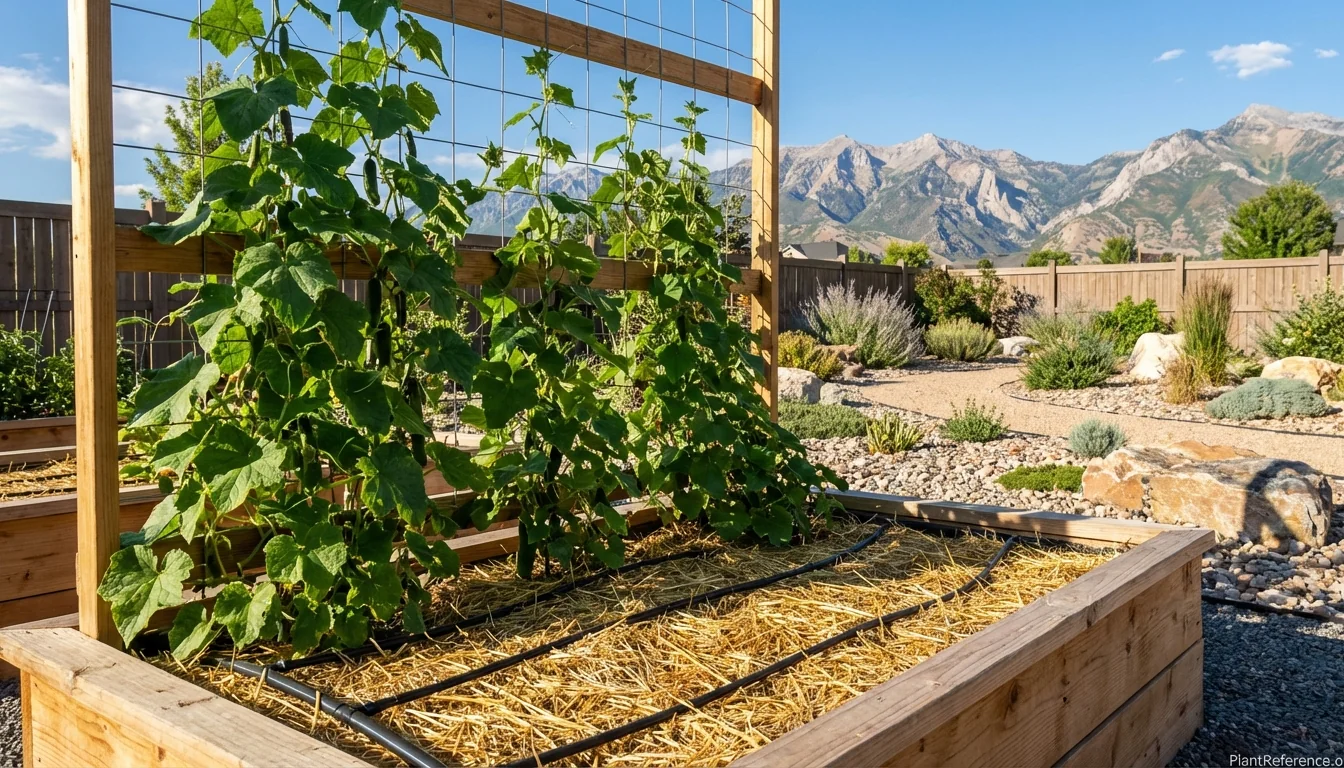
— Image © Plant Reference 2026
Growing cucumbers in Salt Lake City means growing with intention about water. We average under 17 inches (43 cm) of annual precipitation, and cucumber vines need 1 to 1.5 inches (2.5-4 cm) per week during peak production—meaning nearly all of their moisture comes from irrigation. That's not a reason to avoid cucumbers; it's a reason to grow them efficiently. Drip irrigation, heavy mulch, and varieties adapted to arid conditions make cucumber growing practical and productive here. Our 173-day season provides plenty of time, our intense Wasatch Front sun drives vigorous growth, and our low humidity means virtually no Downy Mildew pressure—a problem that defines cucumber growing in the humid East. Utah cucumbers face different challenges: alkaline soil, spider mites thriving in dry heat, and sunscald from our intense UV at elevation. Solve those and cucumbers are one of the most rewarding summer crops in the Intermountain West. When to Plant Tomatoes in Salt Lake City: Complete Guide + Best Varieties for Zone 7a
Best Cucumber Varieties for Salt Lake City's Climate
Salt Lake City sits in USDA Zone 7a with an April 25 last frost and October 15 first frost—173 growing days. Our arid, high-elevation climate (4,200 feet) creates a distinct growing environment with intense sun, low humidity, large day-night temperature swings, and alkaline soils. Variety selection here prioritizes drought tolerance, heat resilience, and the ability to produce in low-humidity conditions where spider mites replace Downy Mildew as the primary pest.
Variety | Type | Days to Harvest | Disease Resistance | Best For |
|---|---|---|---|---|
Specialty | 65 days | Moderate (Rust, drought tolerant) | Best drought tolerance for Utah | |
Slicing | 65 days | High (Scab, CMV, moderate DM/PM) | Reliable slicer with heavy foliage | |
🌿Cucumis sativus 'Persian' (Beit Alpha) | Specialty | 55 days | Moderate (PM) | Arid-climate adapted, fast maturity |
Pickling | 55 days | Low-Moderate | Fast harvest, pickling | |
Slicing | 63 days | Low (CMV tolerance only) | Early season with consistent irrigation | |
🌿Cucumis sativus 'Marketmore 76' (succession) | Slicing | 65 days | High | Mid-June planting for extended harvest |
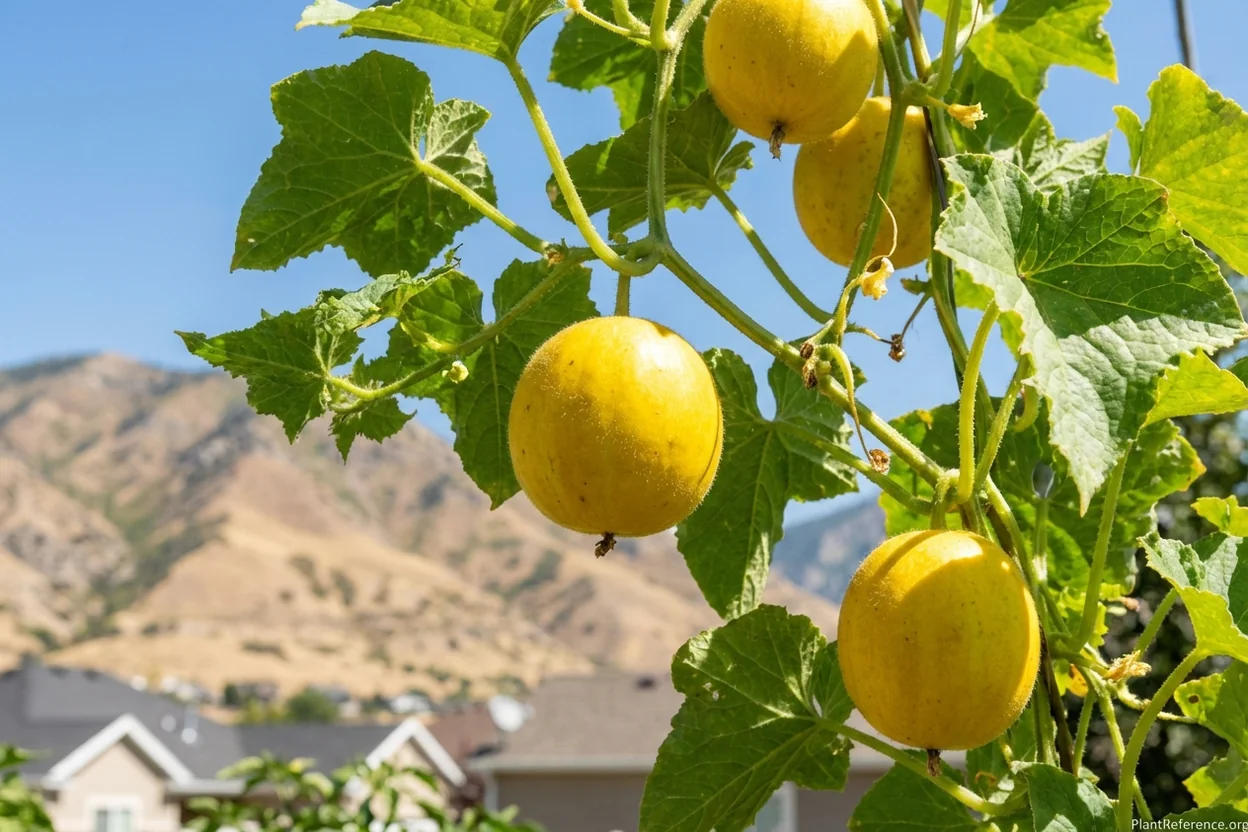
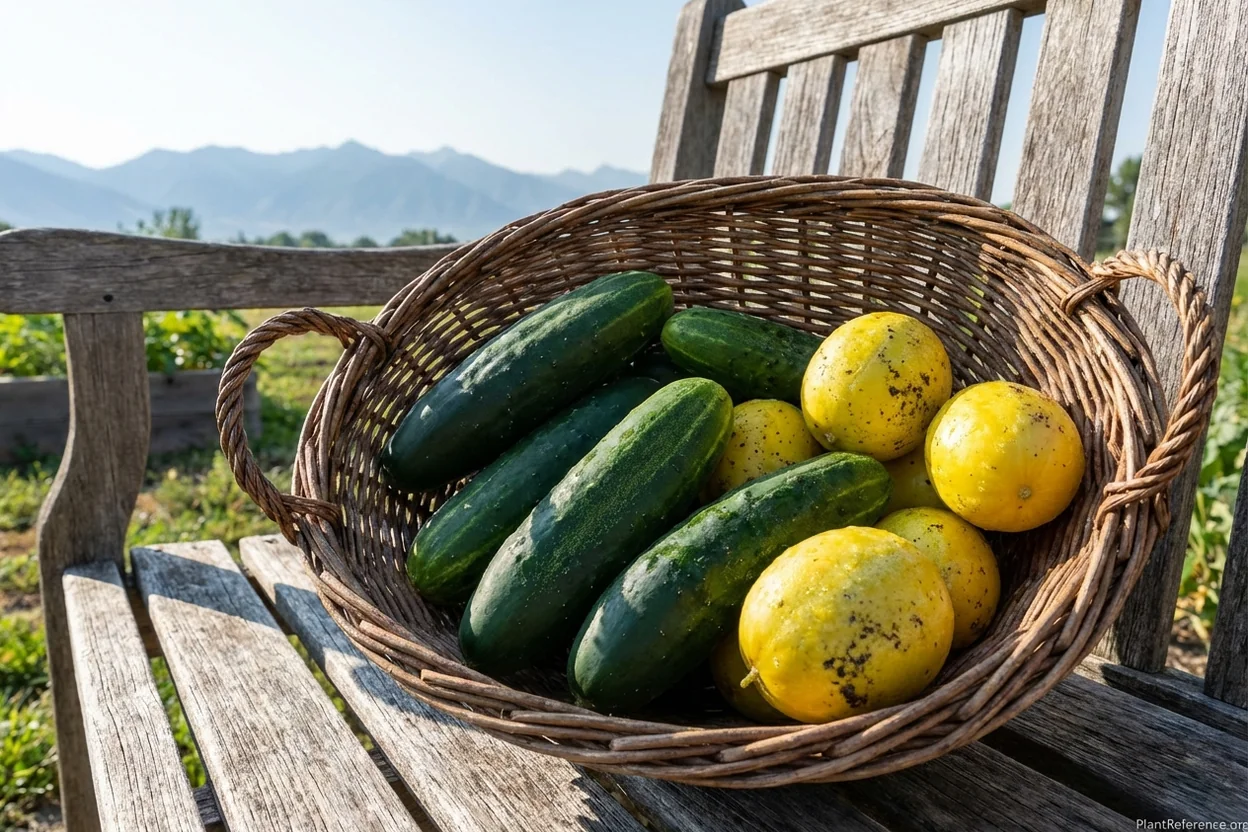
🌿Cucumis sativus 'Lemon' is the standout variety for Salt Lake City. Its drought tolerance from ancestral lineages adapted to arid conditions gives it a genuine advantage in Utah's dry climate. When irrigation schedules tighten during July and August drought, 🌿Cucumis sativus 'Lemon' continues producing mild, burpless fruit while other varieties stress and turn bitter. The round yellow fruit also resists sunscald better than elongated slicers because its shape and light color reflect more solar radiation.
🌿Cucumis sativus 'Marketmore 76' is the best slicing variety for SLC because its heavy foliage provides natural self-shading that protects fruit from our intense high-elevation sun. Without adequate foliage cover, cucumber fruit develops sunscald—white, papery patches that compromise texture and flavor. The "stay-green" gene maintains foliage density through heat stress, which is doubly valuable here as both a fruit quality trait and a sunscald prevention mechanism.
🌿Cucumis sativus 'Persian' types were bred for hot, arid Mediterranean climates and translate well to Salt Lake City conditions. At 55 days, they maximize our 173-day window. The parthenocarpic trait ensures fruit set even during the hottest weeks when pollinator activity may decrease. Keep irrigation consistent—their thin skins dehydrate rapidly in our dry mountain air.
🌿Cucumis sativus 'Straight Eight' produces well in Salt Lake City with consistent irrigation but lacks the drought tolerance that gives 🌿Cucumis sativus 'Lemon' its edge. It's more prone to bitter fruit production during water stress events. Use it for early-season eating and transition to more resilient varieties through summer. When to Plant Peppers in Salt Lake City: Complete Guide + Best Varieties for Zone 7a
Specific Planting Dates for Salt Lake City Gardens
Salt Lake City's April 25 last frost and October 15 first frost provide 173 growing days—adequate for cucumbers with transplants, but timing matters. Our Wasatch Front location means cold air drainage from the mountains can deliver late frosts in sheltered valleys, and fall temperatures drop fast once October arrives.
Indoor Seed Starting: April 1-8 (3 weeks before last frost). Start at 75°F (24°C) for 3-5 day germination. Utah homes are dry in spring—keep seedlings consistently moist without overwatering.
Transplant Outdoors: May 2-10 (one week after last frost, soil at 60°F/16°C). Harden off 5-7 days. SLC's spring weather is generally stable but late frost pockets in valley locations can catch gardeners off guard. Row covers provide insurance through the first week of May.
Direct Sow: May 1-15. Utah's sandy loam soils warm quickly in our intense spring sun. Check at 4 inches (10 cm) with a thermometer. Our dry climate means soil temperature rises faster than in humid regions because there's less moisture to absorb solar energy.
Succession Plantings: One to two successions by mid-June. SLC's 173-day season supports 2-3 plantings total. The first transplant and one or two follow-up sowings provide harvest from late June through September.
Final Sowing Deadline: June 15. A 55-day variety planted June 15 matures around August 9 with nine weeks of harvest before the October 15 frost. Sixty-five-day varieties need to go in by June 1 for comfortable maturation. Raised Bed Vegetable Garden Layout: Planning for Maximum Production
Complete Growing Guide for Salt Lake City
Water Management: The Core Challenge
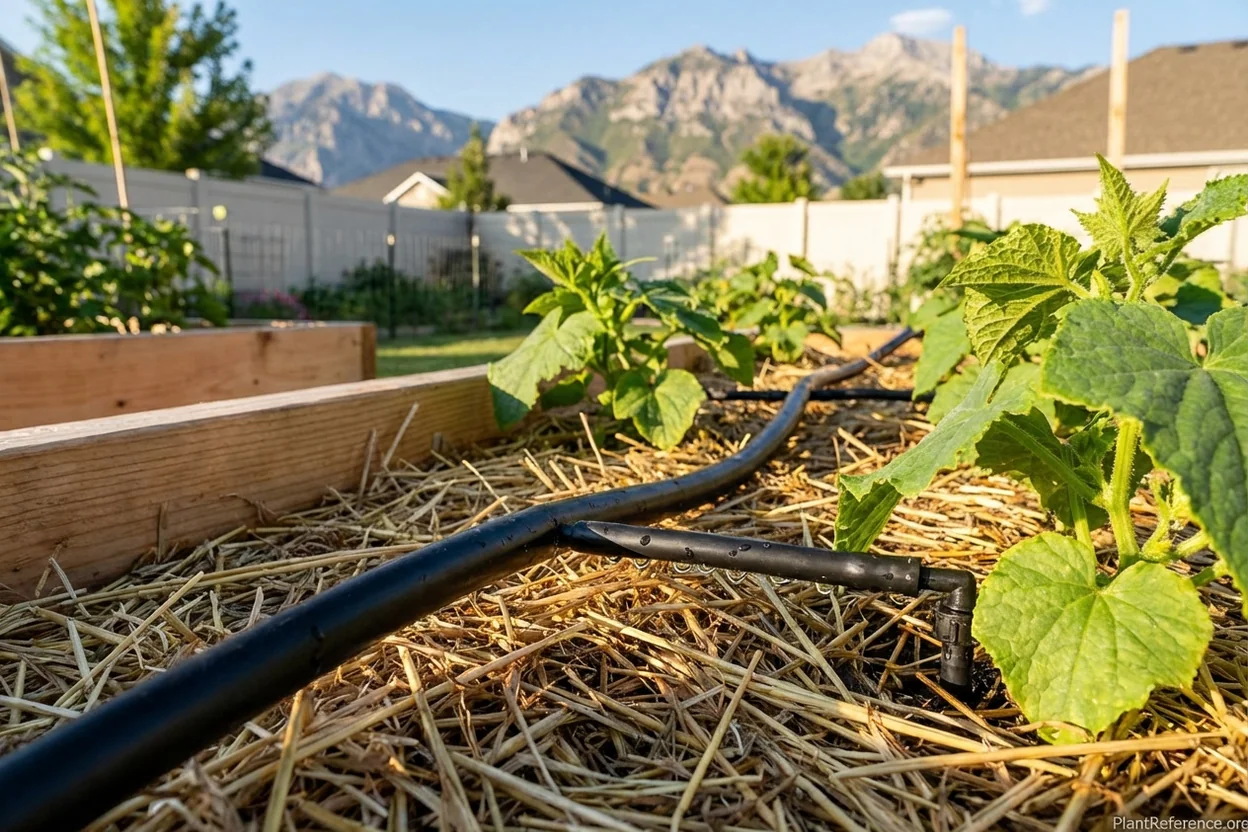
Utah water is expensive and increasingly scarce. Cucumber growing here must be water-efficient or it isn't sustainable. Drip irrigation on a timer delivers 1 to 1.5 inches (2.5-4 cm) weekly directly to root zones with minimal waste. Water in the early morning before our intense sun drives evaporation. Overhead watering wastes 30-50% of applied water to evaporation in our dry, sunny conditions—drip eliminates that loss entirely.
Mulch 3-4 inches (8-10 cm) with straw or shredded bark after transplanting. In Salt Lake City's dry climate, mulch reduces irrigation needs by 25-30% by preventing surface evaporation. It also moderates the large soil temperature swings (up to 30°F difference between daytime surface and 4-inch depth) that our intense sun and cool nights create. 5 Best Drip Irrigation Kits for Raised Beds (Tested for Easy Installation)
Soil and Alkalinity
Salt Lake City soils are typically alkaline (pH 7.5-8.5) with variable texture from sandy bench soils near the mountains to heavy clay in the valley floor. Cucumbers prefer 6.0-6.8 pH, so correction is usually necessary. Get a soil test through the Utah State University Extension for under $15 before amending.
Raised beds filled with 60% topsoil, 30% compost, and 10% perlite bypass both alkalinity and drainage issues. For in-ground plots, work 4-6 inches (10-15 cm) of compost into the top 12 inches (30 cm) and amend with elemental sulfur based on soil test results. Our native soils provide decent mineral nutrition when pH is corrected. How to Build a Raised Garden Bed: Step-by-Step Construction Guide
Sun Protection
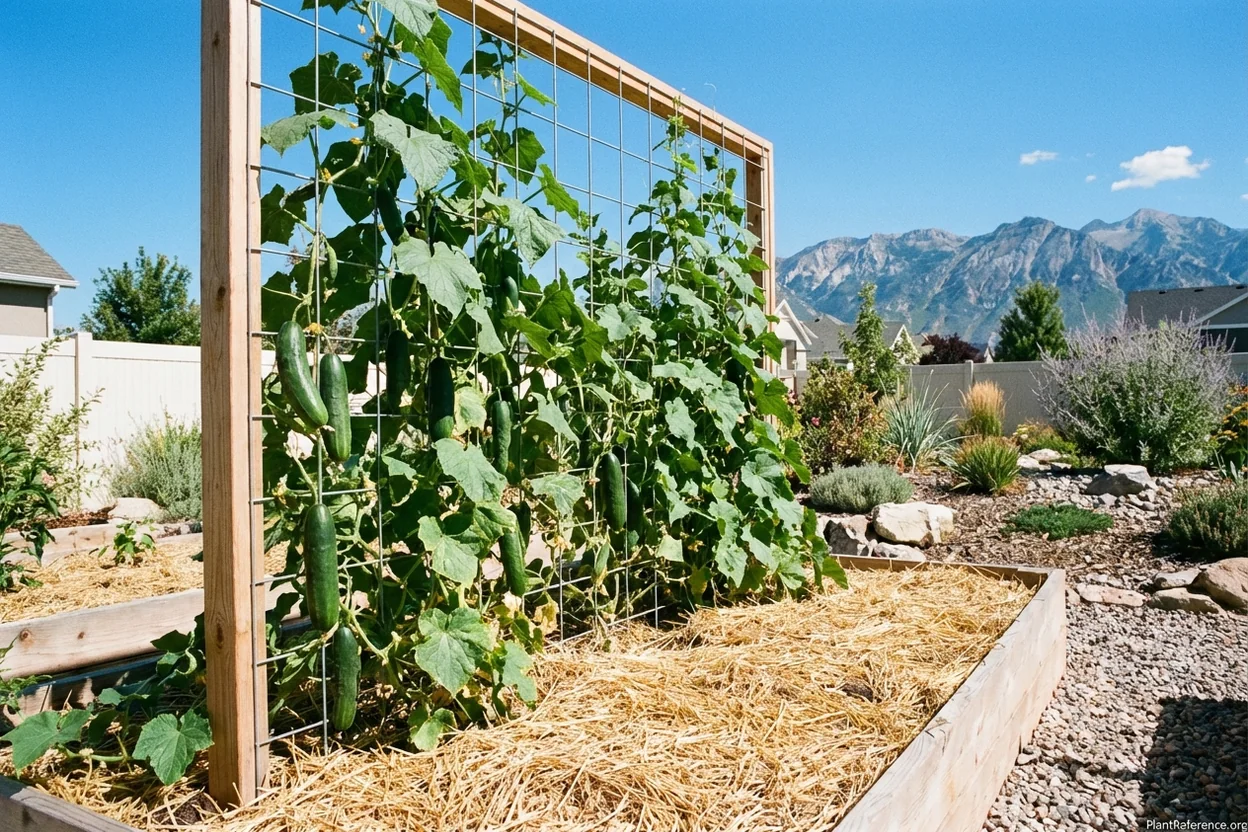
Salt Lake City's high-elevation sun (4,200 feet) delivers more intense UV radiation than sea-level locations at the same latitude. This intensity drives rapid photosynthesis but also causes sunscald on exposed cucumber fruit—white, papery patches that ruin texture and flavor. Trellis varieties with heavy foliage like 🌿Cucumis sativus 'Marketmore 76' to provide natural self-shading. If foliage thins during spider mite attacks, drape 30% shade cloth over affected plants to protect fruit until vines recover. Trellis on the south side of beds so fruit hangs in the shade created by the trellis structure.
Trellising
Vertical growing in SLC serves primarily for sun management and air circulation rather than disease prevention (our dry climate makes Downy Mildew rare). A 6-foot (1.8 m) trellis oriented north-south maximizes morning and evening sun exposure while creating midday shade on the east side of the trellis where fruit hangs. Trellised cucumbers produce cleaner fruit, use water more efficiently because less ground area is irrigated, and are easier to inspect for spider mites—our primary cucumber pest. When to Plant Squash in Salt Lake City: Complete Guide + Best Varieties for Zone 7a
Feeding
Side-dress with balanced fertilizer at flowering and every two weeks during production. Apply chelated iron and zinc if you see interveinal chlorosis—this is common in Utah's alkaline soils and signals micronutrient lockout rather than a fertility deficiency. Fish emulsion provides gentle, balanced nutrition without raising soil pH further. Avoid high-phosphorus fertilizers in alkaline conditions—excess phosphorus in high-pH soil locks up zinc, compounding micronutrient problems.
Pollination
Standard varieties need pollinators. Salt Lake City supports healthy bee populations, particularly in neighborhoods near gardens, orchards, and the urban-wildland interface along the Wasatch Front. Pollination is generally reliable throughout the growing season because our warm, dry, sunny conditions are ideal for bee activity. 🌿Cucumis sativus 'Persian' parthenocarpic types provide insurance during occasional cool or windy stretches when pollinators are less active. When to Plant Kale in Salt Lake City: Complete Guide + Best Varieties for Zone 7a
Troubleshooting Salt Lake City-Specific Problems
Spider Mites
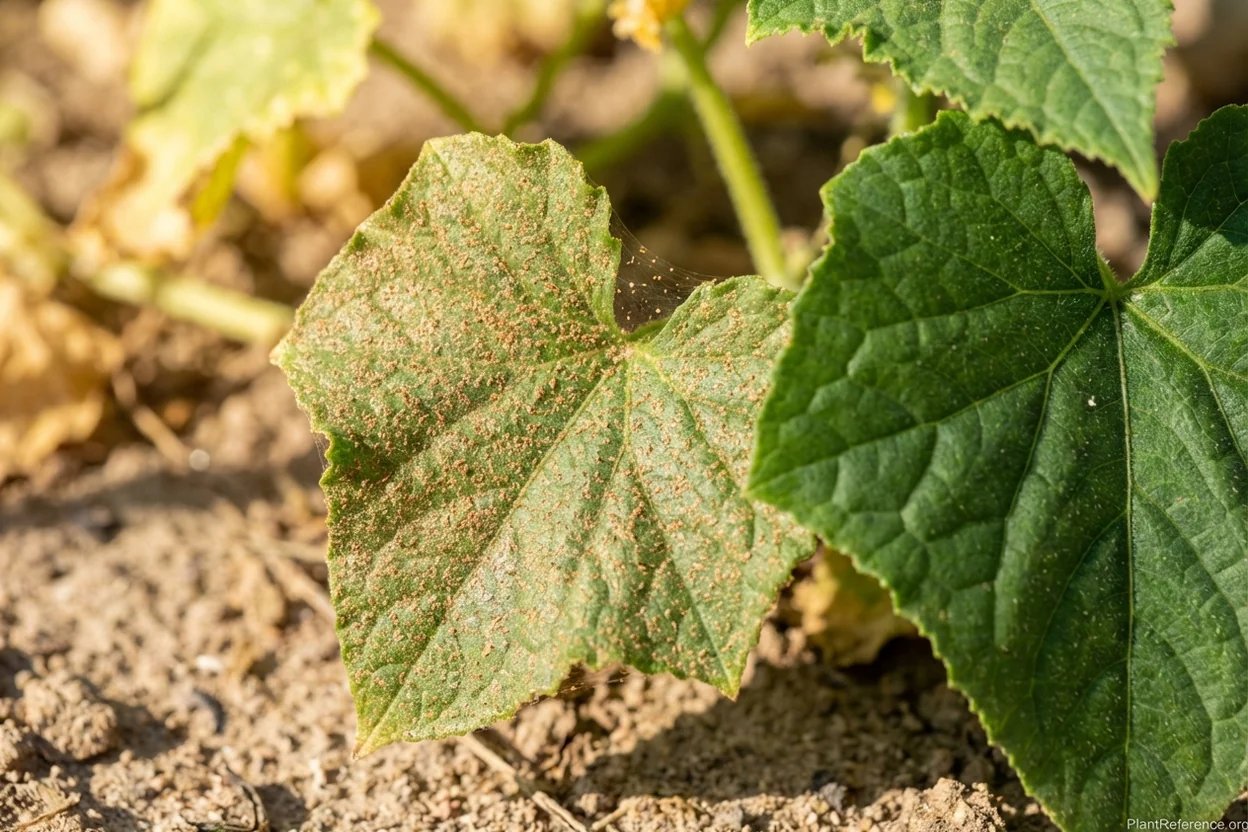
The primary cucumber pest in Salt Lake City's dry climate. Spider mites thrive in hot, dry, dusty conditions—exactly what our summers deliver. Stippled, bronzed leaves and fine webbing on undersides are the telltale signs. Prevention: overhead misting of foliage (not irrigation—a brief afternoon blast from a hose) disrupts mite populations by raising humidity around leaves. Neem oil applied every 7-10 days provides organic control. Insecticidal soap for active infestations. Heavy infestations defoliate vines, exposing fruit to sunscald. Raised Bed Pest Problems: Identification and Organic Control Methods
Sunscald
Exposed cucumber fruit develops white, papery patches under our intense high-elevation UV. Prevention: choose varieties with heavy foliage for natural self-shading, trellis so fruit hangs in shade created by foliage above, and drape 30% shade cloth over vines if foliage thins from spider mite damage or heat stress. 🌿Cucumis sativus 'Marketmore 76' resists sunscald better than thin-canopy varieties because its dense foliage provides consistent fruit shading.
Alkaline Soil and Micronutrient Lockout
Salt Lake City's alkaline soils (pH 7.5-8.5) lock up iron, zinc, and manganese. Interveinal chlorosis—yellowing between green veins—is the classic symptom. Apply chelated iron as a foliar spray for immediate correction. Amend with elemental sulfur over time based on soil test recommendations. Raised beds with controlled pH soil mix avoid the problem entirely. Raised Bed Too Hot in Summer: Protecting Plants from Heat Stress
Large Day-Night Temperature Swings
Salt Lake City commonly swings 30-40°F between daytime highs and nighttime lows. Cucumbers prefer consistent temperatures and these swings can stress vines, particularly in late spring and early fall when nighttime lows drop below 50°F (10°C). Mulch moderates soil temperature swings. Row covers on cool nights in May and September protect against the low end of the swing. Raised beds retain daytime heat longer than in-ground plots, buffering the nighttime drop.
Harvest & Storage
Harvest slicing cucumbers at 6-8 inches (15-20 cm) and pickling types at 2-4 inches (5-10 cm). Check vines every 2-3 days during peak production in July and August. Salt Lake City's dry heat drives moderate fruit development—faster than cool-climate cities but not the explosive growth of humid Southern gardens. Don't leave overripe fruit on vines—consistent picking maximizes production through the season.
Cut with pruners rather than pulling. Harvest in the early morning before our intense sun heats fruit. A healthy 🌿Cucumis sativus 'Marketmore 76' plant produces 10-15 slicers; 🌿Cucumis sativus 'Lemon' yields 12-18 round yellow fruit with consistent picking. 🌿Cucumis sativus 'Boston Pickling' produces 15-20 small fruits per vine.
Fresh cucumbers store 7-10 days refrigerated in a towel inside a loose bag. Utah-grown cucumbers from our dry, sunny climate develop excellent flavor because consistent sun exposure without excessive humidity creates clean, concentrated taste without the bitterness that water-stressed or heat-stressed cucumbers develop in other regions. Our climate actually produces some of the best-tasting cucumbers in the country when irrigation is managed properly. The Complete Guide to Raised Bed Gardening for Beginners (2025)
Frequently Asked Questions
Reading about plants and recognising them are different skills. These three build the second.
- Daily PlantIdentify the day’s mystery plant from a close-up photograph.
- Keyed OutWork a dichotomous key, lead by lead, to name a hidden specimen.
- Name That PlantName a specimen from botanical clues dealt hardest first.
Free to play, no account needed
Yuki is a landscape designer in Salt Lake City who specializes in water-wise gardens that work with Utah's dry climate and alkaline soil. She moved to Utah from Portland, Oregon—a rude awakening for someone used to gardening in rich, acidic soil with reliable rainfall. That transition taught her to rethink everything she knew about plant selection and garden design. Yuki now focuses on intermountain-adapted plantings that combine ornamental grasses, drought-tolerant perennials, and carefully chosen shrubs for year-round interest. She works with homeowners looking to reduce water use without giving up on having an attractive garden. Yuki writes with the clarity of someone who had to learn a new climate from scratch.