When to Plant Cucumbers in Miami: Complete Guide + Best Varieties for Zone 10b
Pets & Toxicity
Recorded toxicity for plants linked in this guide. An unknown status is not a safety assessment.
No linked plant is recorded as toxicDetailsHide
Cucumis sativus 'Marketmore 76' — Toxicity
Non-toxicView Cucumis sativus 'Marketmore 76' plant profileCucumis sativus 'Straight Eight' — Toxicity
Non-toxicView Cucumis sativus 'Straight Eight' plant profileCucumis sativus 'Boston Pickling' — Toxicity
Non-toxicView Cucumis sativus 'Boston Pickling' plant profile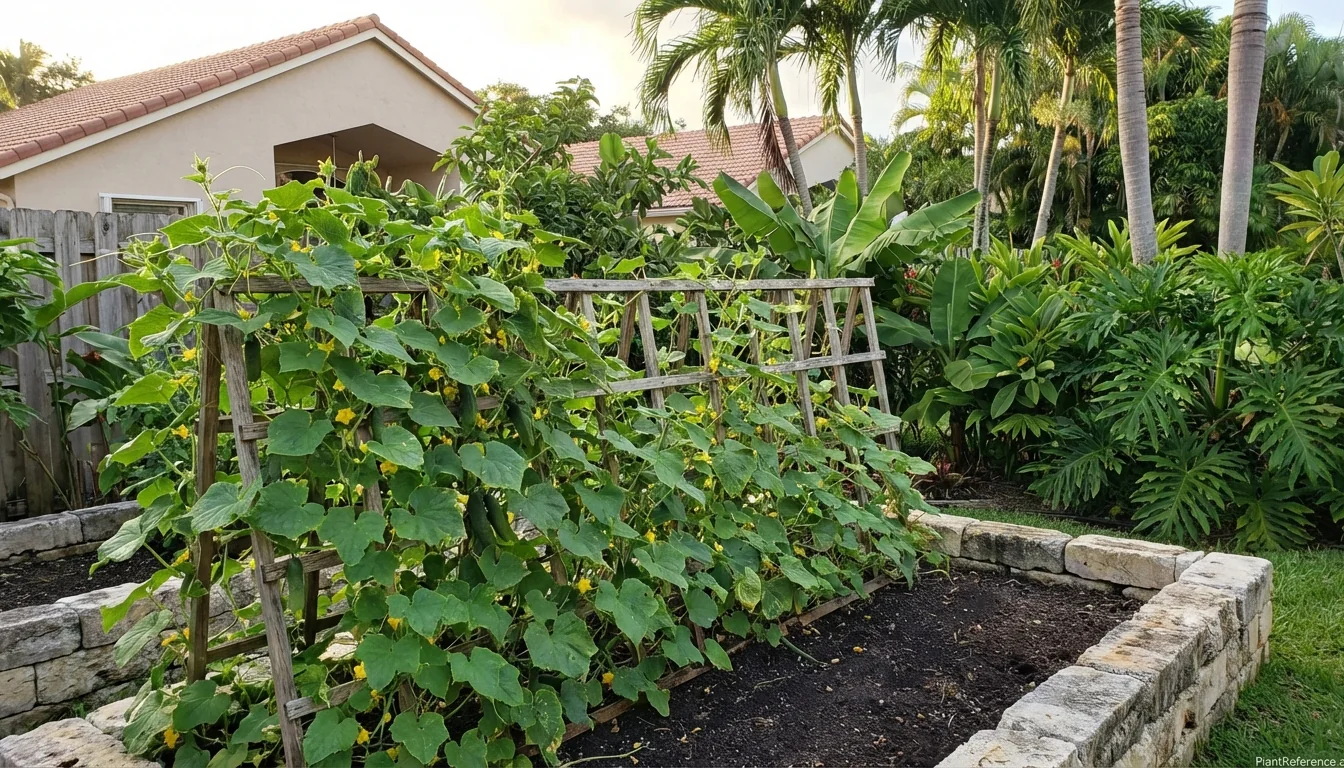
— Image © Plant Reference 2026
Miami soil isn't really soil—it's oolitic limestone with a thin layer of organic material on top. You can't dig a proper planting hole without a pickaxe. Most people here grow in raised beds or mound up imported soil on top of the rock. Once you accept that, growing cucumbers in Miami becomes surprisingly straightforward during the right season. And the right season isn't summer. Miami's year-round warmth sounds perfect for cucumbers, but our summer humidity from May through September creates the most intense Downy Mildew (Pseudoperonospora cubensis) pressure anywhere in the continental United States. Miami is literally the overwintering source for Downy Mildew spores that migrate north each spring to devastate cucumber crops across the Eastern Seaboard. The dry season—October through April—is when Miami cucumbers thrive. Lower humidity, cooler nights, and reduced disease pressure create a production window that's the envy of Northern gardeners picking frost-damaged vines. When to Plant Tomatoes in Miami: Complete Guide + Best Varieties for Zone 10b
Best Cucumber Varieties for Miami's Climate
Miami sits in USDA Zone 10b with no meaningful frost risk—the growing season is essentially year-round. But effective cucumber production focuses on the October through April dry season. Disease resistance dominates variety selection here more than anywhere else in the country because Miami's tropical humidity makes Downy Mildew pressure extreme. This is not the moderate disease pressure of the Mid-Atlantic or Midwest—this is ground zero for the pathogen. Varieties without strong resistance genes may produce for only 2-3 weeks before complete collapse during humid months.
Variety | Type | Days to Harvest | Disease Resistance | Best For |
|---|---|---|---|---|
Slicing | 65 days | High (Scab, CMV, moderate DM/PM) | Essential for Miami disease pressure | |
🌿Cucumis sativus 'Persian' (Beit Alpha) | Specialty | 55 days | Moderate (PM) | Parthenocarpic for humid conditions |
Pickling | 55 days | Low-Moderate | Fast dry-season harvest | |
Specialty | 65 days | Moderate (Rust, drought tolerant) | Heat tolerance, novelty | |
Slicing | 63 days | Low (CMV tolerance only) | Dry season only with close monitoring | |
🌿Cucumis sativus 'Marketmore 76' (succession) | Slicing | 65 days | High | January planting for spring harvest |
🌿Cucumis sativus 'Marketmore 76' is non-negotiable for Miami. Its resistance to Scab, Cucumber Mosaic Virus, and intermediate Downy and Powdery Mildew resistance provides the foundation for any successful planting. Even during the dry season, Miami's ambient humidity remains high enough to support sporadic Downy Mildew outbreaks. The "stay-green" gene prevents heat-induced yellowing that affects other varieties during our warm winter days, and the heavy foliage canopy self-shades fruit in our intense tropical sun.
🌿Cucumis sativus 'Persian' types are the second essential variety for Miami. Their parthenocarpic fruit set bypasses the pollination challenges that muggy conditions create—during humid stretches, pollen viability decreases and pollinator activity drops. Persian cucumbers produce regardless. At 55 days, they also maximize production during the optimal dry-season window.
🌿Cucumis sativus 'Straight Eight' works only during the driest months (December-February) and requires vigilant monitoring for disease symptoms. It produces excellent early fruit but collapses rapidly at the first sign of Downy Mildew. Think of it as a bonus variety, not a dependable one.
🌿Cucumis sativus 'Lemon' adds variety and handles Miami's heat well. Its drought tolerance is less critical here than in arid Western cities, but its heat-adapted genetics produce mild, burpless fruit even during warm winter stretches. When to Plant Peppers in Miami: Complete Guide + Best Varieties for Zone 10b
Specific Planting Dates for Miami Gardens
Miami's cucumber calendar is inverted from the rest of the country. While Northern gardeners plant in spring and summer, Miami's best production comes from fall through early spring plantings that exploit the dry season's lower disease pressure.
Indoor Seed Starting: September 15-October 1. Start at 75°F (24°C) for 3-5 day germination. Miami homes stay warm year-round, so temperature management isn't an issue—humidity management is. Use fans to prevent damping-off in seedlings.
Transplant Outdoors (first crop): October 5-15. This is the ideal planting date for Miami cucumbers. The rainy season has ended, humidity begins declining, and temperatures moderate from summer extremes into the comfortable 80-85°F range that cucumbers prefer.
Direct Sow: October 1-March 1. Miami's warm soil germinates cucumber seeds in 3-5 days year-round. Direct sowing works well during the dry season because consistent warmth drives fast emergence and the reduced humidity minimizes seed rot.
Succession Plantings: Every 3-4 weeks from October through February. Miami's frost-free climate supports 4-5 dry-season successions—enough for continuous harvest from November through May. Each succession provides 6-8 weeks of production before either disease or declining vigor ends the cycle.
Spring Transition: March plantings produce into May but face increasing disease pressure as humidity rises. These are your last dry-season plantings. Monitor closely for Downy Mildew symptoms from April onward.
Summer Growing (May-September): Possible but challenging. Extreme Downy Mildew pressure means only 🌿Cucumis sativus 'Marketmore 76' with aggressive fungicide programs and perfect cultural practices has a chance. Most Miami gardeners rest cucumbers during summer and focus on tropical crops that handle humidity better. Raised Bed Vegetable Garden Layout: Planning for Maximum Production
Complete Growing Guide for Miami
Raised Beds on Limestone
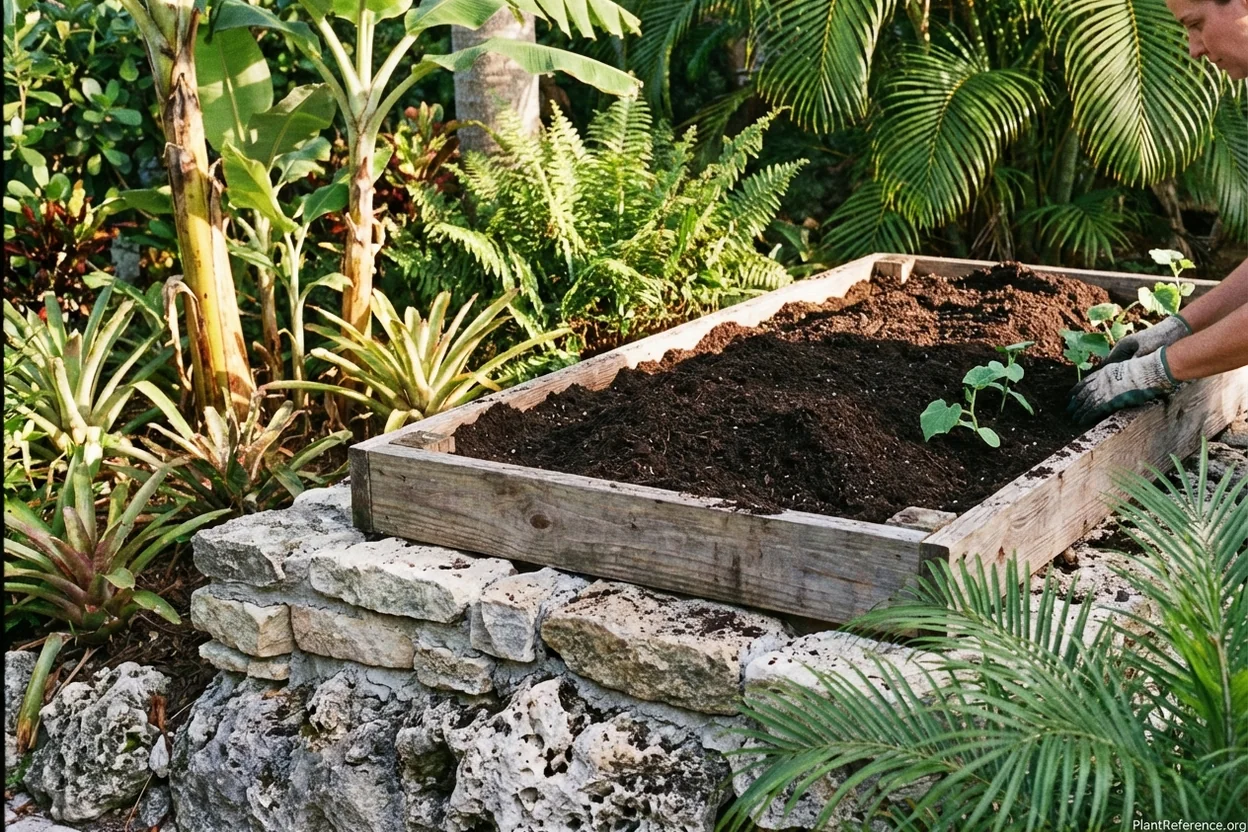
Miami's oolitic limestone bedrock sits inches below the surface across most of Miami-Dade County. You cannot dig in-ground garden plots. Raised beds are the only practical approach—build 12-18 inches (30-46 cm) tall from rot-resistant materials (pressure-treated lumber, concrete block, or composite materials all work in our climate; untreated wood rots within a year in Miami humidity). Fill with 60% topsoil, 30% compost, and 10% perlite. The limestone beneath actually provides some benefit—it acts as a natural drainage layer that prevents the waterlogging that heavy tropical rains would otherwise cause. How to Build a Raised Garden Bed: Step-by-Step Construction Guide
Disease Management: The Central Challenge
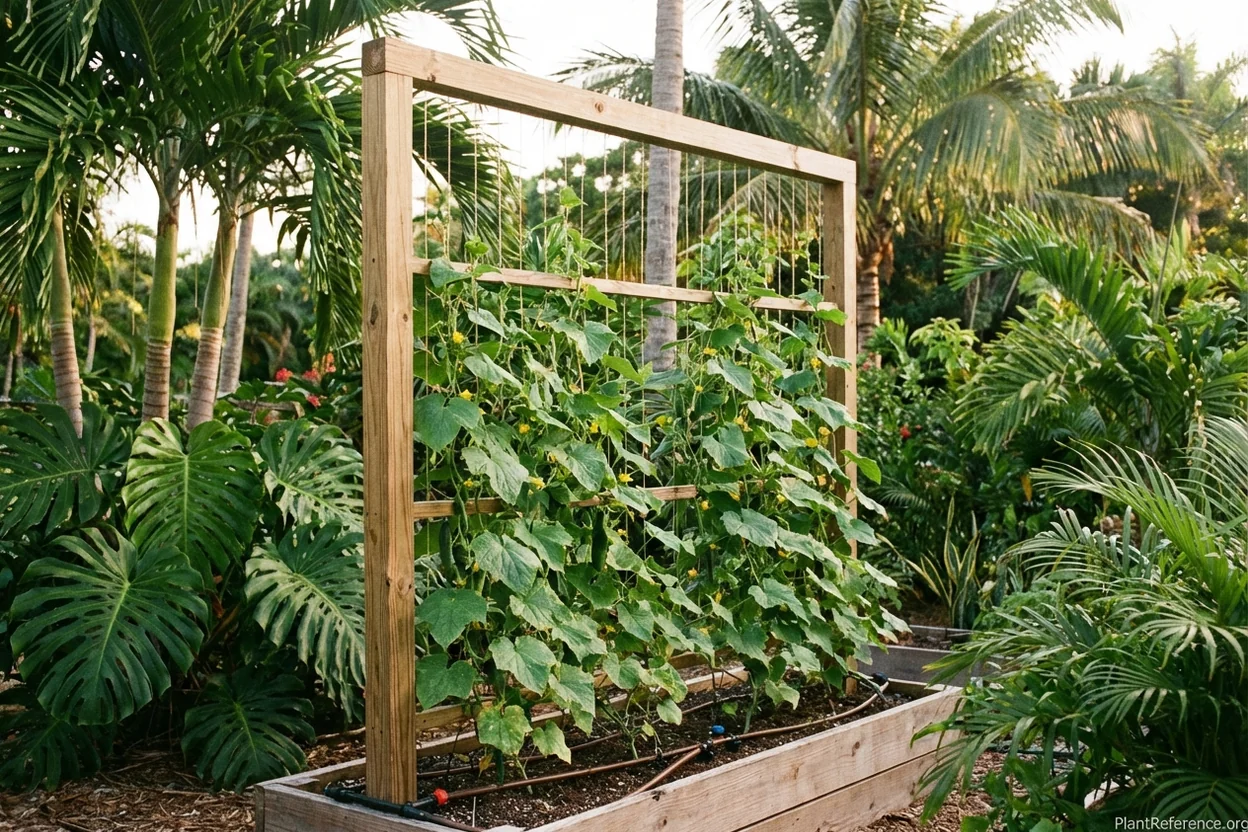
Miami is ground zero for Downy Mildew in the continental United States. Spores overwinter here and migrate north with weather systems each spring. Your cucumber disease management strategy determines your entire season. Plant 🌿Cucumis sativus 'Marketmore 76' for resistance. Trellis vertically for maximum airflow—this is more critical in Miami than anywhere else. Use drip irrigation exclusively; overhead watering in Miami's humidity is essentially inoculating your foliage with disease. Remove infected leaves immediately—don't wait to see if they recover. Succession planting ensures fresh, healthy vines replace those declining to disease. 5 Best Drip Irrigation Kits for Raised Beds (Tested for Easy Installation)
Trellising
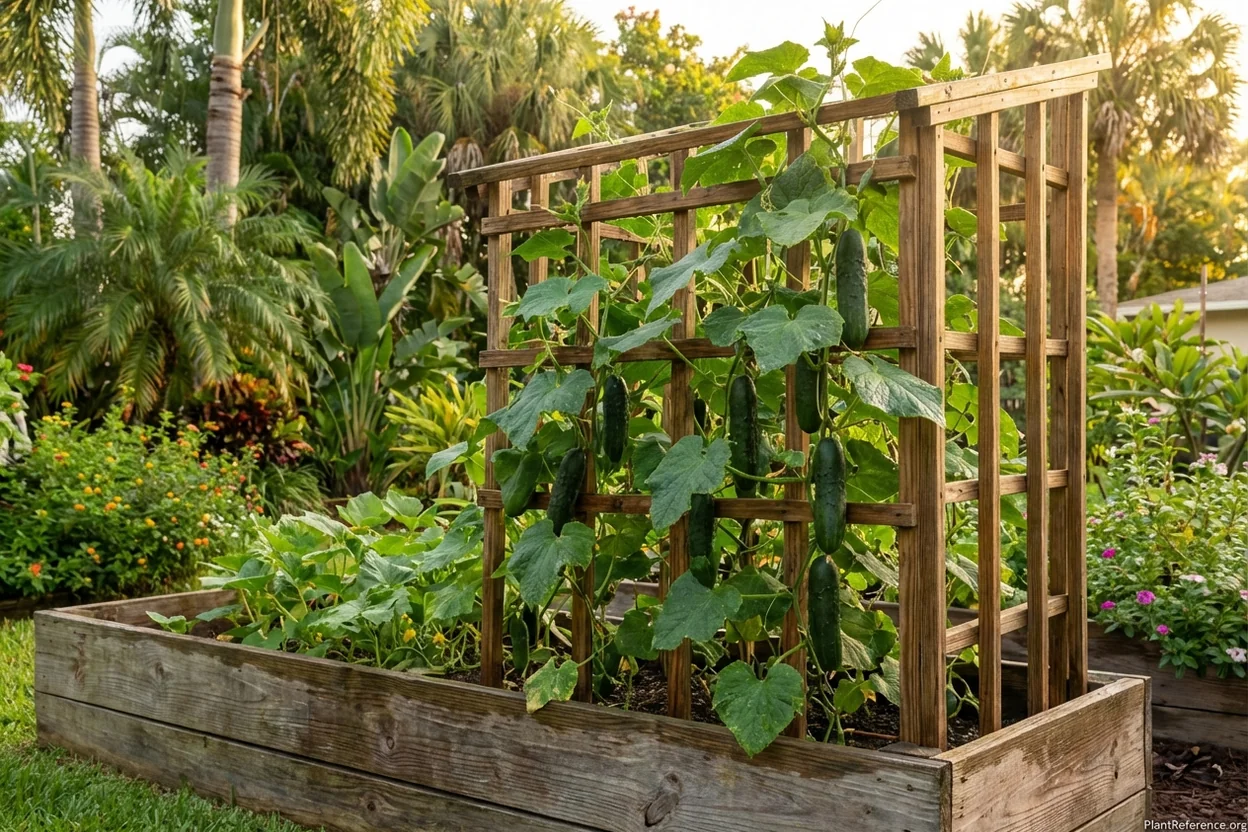
Airflow is survival in Miami. A 6-foot (1.8 m) trellis with maximum spacing between plants (24 inches/60 cm) keeps foliage in moving air where leaves dry after the frequent brief tropical showers that occur even during the dry season. Don't crowd plants—the temptation to maximize production per square foot works against you in Miami because reduced airflow accelerates the disease that will end your harvest prematurely.
Watering
Miami gets 60+ inches (150 cm) of annual rainfall, but distribution is heavily weighted toward the May-October rainy season. During the dry season (October-April), rainfall is scarce and drip irrigation provides the 1 to 1.5 inches (2.5-4 cm) weekly that cucumbers need. Water in the early morning so foliage dries quickly—moisture on leaves at night in Miami's humidity is a direct invitation for disease. During the rainy season, irrigation is rarely needed but drainage becomes critical. When to Plant Squash in Miami: Complete Guide + Best Varieties for Zone 10b
Feeding
Side-dress with balanced fertilizer at flowering and every two weeks. Miami's sandy limestone-derived soil has minimal nutrient-holding capacity—nutrients leach quickly during rain events. Frequent, light applications of fish emulsion maintain fertility without salt buildup that synthetic fertilizers cause in our warm, moist conditions. Miami's alkaline soil (pH 7.5-8.5 from limestone) benefits from sulfur amendments, and chelated iron corrects the interveinal chlorosis common in our alkaline conditions. Avoid slow-release granular fertilizers during the rainy season because heavy downpours wash them away before plants can absorb nutrients. Liquid feeding through the drip system provides the most efficient nutrient delivery for Miami's unique soil conditions.
Pollination
Miami's tropical environment supports year-round pollinator populations, so pollination is generally reliable during the dry season when conditions are comfortable for both gardeners and bees. During the muggiest transition months of May and October, pollen viability decreases and some pollinators reduce activity during the hottest, most humid hours. 🌿Cucumis sativus 'Persian' parthenocarpic types produce regardless of pollinator activity—an important advantage during humid stretches in early fall and late spring when conditions are marginal for standard varieties. Plant tropical flowers like lantana and pentas near cucumber beds to support Miami's diverse native and non-native pollinator populations throughout the growing season. When to Plant Kale in Miami: Complete Guide + Best Varieties for Zone 10b
Troubleshooting Miami-Specific Problems
Downy Mildew
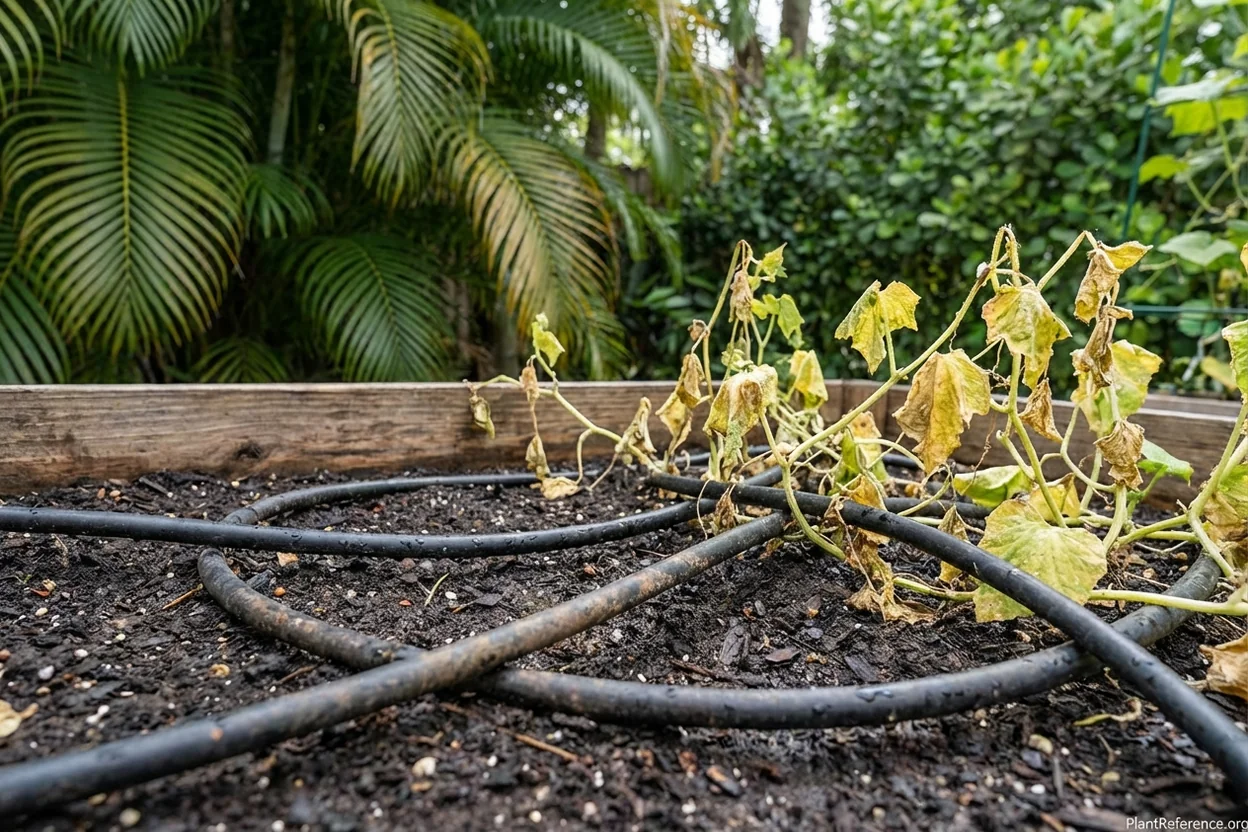
Miami's defining cucumber challenge. As the continental US overwintering site for Pseudoperonospora cubensis, spore loads in South Florida are higher than anywhere else. Angular yellow spots on upper leaf surfaces that progress to brown necrotic tissue—once symptoms appear, the countdown to vine decline begins. Prevention: 🌿Cucumis sativus 'Marketmore 76' for resistance, aggressive trellising for airflow, drip irrigation only, and immediate removal of infected leaves. Even with perfect cultural practices, expect shorter vine life in Miami than in drier climates. Succession planting is not optional—it's the framework that makes Miami cucumber growing viable. Raised Bed Pest Problems: Identification and Organic Control Methods
Limestone Soil Alkalinity
Miami's limestone substrate creates alkaline conditions (pH 7.5-8.5) that lock up iron, manganese, and zinc. Interveinal chlorosis is common. Raised beds with imported soil bypass the problem, but Miami's alkaline water gradually raises bed pH over time. Apply chelated iron as a foliar spray every 2-3 weeks and amend with elemental sulfur based on annual soil tests. Raised Bed Too Hot in Summer: Protecting Plants from Heat Stress
Hurricane Season
Miami's hurricane season (June-November) overlaps with the transition between summer rest and fall planting. Tropical storms deliver heavy rain and wind that can destroy cucumber plantings. Plant fall crops after the peak hurricane period passes in late October if you want to minimize risk. Keep tarps available to shield beds from sideways rain during storms. After any storm flooding, inspect for root damage and bacterial contamination.
Nematodes
Root-knot nematodes thrive in Miami's warm sandy soil and attack cucumber roots, causing knobby galls that reduce water and nutrient uptake. Rotate cucumber planting locations annually. Soil solarization (clear plastic over wet soil for 6-8 weeks during summer) reduces nematode populations before fall planting. Grafted cucumber transplants on nematode-resistant rootstock are an emerging solution for persistent problems. Best Soil Mix for Raised Beds: Creating the Perfect Growing Medium
Harvest & Storage
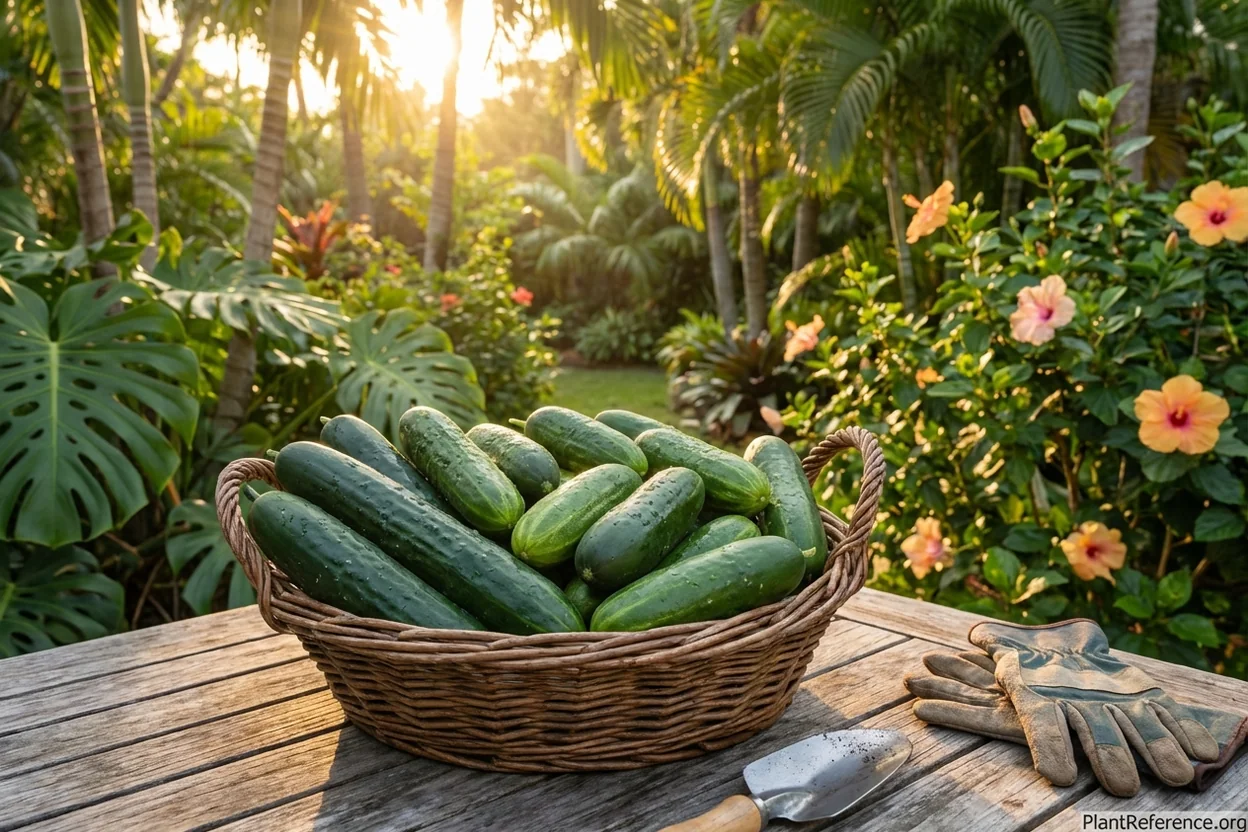
Harvest slicing cucumbers at 6-8 inches (15-20 cm) and pickling types at 2-4 inches (5-10 cm). Check vines every 2 days during peak dry-season production. Miami's warm year-round temperatures drive steady fruit development. Don't leave overripe fruit on vines—in a disease-pressured environment, every productive day counts.
Cut with pruners rather than pulling. Harvest in the early morning before heat builds. A healthy 🌿Cucumis sativus 'Marketmore 76' plant produces 10-15 slicers per cycle; 🌿Cucumis sativus 'Persian' yields 14-20 snacking cucumbers. With 4-5 dry-season successions, total annual yield from a Miami garden bed reaches 60-90 cucumbers—excellent production from the inverted growing calendar that makes South Florida unique.
Fresh cucumbers store 7-10 days refrigerated in a towel inside a loose bag. Miami dry-season cucumbers develop excellent quality because the 75-85°F temperature range during November through March is the metabolic sweet spot for 🌿Cucumis sativus 'Straight Eight'. The combination of consistent warmth without extreme heat and reduced humidity produces fruit with clean flavor and firm texture. While the rest of the country is buying imported supermarket cucumbers in January, Miami gardeners are harvesting from their backyard beds. The Complete Guide to Raised Bed Gardening for Beginners (2025)
Frequently Asked Questions
Reading about plants and recognising them are different skills. These three build the second.
- Daily PlantIdentify the day’s mystery plant from a close-up photograph.
- Keyed OutWork a dichotomous key, lead by lead, to name a hidden specimen.
- Name That PlantName a specimen from botanical clues dealt hardest first.
Free to play, no account needed
Maria is a tropical plant grower in Miami who maintains a half-acre property packed with palms, fruit trees, and tropical ornamentals. She grew up in Puerto Rico surrounded by tropical plants and moved to South Florida for college, earning a biology degree. Maria worked at a major tropical botanic garden for several years before transitioning to freelance writing and consulting. She specializes in tropical fruit growing, hurricane-resilient landscaping, and the particular challenges of gardening in South Florida—salt air, limestone soil, intense rain, and the threat of tropical storms. Maria's practical about the realities of tropical gardening: it's not paradise if you don't understand what you're dealing with.