When to Plant Cucumbers in Los Angeles: Complete Guide + Best Varieties for Zone 10b
Pets & Toxicity
Recorded toxicity for plants linked in this guide. An unknown status is not a safety assessment.
No linked plant is recorded as toxicDetailsHide
Cucumis sativus 'Straight Eight' — Toxicity
Non-toxicView Cucumis sativus 'Straight Eight' plant profileCucumis sativus 'Marketmore 76' — Toxicity
Non-toxicView Cucumis sativus 'Marketmore 76' plant profileCucumis sativus 'Boston Pickling' — Toxicity
Non-toxicView Cucumis sativus 'Boston Pickling' plant profile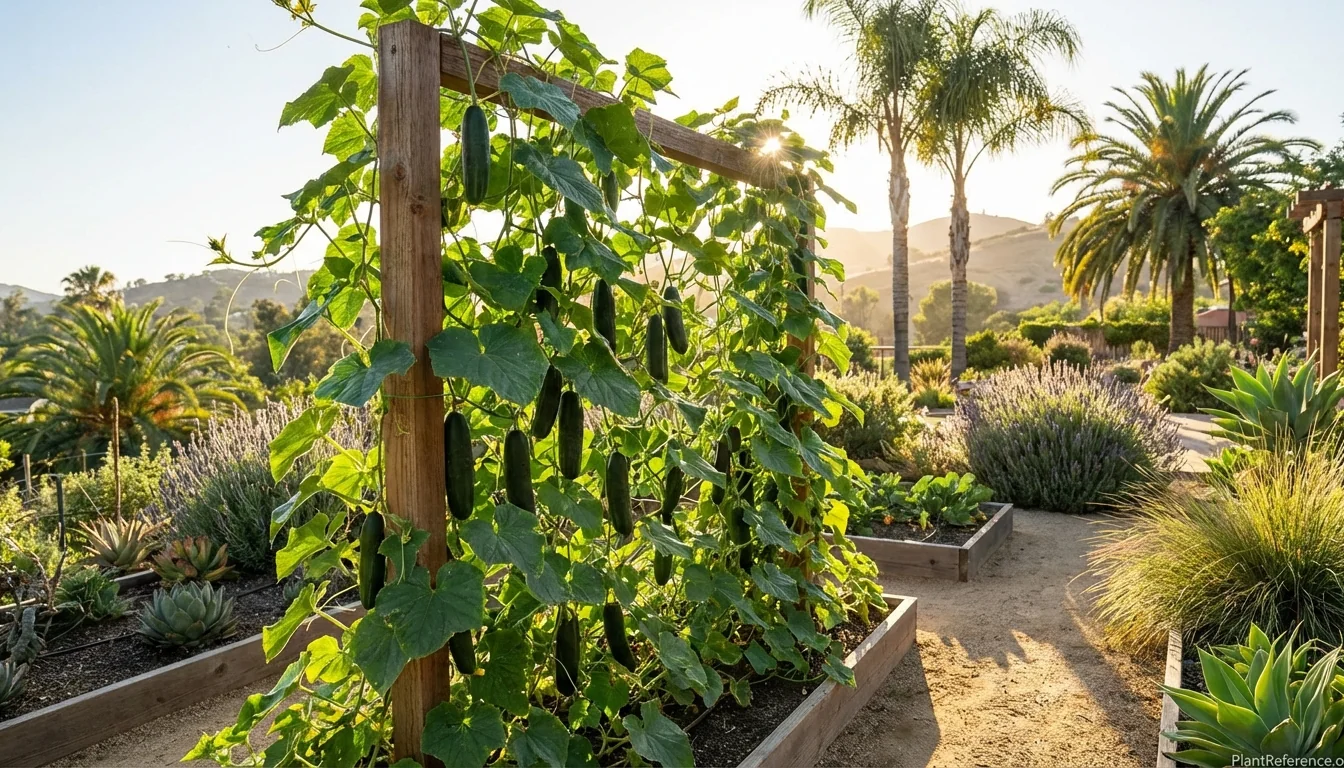
— Image © Plant Reference 2026
Los Angeles gives you one of the longest cucumber growing seasons in the country—303 frost-free days—and the warm, dry climate that 🌿Cucumis sativus 'Straight Eight' genuinely thrives in. The question isn't whether you can grow cucumbers here. It's whether you should, and the answer depends entirely on water. LA averages under 15 inches (38 cm) of annual rainfall, and virtually all of it falls between November and March—meaning your cucumbers rely completely on irrigation from spring through fall. If you're growing with drip irrigation and mulch, cucumbers use water efficiently and produce heavily. If you're using overhead sprinklers, you're wasting water in a region that can't afford to waste it. The good news: efficient cucumber growing in LA is straightforward. Drip irrigation, varieties adapted to dry heat, and succession planting from March through August produce cucumbers nearly year-round without excessive water use. When to Plant Tomatoes in Los Angeles: Complete Guide + Best Varieties for Zone 10b
Best Cucumber Varieties for Los Angeles' Climate
Los Angeles sits in USDA Zone 10b with a February 15 last frost and December 15 first frost—303 growing days. The Mediterranean climate provides warm, dry summers ideal for cucumbers with virtually no humidity-driven disease pressure. Variety selection prioritizes drought tolerance, heat resilience, and extended production potential across our long season. Disease resistance is less critical than in humid Eastern climates because our dry air suppresses Downy Mildew almost completely.
Variety | Type | Days to Harvest | Disease Resistance | Best For |
|---|---|---|---|---|
🌿Cucumis sativus 'Persian' (Beit Alpha) | Specialty | 55 days | Moderate (PM) | Mediterranean-adapted, top choice for LA |
Specialty | 65 days | Moderate (Rust, drought tolerant) | Superior drought tolerance | |
Slicing | 65 days | High (Scab, CMV, moderate DM/PM) | Heavy foliage for sun protection | |
Pickling | 55 days | Low-Moderate | Fast harvest, pickling | |
Slicing | 63 days | Low (CMV tolerance only) | Traditional slicer, needs consistent water | |
🌿Cucumis sativus 'Persian' (succession) | Specialty | 55 days | Moderate | Continuous planting March-August |
🌿Cucumis sativus 'Persian' is the ideal variety for Los Angeles. It was literally bred for our climate—the Beit Alpha strains developed in the Mediterranean basin share our hot, dry growing conditions. Fast maturity at 55 days means you can make 4-6 succession plantings across the season. Parthenocarpic fruit set means no pollination worries during heat waves. Compact vines fit in the smaller garden spaces that LA lots typically provide. And the thin-skinned, seedless fruit is what Southern California farmers markets have trained local palates to expect from premium cucumbers.
🌿Cucumis sativus 'Lemon' handles LA's drought conditions better than any other variety. Its ancestral genetics adapted to arid climates provide genuine resilience during water-restricted periods. When municipal watering restrictions tighten in summer, 🌿Cucumis sativus 'Lemon' maintains production while water-hungry varieties stress and turn bitter. The round yellow fruit resists sunscald and adds visual variety to the garden.
🌿Cucumis sativus 'Marketmore 76' is the best traditional slicer for LA because its dense foliage provides natural self-shading that protects fruit from our intense sun. The "stay-green" gene maintains canopy density through heat—important in a climate where cloudless days are the norm from May through October.
🌿Cucumis sativus 'Straight Eight' produces well with consistent irrigation but lacks the drought tolerance that 🌿Cucumis sativus 'Lemon' and 🌿Cucumis sativus 'Persian' provide. It's the first variety to produce bitter fruit during water stress events. When to Plant Peppers in Los Angeles: Complete Guide + Best Varieties for Zone 10b
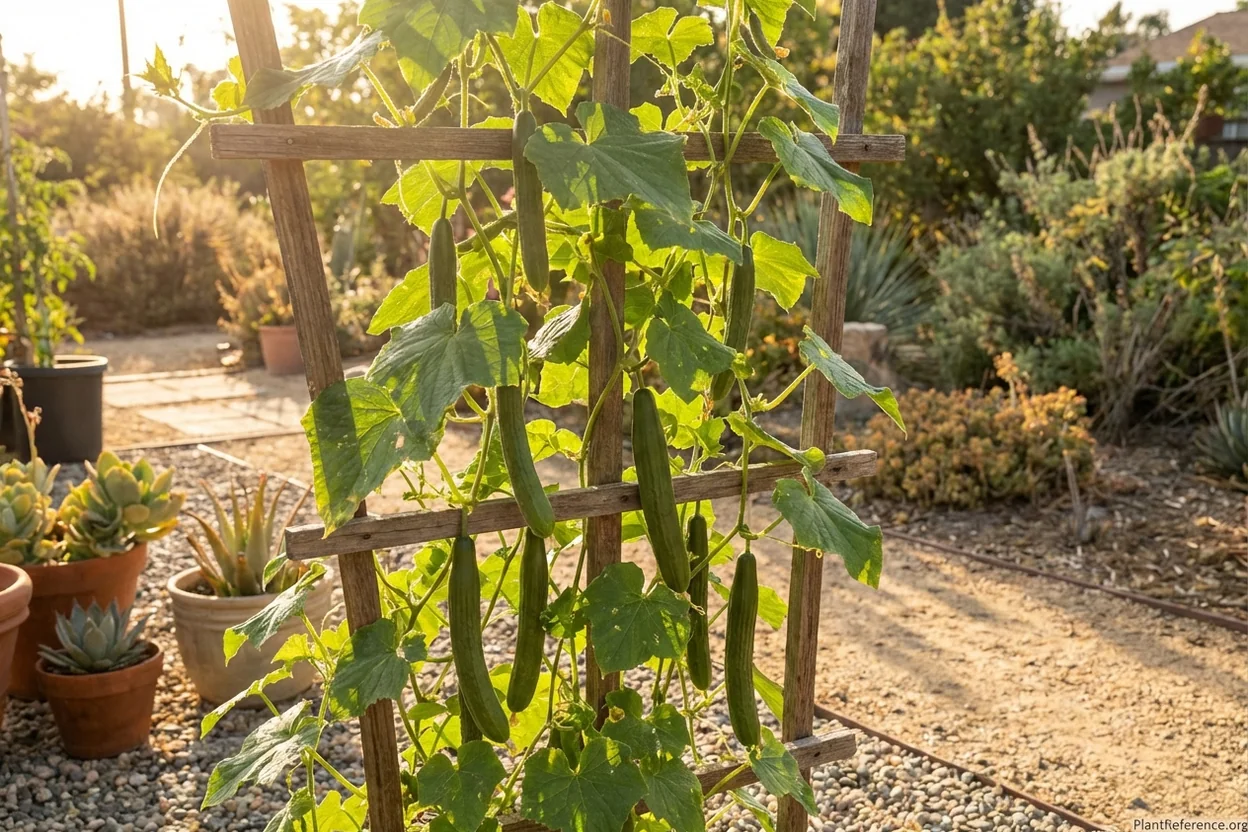
Specific Planting Dates for Los Angeles Gardens
LA's February 15 last frost and December 15 first frost create a 303-day window that accommodates continuous cucumber production from early spring through late fall. The practical limitation isn't frost—it's the peak summer heat in July and August that can reduce fruit quality in inland valleys.
Indoor Seed Starting: February 1-15 (2 weeks before last frost). Start at 75°F (24°C) for 3-5 day germination. LA homes stay warm year-round and a south-facing window provides adequate light for stocky transplants in February.
Transplant Outdoors (first crop): March 1-15. LA's soil reaches 60°F (16°C) by early March in most neighborhoods. Coastal areas warm slightly slower than inland valleys.
Direct Sow: March 1-August 15. LA's warm, dry soil germinates cucumber seeds in 3-5 days with virtually no rot risk. Direct sowing works extremely well here because our soil conditions are ideal for seed germination when irrigation is provided.
Succession Plantings: Every 3-4 weeks from March through August. LA's extraordinarily long season supports 4-6 successions—more than almost any other US city. This succession approach maintains fresh, productive vines throughout the growing season and provides continuous harvest from late April through November.
Summer Heat Gap (inland): July and August temperatures in San Fernando Valley, San Gabriel Valley, and other inland areas regularly exceed 100°F (38°C). Coastal neighborhoods stay cooler. Inland gardeners may see reduced production during peak heat—shade cloth helps, and 🌿Cucumis sativus 'Persian' handles heat better than standard varieties.
Final Sowing Deadline: August 15. A 55-day 🌿Cucumis sativus 'Persian' planted August 15 matures by mid-October with two months of harvest before the December 15 frost. Sixty-five-day varieties planted by August 1 produce through November. Raised Bed Vegetable Garden Layout: Planning for Maximum Production
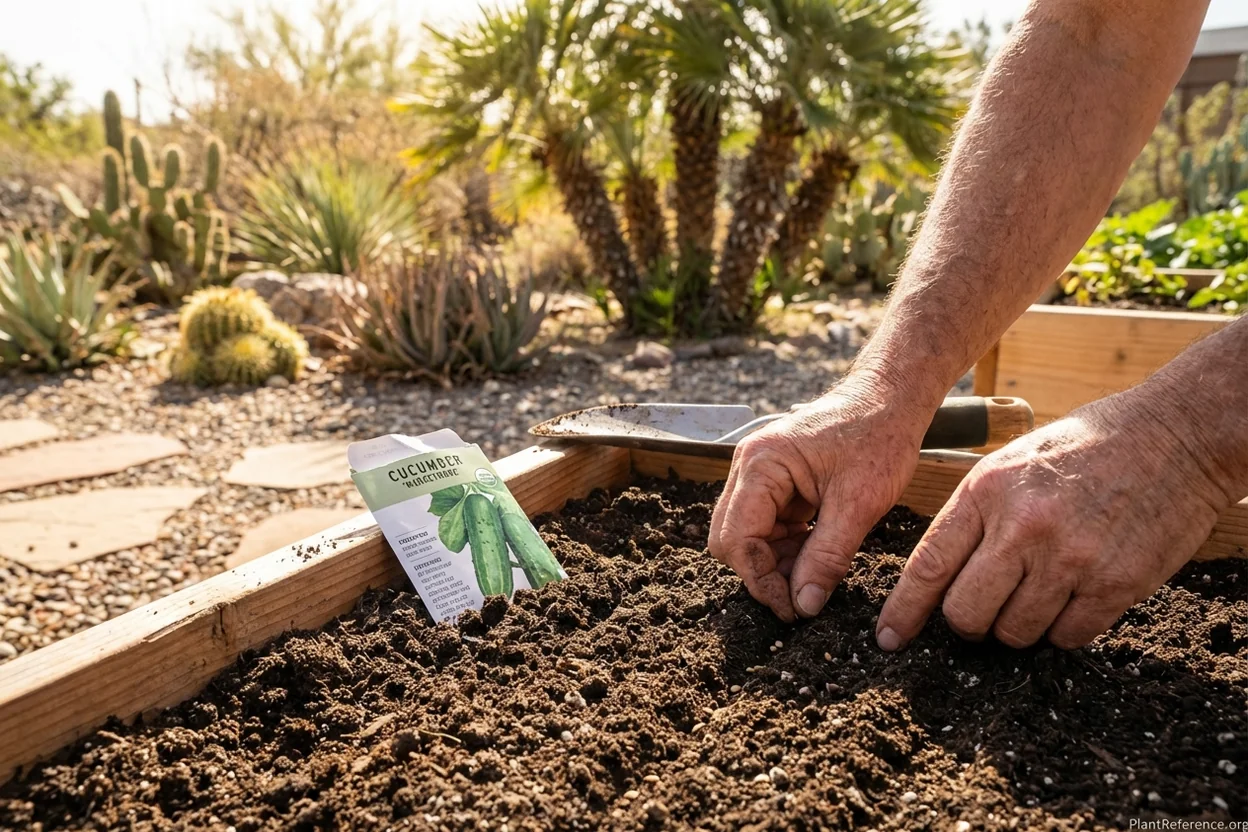
Complete Growing Guide for Los Angeles
Water-Efficient Irrigation
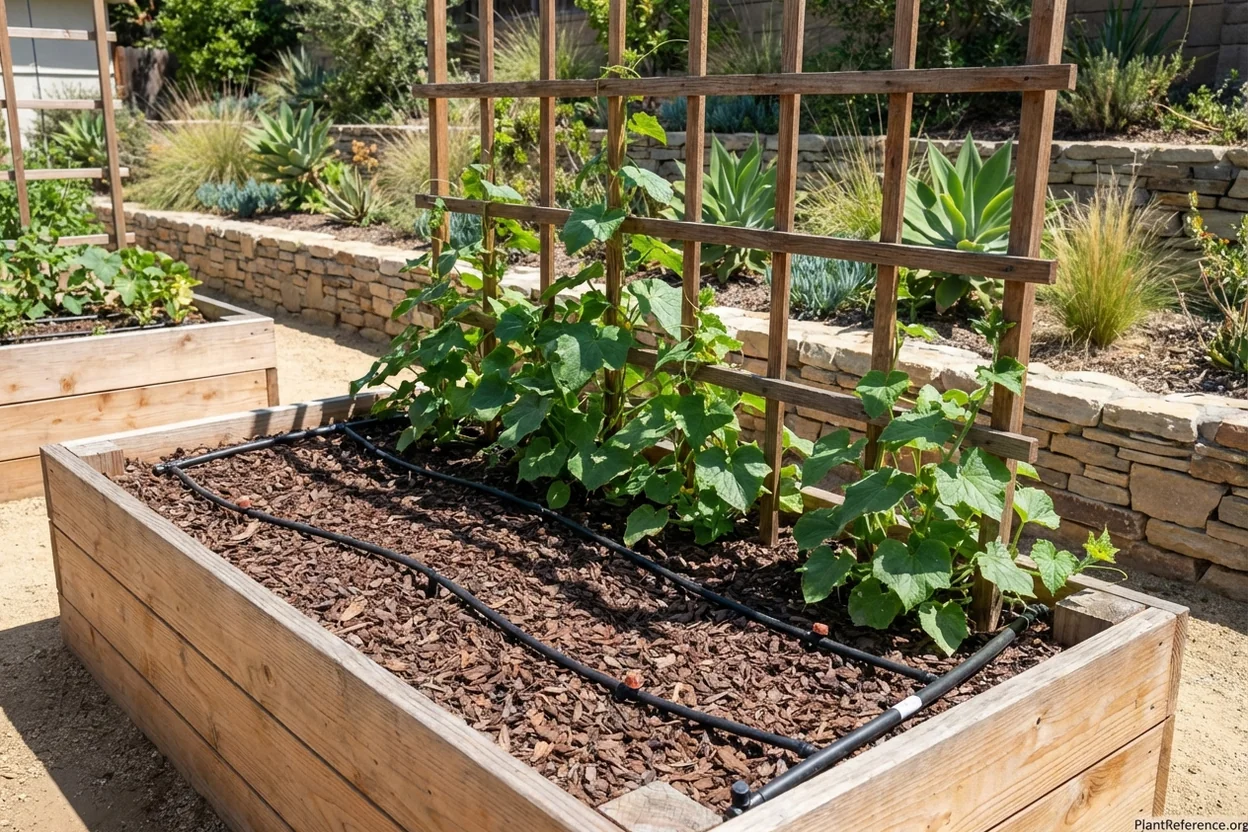
Every drop counts in Los Angeles. Drip irrigation on a timer delivers 1 to 1.5 inches (2.5-4 cm) weekly directly to root zones with minimal waste. Overhead watering loses 30-50% to evaporation in our dry, sunny conditions and is irresponsible in a drought-conscious city. Water in the early morning before heat builds—this maximizes root absorption and minimizes evaporation.
Mulch 3-4 inches (8-10 cm) with straw, wood chips, or shredded bark after transplanting. In LA's climate, mulch reduces irrigation needs by 25-30% through evaporation prevention. This isn't optional—it's the difference between water-responsible cucumber growing and waste. Many LA water districts offer rebates or free mulch for food gardens—check your local program. 5 Best Drip Irrigation Kits for Raised Beds (Tested for Easy Installation)
Soil
LA soils vary dramatically by neighborhood—from heavy clay in the valleys to decomposed granite in hillside areas to sandy loam near the coast. Most test alkaline (pH 7.0-8.0). Raised beds with 60% topsoil, 30% compost, and 10% perlite provide the most consistent results regardless of native soil. For in-ground plots, work 4-6 inches (10-15 cm) of compost into the top 12 inches (30 cm). UC Master Gardener programs offer soil testing guidance through county cooperative extension offices. How to Build a Raised Garden Bed: Step-by-Step Construction Guide
Trellising
Vertical growing in LA serves sun management and space efficiency. Our intense sun causes sunscald on exposed fruit, and trellising allows foliage to shade cucumbers below. In LA's typically small garden spaces, trellising also maximizes production per square foot—a vertical 🌿Cucumis sativus 'Persian' vine produces as much fruit in 2 square feet of ground space as a sprawling vine in 8. A 6-foot (1.8 m) trellis oriented north-south catches maximum light while creating shade on the east face where fruit hangs.
Shade Cloth for Inland Valleys
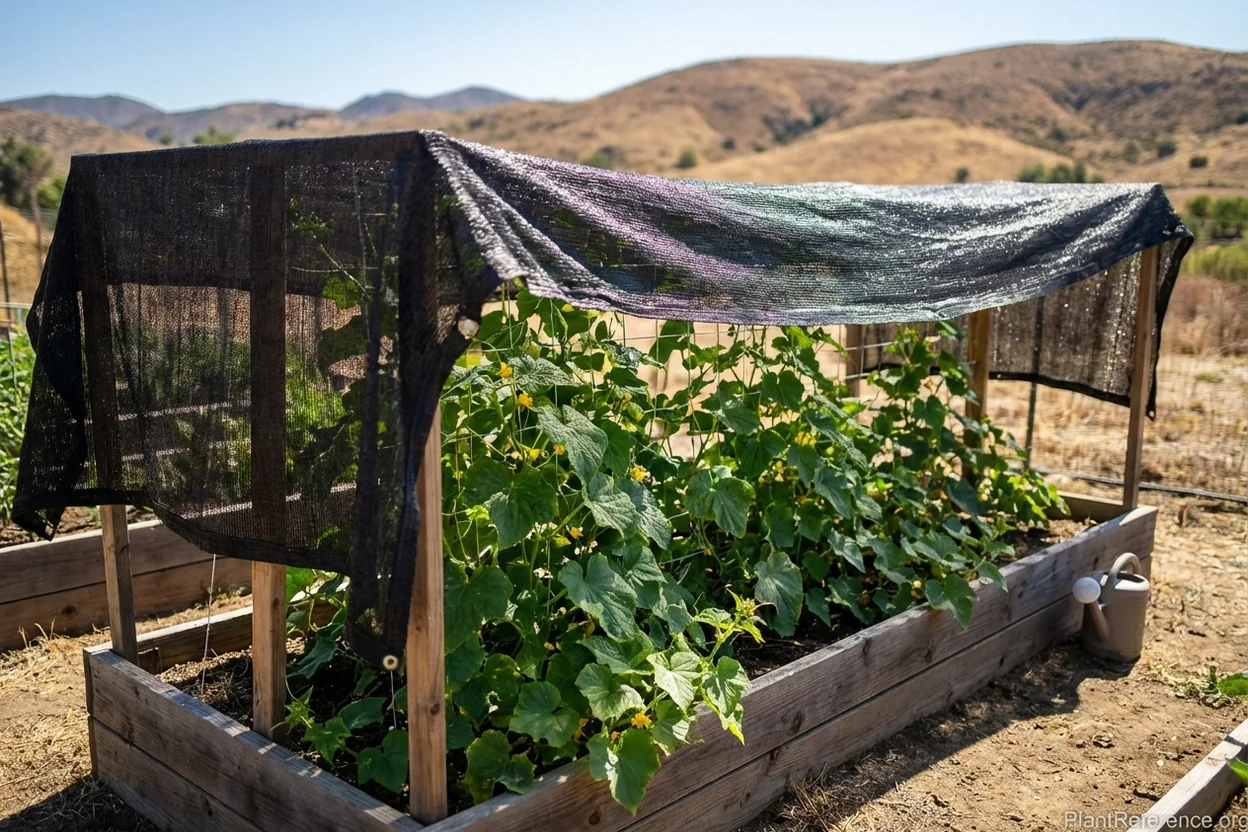
If you garden in the San Fernando Valley, Pasadena, the Inland Empire, or other areas where summer temperatures regularly exceed 100°F (38°C), shade cloth (30-50%) is essential from late June through August. It reduces leaf temperature by 10-15°F, prevents sunscald, and decreases irrigation demand. Coastal gardeners from Santa Monica to Long Beach rarely need shade cloth because marine influence keeps temperatures moderate. When to Plant Squash in Los Angeles: Complete Guide + Best Varieties for Zone 10b
Feeding
Side-dress with balanced fertilizer at flowering and every two weeks during production. Fish emulsion provides gentle, balanced nutrition without the salt buildup that synthetic fertilizers cause in our dry climate where irrigation salts accumulate faster than in rainy regions. Apply chelated iron if interveinal chlorosis appears—common in LA's alkaline soils. With 4-6 succession plantings over the season, feeding consistently is important because each new planting draws from the same soil over many months. Refresh compost between succession plantings to maintain fertility and soil structure through the long growing year. Organic matter breaks down faster in LA's warm, well-aerated soil than in cooler or wetter climates, so replenishment is more frequent here.
Pollination
LA supports excellent pollinator populations year-round due to our mild climate and diverse plantings. Fruit set is reliable across the growing season. 🌿Cucumis sativus 'Persian' parthenocarpic types bypass pollination entirely—a convenience rather than a necessity in LA's pollinator-friendly environment. During inland heat waves above 100°F, pollen viability decreases in standard varieties—another advantage of parthenocarpic types for valley gardeners. Plant flowering herbs like basil and cilantro near cucumber beds to maintain diverse pollinator populations throughout the long Southern California growing season. When to Plant Kale in Los Angeles: Complete Guide + Best Varieties for Zone 10b
Troubleshooting Los Angeles-Specific Problems
Spider Mites
The primary cucumber pest in LA's dry climate. Spider mites thrive in hot, dusty conditions—especially in inland valleys during summer. Stippled, bronzed leaves with fine webbing indicate infestation. Brief overhead misting from a hose (distinct from irrigation) disrupts mite populations by temporarily raising leaf humidity. Neem oil every 7-10 days provides preventative control. Monitor closely because heavy infestations defoliate vines and expose fruit to sunscald. Raised Bed Pest Problems: Identification and Organic Control Methods
Sunscald in Inland Valleys
Exposed fruit develops white, papery patches under LA's intense sun—especially inland where temperatures exceed 100°F. Choose varieties with heavy foliage like 🌿Cucumis sativus 'Marketmore 76' for self-shading. Install 30-50% shade cloth over inland gardens from late June through August. Coastal gardens rarely experience severe sunscald because marine cloud cover moderates UV intensity during morning hours.
Powdery Mildew in Fall
LA's fall season (September-November) brings slightly higher humidity from offshore flow patterns, creating conditions for Powdery Mildew on late-season cucumber plantings. This is the only significant foliar disease in LA. Trellis for airflow, apply neem oil preventatively, and choose 🌿Cucumis sativus 'Marketmore 76' for its intermediate resistance if growing late-season crops. Raised Bed Too Hot in Summer: Protecting Plants from Heat Stress
Water Restrictions
LA frequently imposes watering restrictions during drought years. Food gardens are typically exempt from outdoor irrigation limits, but verify with your local water district. Drip irrigation, mulch, and drought-tolerant varieties like 🌿Cucumis sativus 'Lemon' and 🌿Cucumis sativus 'Persian' provide insurance during restricted periods. One well-managed drip-irrigated cucumber bed uses significantly less water than even a small section of lawn, making it an efficient use of a scarce resource. Best Soil Mix for Raised Beds: Creating the Perfect Growing Medium
Harvest & Storage
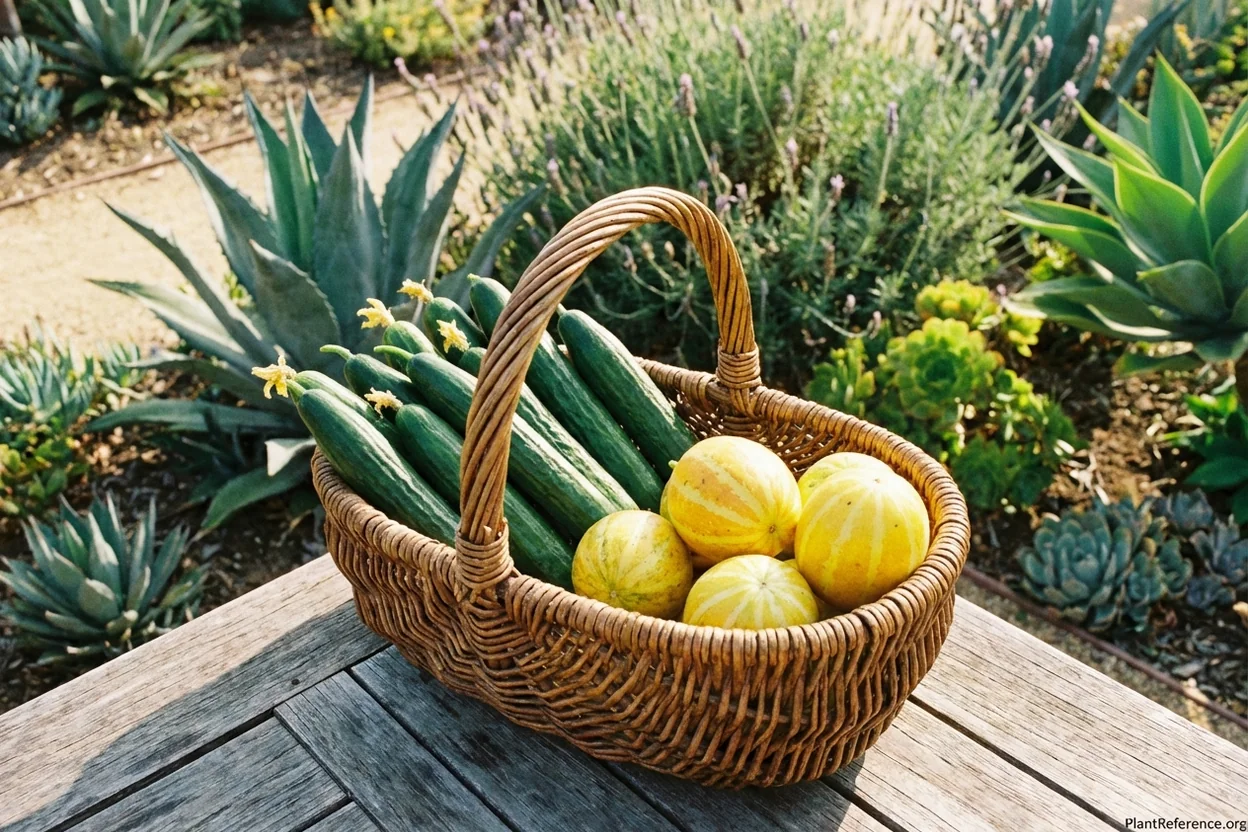
Harvest slicing cucumbers at 6-8 inches (15-20 cm) and pickling types at 2-4 inches (5-10 cm). Check vines every 2 days during peak production—LA's warm, dry climate drives steady fruit development from April through October. Don't leave overripe fruit on vines—consistent picking keeps plants producing through the long season.
Cut with pruners rather than pulling. Harvest in the early morning before sun heats fruit. A healthy 🌿Cucumis sativus 'Persian' plant produces 15-20 snacking cucumbers; 🌿Cucumis sativus 'Marketmore 76' yields 12-16 slicers. With 4-6 succession plantings, total season yield from a small LA garden bed can reach 80-120 cucumbers—extraordinary production from a modest space.
Fresh cucumbers store 7-10 days refrigerated in a towel inside a loose bag. LA-grown cucumbers develop outstanding flavor from our consistent sun and dry air—clean, concentrated taste without the bitterness that humidity and water stress create in other regions. 🌿Cucumis sativus 'Persian' cucumbers from well-irrigated LA gardens rival the quality of farmers market produce at a fraction of the cost. The Complete Guide to Raised Bed Gardening for Beginners (2025)
Frequently Asked Questions
Reading about plants and recognising them are different skills. These three build the second.
- Daily PlantIdentify the day’s mystery plant from a close-up photograph.
- Keyed OutWork a dichotomous key, lead by lead, to name a hidden specimen.
- Name That PlantName a specimen from botanical clues dealt hardest first.
Free to play, no account needed
Emma runs a small succulent propagation business from her home in San Diego, shipping starter plants and cuttings across the country. She fell into succulents after college when she realized they were the only plants that survived her travel schedule—she was working as a travel nurse at the time. San Diego's mild, dry climate is ideal for outdoor succulent gardens, and Emma's front yard is a living catalog of over 200 varieties. She completed a certificate program in ornamental horticulture and writes about succulent care, propagation techniques, and drought-tolerant garden design. Her writing is calm and reassuring—she knows people feel bad about killing plants, and she wants them to stop worrying so much.