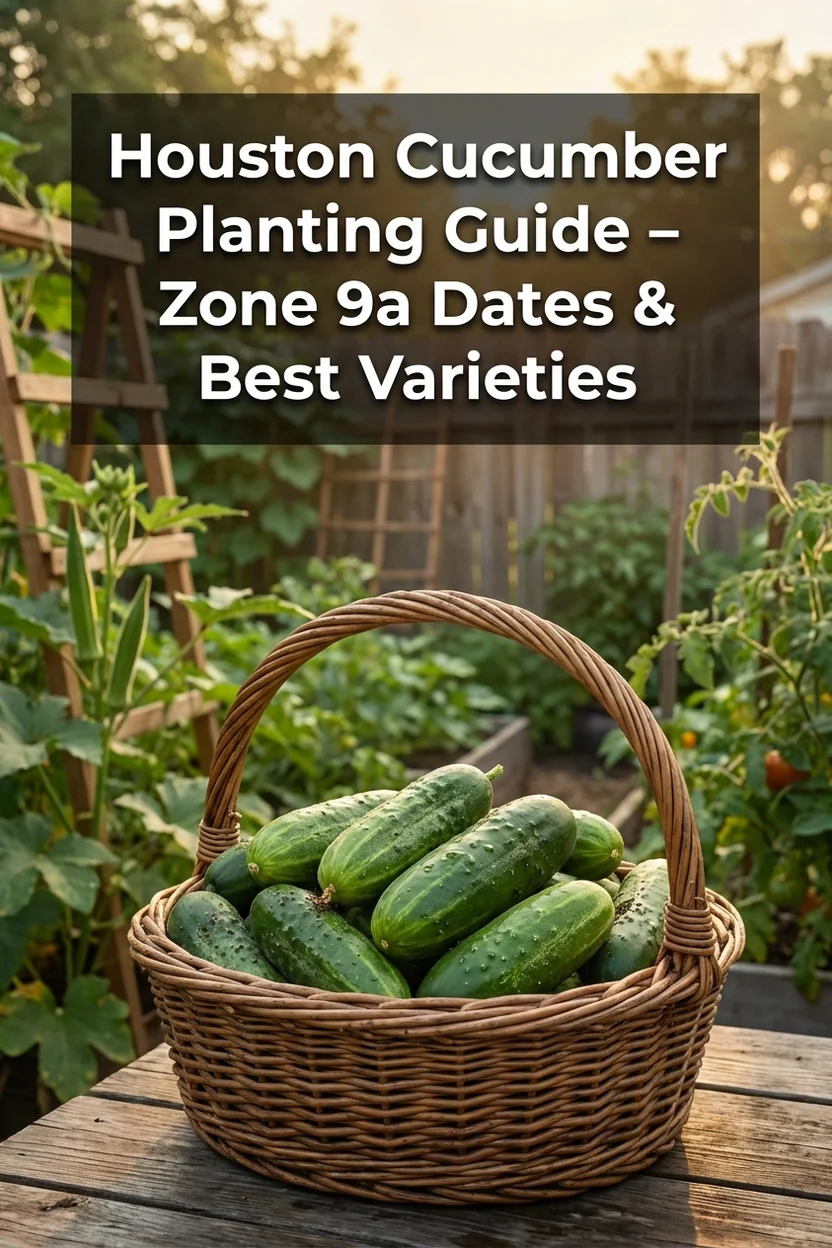
When to Plant Cucumbers in Houston: Complete Guide + Best Varieties for Zone 9a
Pets & Toxicity
Recorded toxicity for plants linked in this guide. An unknown status is not a safety assessment.
No linked plant is recorded as toxicDetailsHide
Cucumis sativus 'Marketmore 76' — Toxicity
Non-toxicView Cucumis sativus 'Marketmore 76' plant profileCucumis sativus 'Straight Eight' — Toxicity
Non-toxicView Cucumis sativus 'Straight Eight' plant profileCucumis sativus 'Boston Pickling' — Toxicity
Non-toxicView Cucumis sativus 'Boston Pickling' plant profile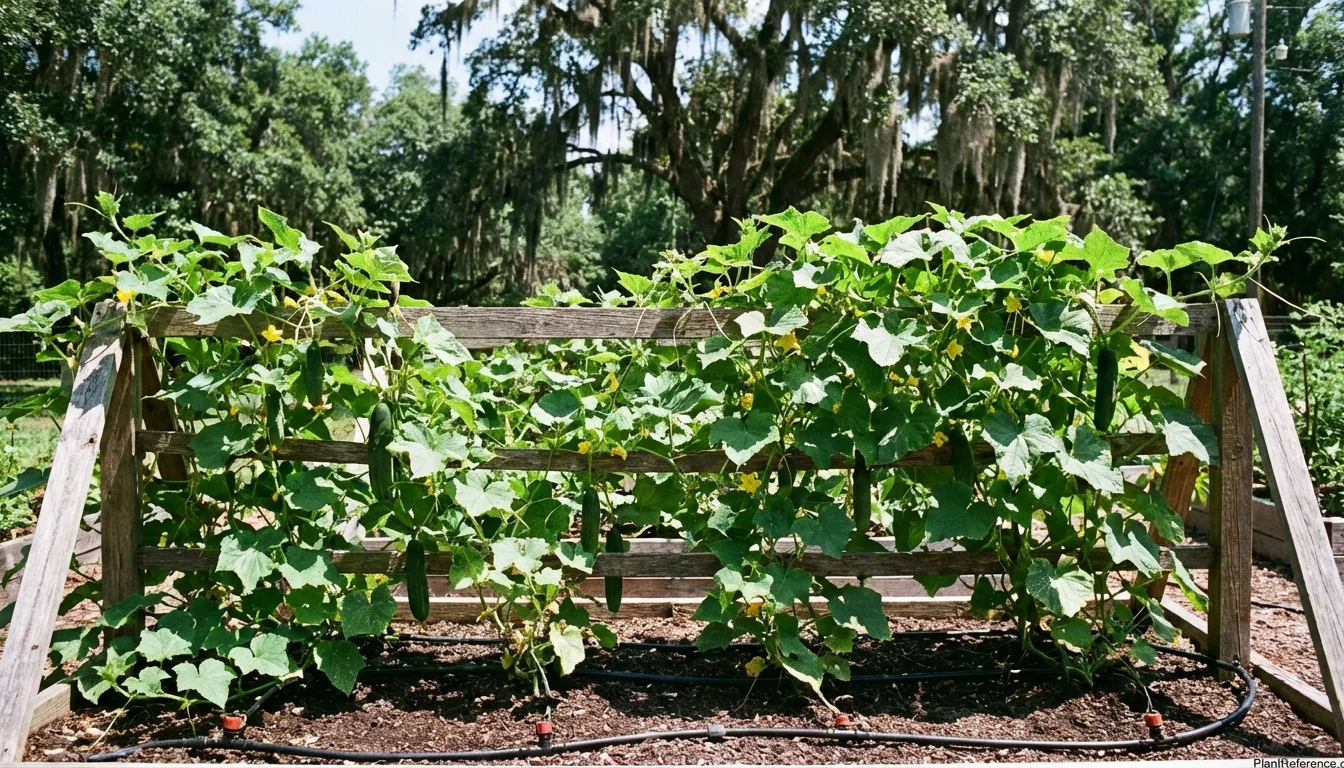
— Image © Plant Reference 2026
Houston clay doesn't drain—it holds water like a bathtub. That's the first thing anyone growing cucumbers here needs to understand. You can have the right varieties, perfect timing, and ideal weather, but if your cucumbers are sitting in waterlogged clay after a Gulf Coast thunderstorm dumps 3 inches in an hour, you'll lose them to root rot before disease ever gets a chance. I've tested this more times than I'd like to admit. Raised beds with expanded shale are non-negotiable in Houston—compost alone won't cut it for the drainage cucumbers demand.
The second reality is humidity. Houston's summer humidity regularly exceeds 90%, creating the most aggressive Downy Mildew (Pseudoperonospora cubensis) pressure on the Gulf Coast outside of South Florida. Our position near the Gulf means warm, moisture-laden air sits over the city for months. The approach that works is a two-season strategy: spring production from March through May before the worst heat and humidity converge, and fall production from September through November when conditions moderate. Between those windows, Houston summer defeats all but the most determined cucumber growers. When to Plant Tomatoes in Houston: Complete Guide + Best Varieties for Zone 9a
Best Cucumber Varieties for Houston's Climate
Houston sits in USDA Zone 9a with a February 15 last frost and December 1 first frost—289 growing days. The Gulf Coast climate combines extreme humidity with extreme heat—the worst combination for cucumber disease. Downy Mildew pressure here is second only to South Florida because Houston's proximity to the Gulf provides the warm, moist air the pathogen thrives in. Disease resistance isn't just important—it's the single factor that determines whether your cucumbers produce for weeks or collapse in days.
Variety | Type | Days to Harvest | Disease Resistance | Best For |
|---|---|---|---|---|
Slicing | 65 days | High (Scab, CMV, moderate DM/PM) | Essential for Houston humidity | |
🌿Cucumis sativus 'Persian' (Beit Alpha) | Specialty | 55 days | Moderate (PM) | Fast harvest, parthenocarpic |
Pickling | 55 days | Low-Moderate | Fast spring, fall pickling | |
Specialty | 65 days | Moderate (Rust, drought tolerant) | Heat tolerance | |
Slicing | 63 days | Low (CMV tolerance only) | Early spring only, before disease | |
🌿Cucumis sativus 'Marketmore 76' (fall crop) | Slicing | 65 days | High | September planting for fall harvest |
🌿Cucumis sativus 'Marketmore 76' is the only slicer I recommend for Houston. Its disease resistance gives it 3-4 weeks more productive life than susceptible varieties in our humidity—the difference between a real harvest and a frustrating failure. The "stay-green" gene prevents yellowing during heat stress, and the heavy foliage canopy provides the self-shading fruit needs in our intense Gulf Coast sun. Every other open-pollinated slicer I've trialed in Houston clay collapses to Downy Mildew weeks before 🌿Cucumis sativus 'Marketmore 76'.
🌿Cucumis sativus 'Persian' types are essential for Houston because their parthenocarpic fruit set bypasses the pollination challenges that our muggy conditions create. When humidity suppresses pollen viability and pollinators reduce activity during the muggiest weeks, Persian cucumbers keep producing. At 55 days, they maximize the compressed production windows.
🌿Cucumis sativus 'Straight Eight' works only for early spring eating—February transplants through early April before humidity-driven disease peaks. It succumbs rapidly to Downy Mildew and produces bitter fruit in heat. Plant it for first-of-season eating and have 🌿Cucumis sativus 'Marketmore 76' ready behind it.
🌿Cucumis sativus 'Boston Pickling' at 55 days is the fall pickling champion. September sowings mature into the cooling nights of October and November that produce the crunchiest pickling cucumbers of the year. When to Plant Peppers in Houston: Complete Guide + Best Varieties for Zone 9a
Specific Planting Dates for Houston Gardens
Houston's February 15 last frost and December 1 first frost create a 289-day window, but effective cucumber production splits into spring and fall with extreme summer humidity and heat creating a mid-season gap.
Indoor Seed Starting (spring): February 1-10 (2 weeks before last frost). Start at 75°F (24°C) for 3-5 day germination. Houston homes stay warm year-round.
Transplant Outdoors (spring): February 22-March 5 (one week after last frost, soil at 60°F/16°C). Houston clay warms quickly in our subtropical spring. Harden off 5 days.
Direct Sow (spring): February 25-April 15. Houston soil reaches 60°F (16°C) by late February. Our clay germinates seeds in 4-6 days. Don't sow after April 15—65-day varieties won't build enough production before the worst heat-humidity combination arrives in June.
Spring Production Window: April through late May. This is your primary harvest. Once daytime temperatures consistently exceed 95°F (35°C) with humidity above 80%, fruit quality and vine health decline rapidly. Harvest aggressively through May.
Summer Gap: June through August. Houston's combination of 95-100°F heat with 85-95% humidity creates conditions where Downy Mildew can defoliate vines within days. Even 🌿Cucumis sativus 'Marketmore 76' struggles during the worst of Houston summer. Rest your cucumber beds and focus on heat-loving crops like okra and sweet potatoes.
Fall Planting: August 15-September 15. Start seeds indoors or direct sow. Fall planting in Houston is less challenging than in desert cities because our soil stays warm and moist—the issue is disease management during the humid September transition. Use 30% shade cloth over new plantings for heat protection.
Fall Production Window: October through November. As humidity drops and temperatures moderate into the 75-85°F range, cucumbers enter their best production period. Houston's fall is cucumber paradise—warm but not extreme, with declining disease pressure.
Final Sowing Deadline: September 15. A 55-day variety planted September 15 matures by early November with a month of harvest before the December 1 frost. Raised Bed Vegetable Garden Layout: Planning for Maximum Production
Complete Growing Guide for Houston
Drainage: The Non-Negotiable Foundation
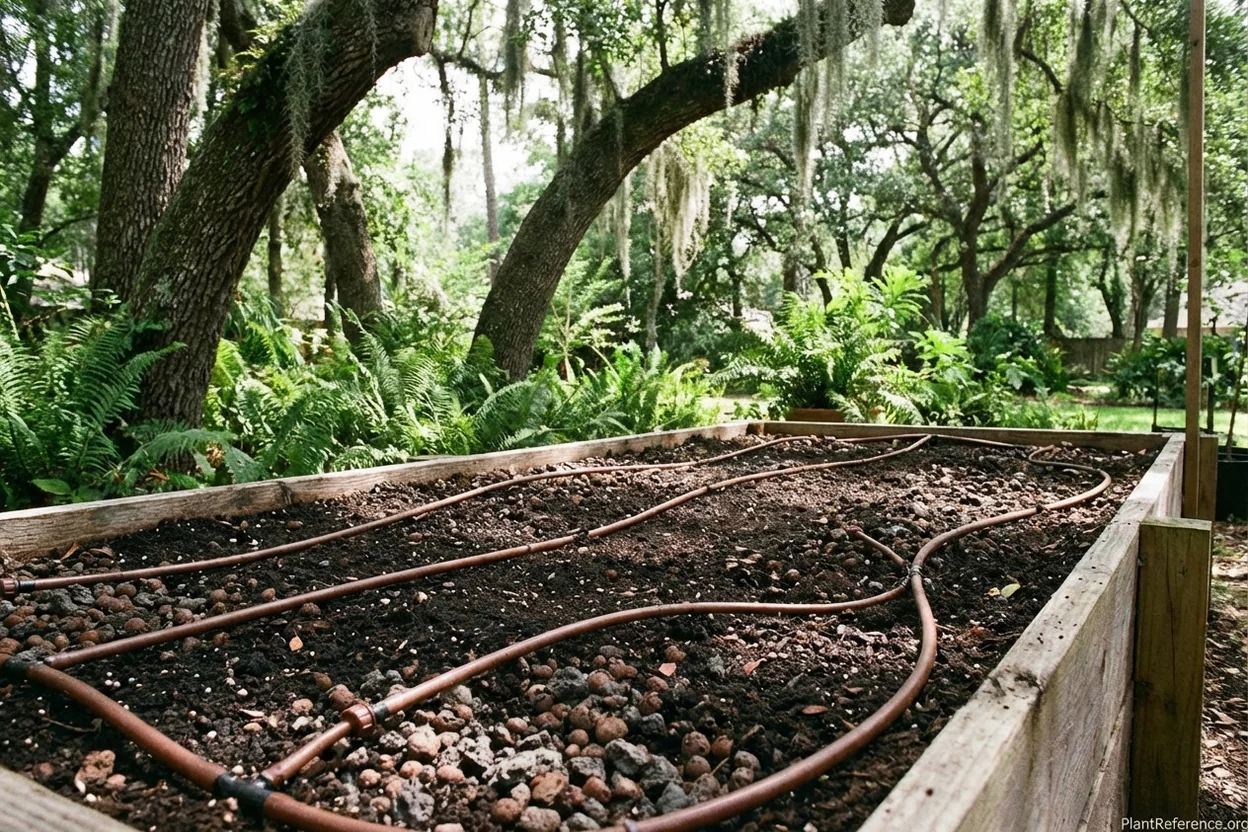
Houston's gumbo clay soil is the worst drainage scenario for cucumbers in any major US city. It expands when wet, contracts when dry, and holds water so effectively that cucumber roots suffocate after every significant rainfall—and Houston gets over 50 inches (127 cm) annually. Raised beds are mandatory. Build 12-18 inches (30-46 cm) tall and fill with 50% topsoil, 30% compost, and 20% expanded shale. Not perlite—expanded shale. It's a Texas-local drainage amendment that provides permanent air pockets in the soil that don't compress or float away like perlite does in Houston's heavy rainfall. Compost alone won't fix Houston clay drainage—I've tested this extensively and the results are consistent. How to Build a Raised Garden Bed: Step-by-Step Construction Guide
Disease Management
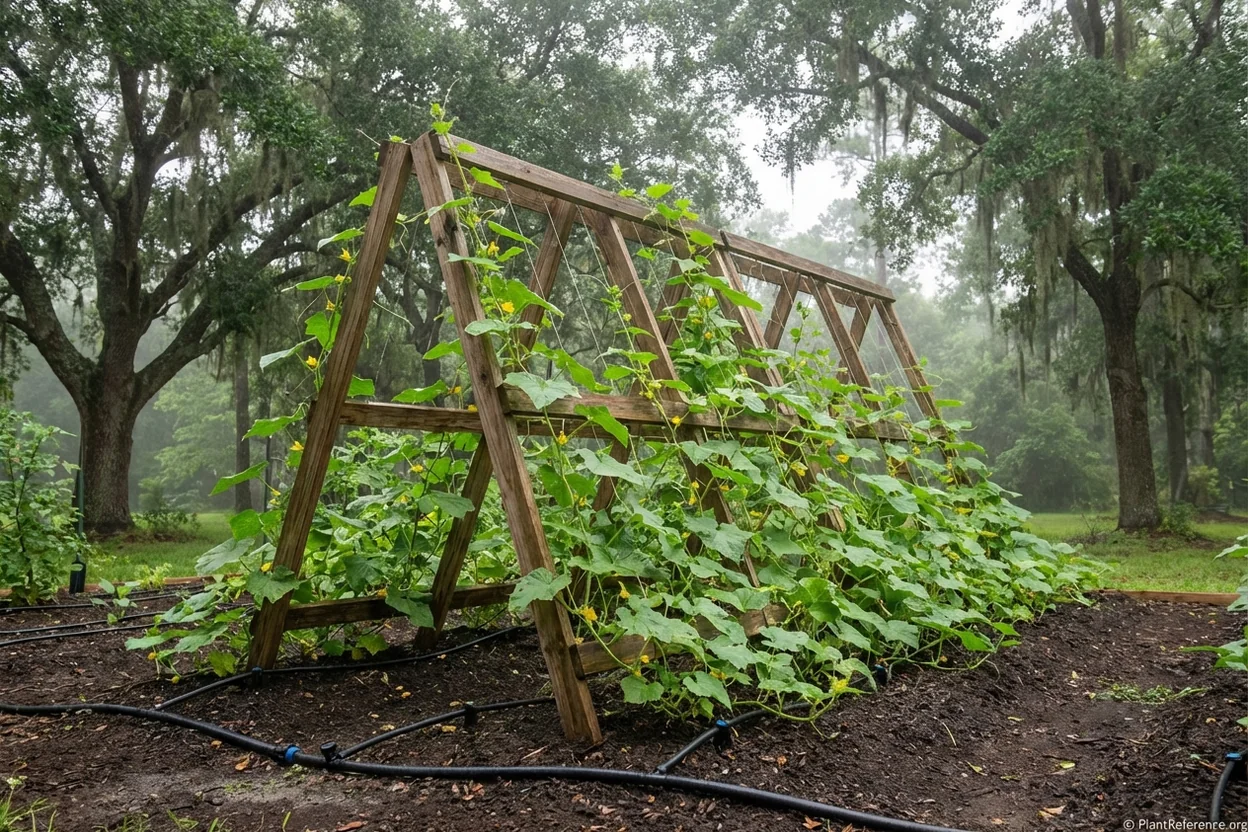
Houston's Gulf Coast humidity makes disease management the central skill for cucumber growing. Trellis vertically with 24-inch (60 cm) spacing between plants for maximum airflow. Use drip irrigation exclusively—overhead watering in Houston humidity is pouring fuel on a fire. Remove infected leaves the moment you see angular yellow spots. Succession plant every 3 weeks so fresh vines replace declining ones. This systematic approach is the only way to maintain continuous production through Houston's disease-heavy growing conditions. 5 Best Drip Irrigation Kits for Raised Beds (Tested for Easy Installation)
Trellising
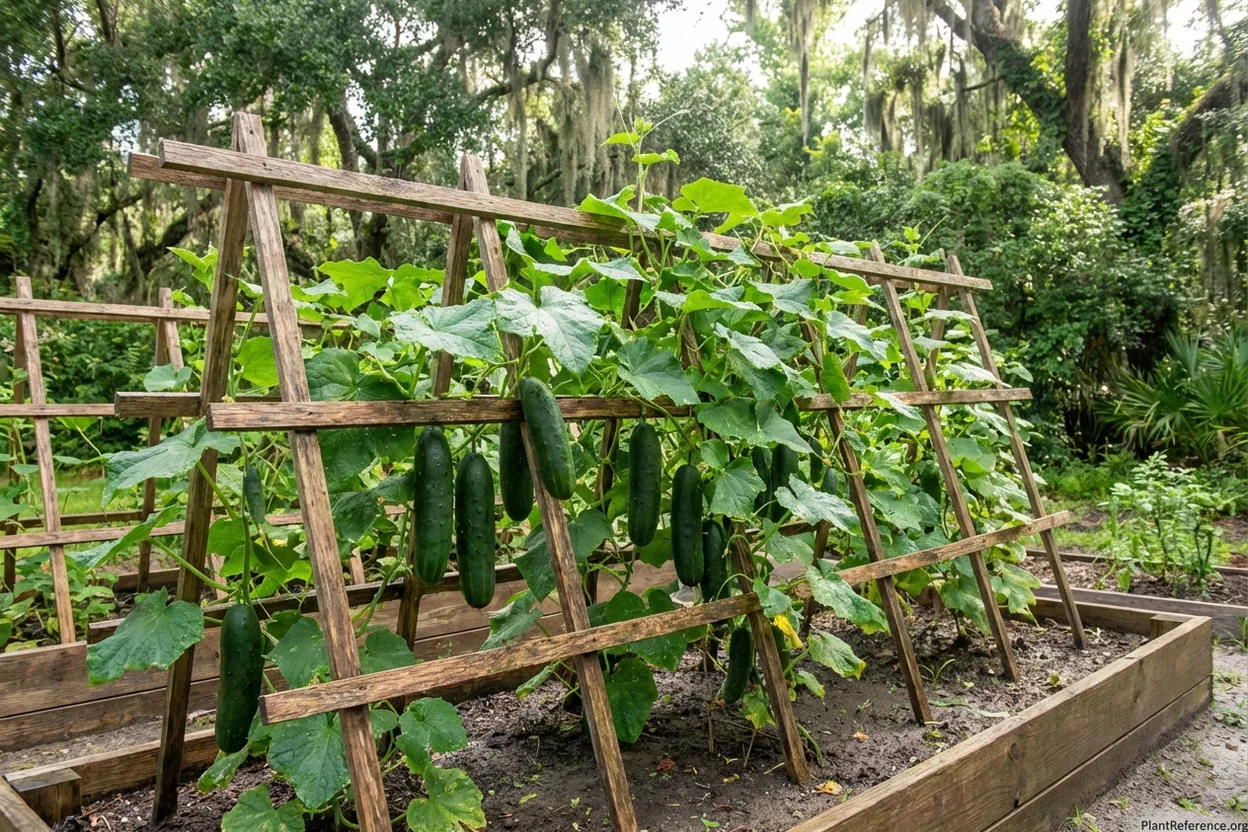
Airflow is the primary reason to trellis in Houston—more important even than in other humid cities because our Gulf Coast humidity stays elevated day and night. A 6-foot (1.8 m) trellis lifts foliage above the stagnant humid air layer that sits at ground level during Houston's muggy evenings. Trellised cucumbers dry faster after rain and morning dew, directly slowing Downy Mildew progression. Build sturdy—Houston's summer thunderstorms produce high winds, and our tropical storms and hurricanes can arrive during fall planting season.
Watering
Houston gets 50+ inches of annual rainfall, so irrigation needs are different here than in arid Western cities. During spring, rainfall often provides sufficient moisture—but delivery is erratic (3 inches in one storm, then dry for a week). Drip irrigation on a timer provides the consistent 1 to 1.5 inches (2.5-4 cm) weekly that cucumbers need and keeps foliage dry. During the humid fall planting season, water only when the top 2 inches (5 cm) of soil are dry—overwatering in Houston's humidity invites root rot. When to Plant Squash in Houston: Complete Guide + Best Varieties for Zone 9a
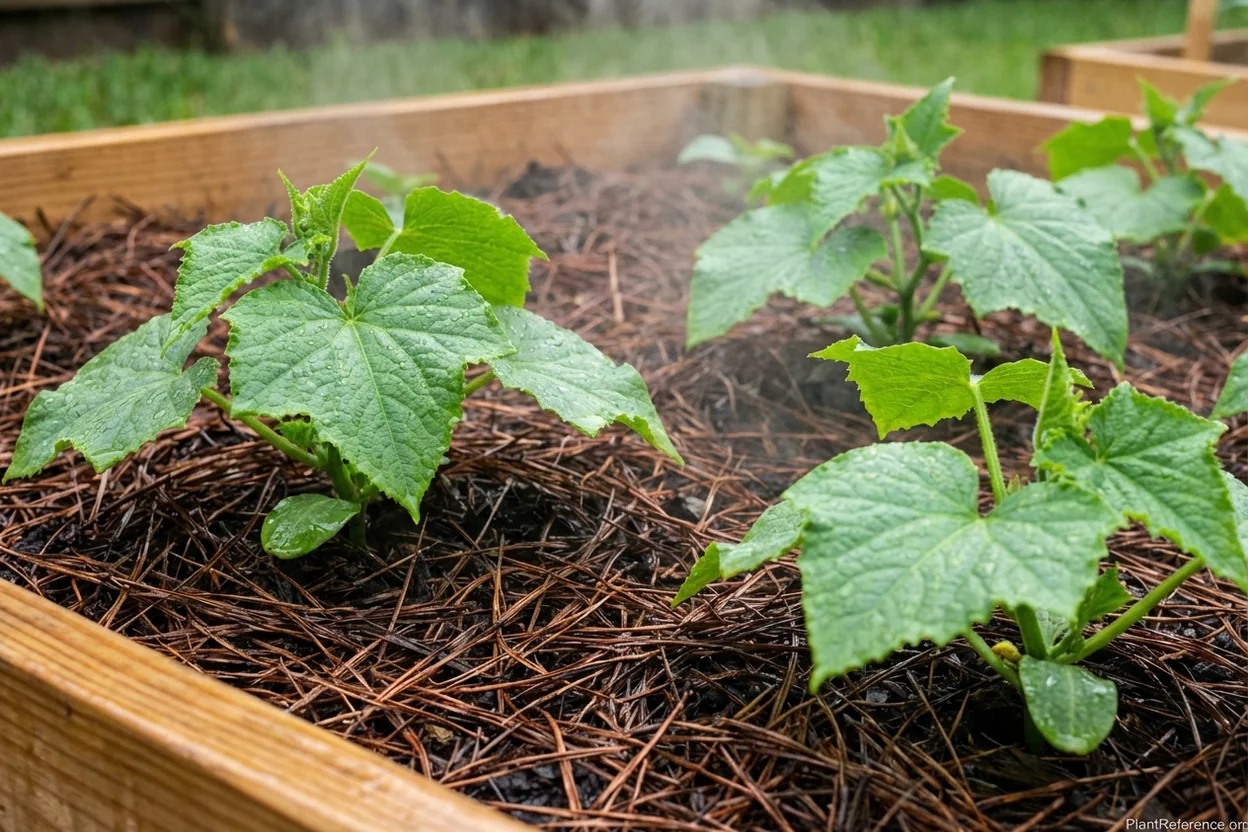
Mulch 3 inches (8 cm) with pine straw or shredded hardwood after transplanting. Mulch prevents soil splash onto lower leaves—critical in Houston where every rain event splashes pathogen-laden clay onto foliage. Pine straw is abundantly available across Southeast Texas and decomposes slowly enough to maintain coverage through the entire growing season.
Feeding
Side-dress with balanced fertilizer at flowering and every two weeks
Fish emulsion provides gentle feeding without salt buildup
Apply chelated iron if interveinal chlorosis appears
Houston's clay is generally less alkaline than limestone-derived soils further west
Test through the Harris County AgriLife Extension for under $15 to know your specific conditions
Pollination
Standard varieties need pollinators. Houston supports excellent year-round pollinator populations in our subtropical climate. During peak humidity when pollen viability decreases, 🌿Cucumis sativus 'Persian' parthenocarpic types maintain production. Plant flowering companions like zinnias, sunflowers, and herbs near cucumber beds to keep pollinators active in your garden through the long Houston growing season. When to Plant Kale in Houston: Complete Guide + Best Varieties for Zone 9a
Troubleshooting Houston-Specific Problems
Downy Mildew
Houston's defining cucumber challenge. Gulf Coast humidity maintains Downy Mildew spore activity from April through November—longer than almost any other US city. Angular yellow spots on upper leaf surfaces that progress to brown necrosis spread rapidly in our conditions. Plant 🌿Cucumis sativus 'Marketmore 76' for resistance, trellis for maximum airflow, use drip irrigation only, and remove infected leaves immediately. Even with resistant varieties, expect individual plantings to decline within 4-8 weeks during the most humid months. Succession planting is the framework that sustains production. Raised Bed Pest Problems: Identification and Organic Control Methods
Houston Clay Waterlogging
After every significant rainfall (common in Houston—we average one 2+ inch rain event per month), standard garden beds become waterlogged. Cucumber roots suffocate within 24-48 hours in saturated clay. Wilting despite wet soil is the classic symptom. Raised beds with expanded shale provide permanent drainage that Houston clay alone cannot achieve. This is the most important infrastructure investment for any Houston vegetable garden. Raised Bed Too Hot in Summer: Protecting Plants from Heat Stress
Heat and Humidity Combined Stress
Houston's summer delivers both extreme heat (95-100°F) and extreme humidity (85-95%) simultaneously—the worst combination for cucumbers. Heat alone causes pollen sterility. Humidity alone drives disease. Together, they create conditions that no cucumber variety can productively endure for more than a few weeks. The two-season approach (spring and fall) is the only practical strategy. Accept the summer gap and plan for it.
Cucumber Beetles and Whiteflies
Both are persistent in Houston's subtropical climate. Cucumber beetles vector bacterial wilt and are active from February through November. Row covers over spring transplants exclude beetles during establishment. Whiteflies thrive in Houston's warm, humid conditions—neem oil every 7-10 days and yellow sticky traps provide control. Monitor consistently because both pest complexes are year-round threats in our climate. Best Soil Mix for Raised Beds: Creating the Perfect Growing Medium
Harvest & Storage
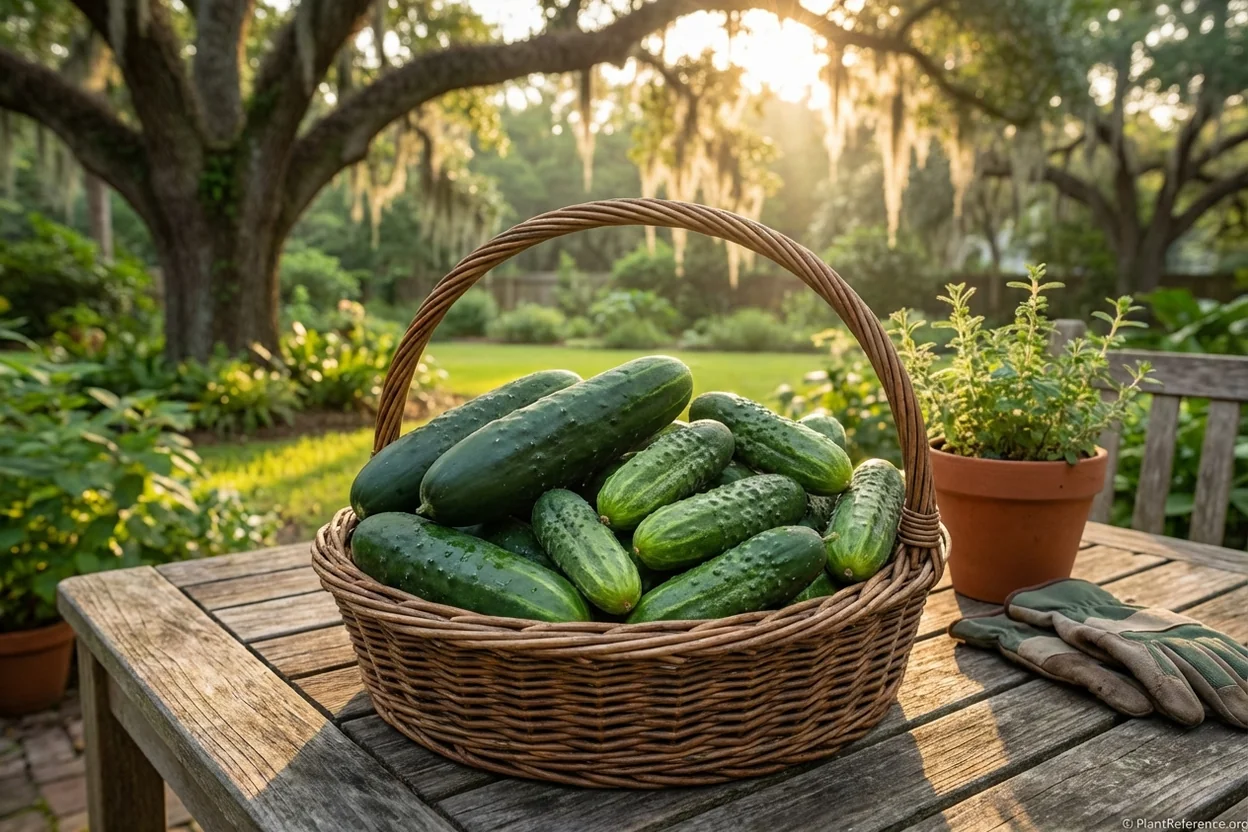
Harvest slicing cucumbers at 6-8 inches (15-20 cm) and pickling types at 2-4 inches (5-10 cm). Check vines daily during production—Houston's warm, humid conditions drive rapid fruit development and cucumbers go from ideal to overgrown in 36 hours. Every overripe fruit left on the vine reduces production. In a disease-pressured environment, maximizing harvest from each vine's limited productive lifespan is essential.
Cut with pruners rather than pulling. Harvest before 8 AM before heat and humidity build. A healthy 🌿Cucumis sativus 'Marketmore 76' plant produces 10-14 slicers per planting cycle; 🌿Cucumis sativus 'Persian' yields 14-18 snacking cucumbers. With 3-4 succession plantings across spring and fall, total annual yield from a Houston garden bed reaches 50-70 cucumbers.
Fresh cucumbers store 7-10 days refrigerated in a towel inside a loose bag. 🌿Cucumis sativus 'Boston Pickling' from the fall crop makes outstanding refrigerator pickles—Houston's cooling October nights develop the firm, crunchy texture that defines quality pickles. The fall harvest is the reward for planning two productive seasons around Houston's challenging but ultimately manageable subtropical climate. The Complete Guide to Raised Bed Gardening for Beginners (2025)
Frequently Asked Questions
Reading about plants and recognising them are different skills. These three build the second.
- Daily PlantIdentify the day’s mystery plant from a close-up photograph.
- Keyed OutWork a dichotomous key, lead by lead, to name a hidden specimen.
- Name That PlantName a specimen from botanical clues dealt hardest first.
Free to play, no account needed
Aisha manages a small tropical nursery on the east side of Houston, specializing in plants that can handle the Gulf Coast's humidity, heat, and unpredictable flooding. She studied horticulture in college and worked at a wholesale grower before opening her own operation. Growing up, her parents kept a kitchen garden with okra, bitter gourd, and curry leaf plants—a tradition she's continued. Houston's subtropical climate lets her grow things most of the country can't, but it also means dealing with fungal issues, standing water, and summers where it's too hot for even tomatoes. Aisha writes about tropical and subtropical plant care, humidity management, and working with heavy clay soils.