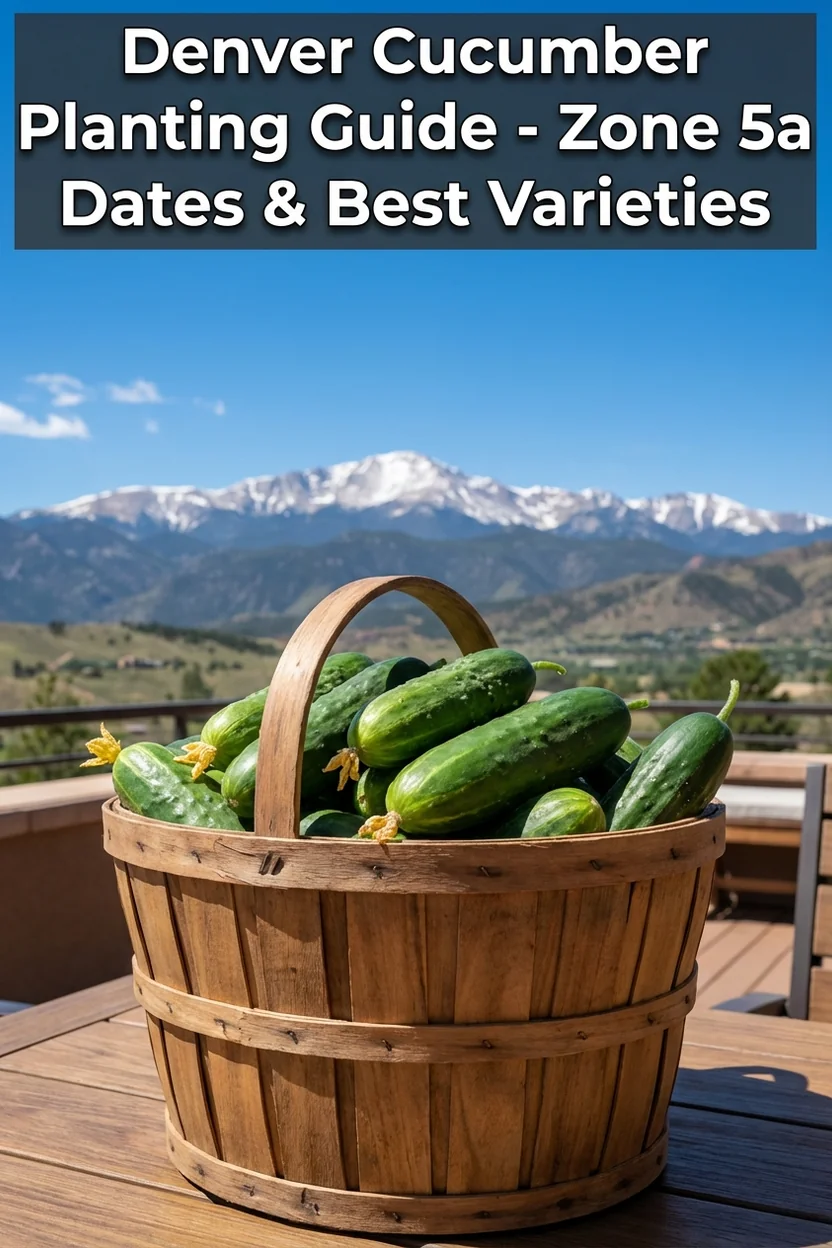
When to Plant Cucumbers in Denver: Complete Guide + Best Varieties for Zone 5a
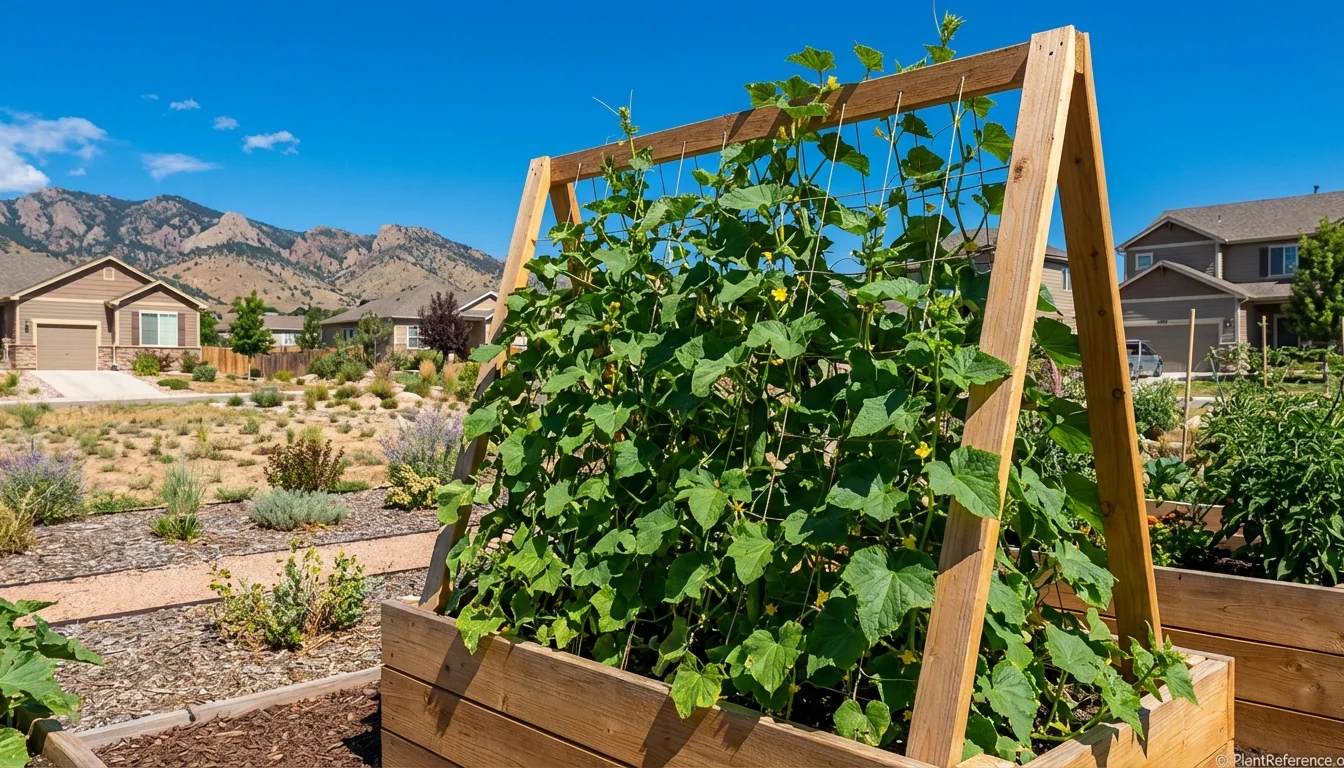
— Image © Plant Reference 2026
Denver's 148-day growing season is one of the shortest in the country for a major city, and most gardening advice you'll find wasn't written for conditions like ours. We sit at 5,280 feet with 15 inches (38 cm) of annual precipitation, intense UV radiation, alkaline clay soils, and late spring frosts that can hit as late as mid-May. Cucumbers are tropical plants that want heat, moisture, and a long season—basically everything Denver doesn't naturally provide. But they're absolutely growable here if you stop following gardening books written for the East Coast and adapt to our actual conditions. Transplants are mandatory, not optional. Fast-maturing varieties are essential, not nice-to-have. And water efficiency isn't a lifestyle choice—it's a necessity. Work with what Denver gives you and cucumbers produce well from late June through September. When to Plant Tomatoes in Denver: Complete Guide + Best Varieties
Best Cucumber Varieties for Denver's Climate
Denver sits in USDA Zone 5a with a May 10 last frost and October 5 first frost—148 growing days. Every day to maturity counts in this window. Fast-maturing varieties give you the longest possible harvest before fall frost, while drought tolerance and UV resilience address Denver's arid, high-altitude conditions. Disease resistance matters less here than in humid climates—our dry air suppresses Downy Mildew almost entirely—but spider mites thrive in exactly the conditions Denver provides.
Variety | Type | Days to Harvest | Disease Resistance | Best For |
|---|---|---|---|---|
Cucumis sativus 'Boston Pickling' | Pickling | 55 days | Low-Moderate | Fastest harvest for short season |
Cucumis sativus 'Persian' (Beit Alpha) | Specialty | 55 days | Moderate (PM) | Fast, arid-adapted, no pollinators |
Slicing | 65 days | High (Scab, CMV, moderate DM/PM) | Best slicer with foliage for UV protection | |
Specialty | 65 days | Moderate (Rust, drought tolerant) | Drought tolerance, UV resistant | |
Slicing | 63 days | Low (CMV tolerance only) | Traditional slicer with irrigation | |
Cucumis sativus 'Boston Pickling' (succession) | Pickling | 55 days | Low-Moderate | One follow-up planting by June 10 |
Cucumis sativus 'Boston Pickling' and Cucumis sativus 'Persian' at 55 days are the foundation for Denver cucumber growing. Transplants set out May 20 produce fruit by mid-July—giving you nearly twelve weeks of harvest before the October 5 frost. That's a workable window. Sixty-five-day varieties like 🌿Cucumis sativus 'Marketmore 76' produce by late July from transplants, still leaving ten weeks of harvest, but the margin is tighter if spring weather delays planting.
Cucumis sativus 'Persian' types deserve emphasis for Denver. Bred for hot, arid Mediterranean climates, they're genetically suited to our dry conditions. The parthenocarpic trait means fruit sets without pollinators—valuable during Denver's unpredictable spring when cool stretches suppress bee activity. Thin-skinned fruit dehydrates faster in our dry air, so consistent irrigation is critical.
🌿Cucumis sativus 'Lemon' handles Denver's drought conditions better than most varieties through ancestral arid-climate genetics. Its round yellow fruit resists sunscald from our intense high-altitude UV, and its genuine drought tolerance provides insurance during water-restricted periods.
🌿Cucumis sativus 'Marketmore 76' is the best slicer for Denver because its dense foliage self-shades fruit against our intense sun. The "stay-green" gene maintains canopy density through heat stress—critical at elevation where UV intensity is 25% higher than at sea level. When to Plant Peppers in Denver: Complete Guide + Best Varieties for Zone 5a
Specific Planting Dates for Denver Gardens
Denver's May 10 last frost is late, and October 5 first frost comes early. That 148-day window is tight for cucumbers. Transplants are mandatory—direct sowing wastes 2-3 weeks you can't afford.
Indoor Seed Starting: April 15-22 (3-4 weeks before last frost). Start on a heat mat at 75°F (24°C) for 3-5 day germination. Denver homes are dry—mist seedlings regularly or use a humidity dome. Grow under lights to 3-4 true leaves before transplanting.
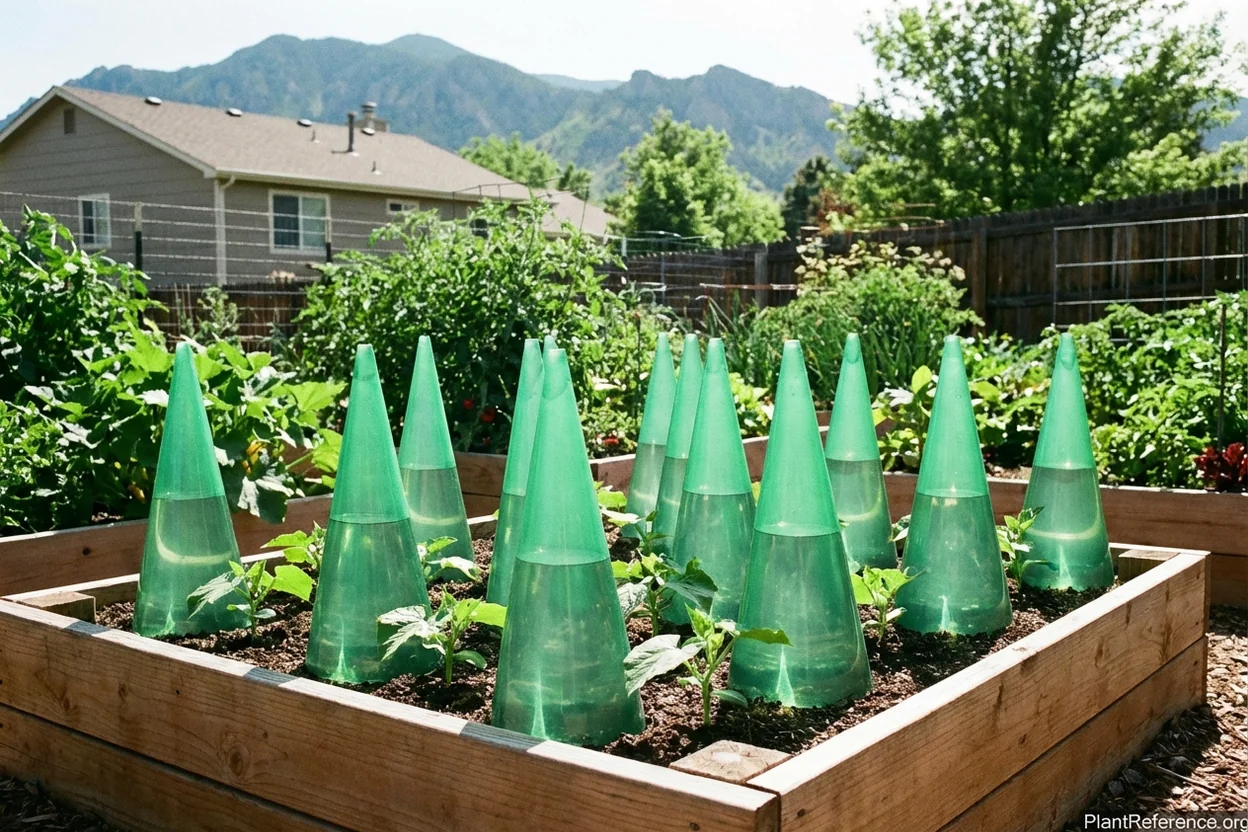
Transplant Outdoors: May 17-25 (one week after last frost, soil at 60°F/16°C). Pre-warm beds with black plastic mulch for 2-3 weeks before transplanting. Denver's late May can still deliver frost—I've seen snow on May 20. Keep row covers or Wall-o-Water protectors available through the end of May.
Direct Sow: Not recommended. Denver soil doesn't reliably hit 60°F (16°C) until late May, and the 7-10 day germination period costs you precious harvest weeks. In 148 days, that lost time is proportionally significant. If transplants fail, direct sow Cucumis sativus 'Boston Pickling' (55 days) immediately as your fastest recovery option.
Succession Planting: One succession at most, by June 10. Denver's window supports the primary transplant plus one quick follow-up. Choose 55-day varieties only for the succession—65-day varieties planted in mid-June cut it close to frost.
Final Sowing Deadline: June 10. A 55-day Cucumis sativus 'Boston Pickling' planted June 10 matures around August 4 with two months of harvest before frost. Later plantings are too risky. Raised Bed Vegetable Garden Layout: Planning for Maximum Production
Complete Growing Guide for Denver
Raised Beds and Soil
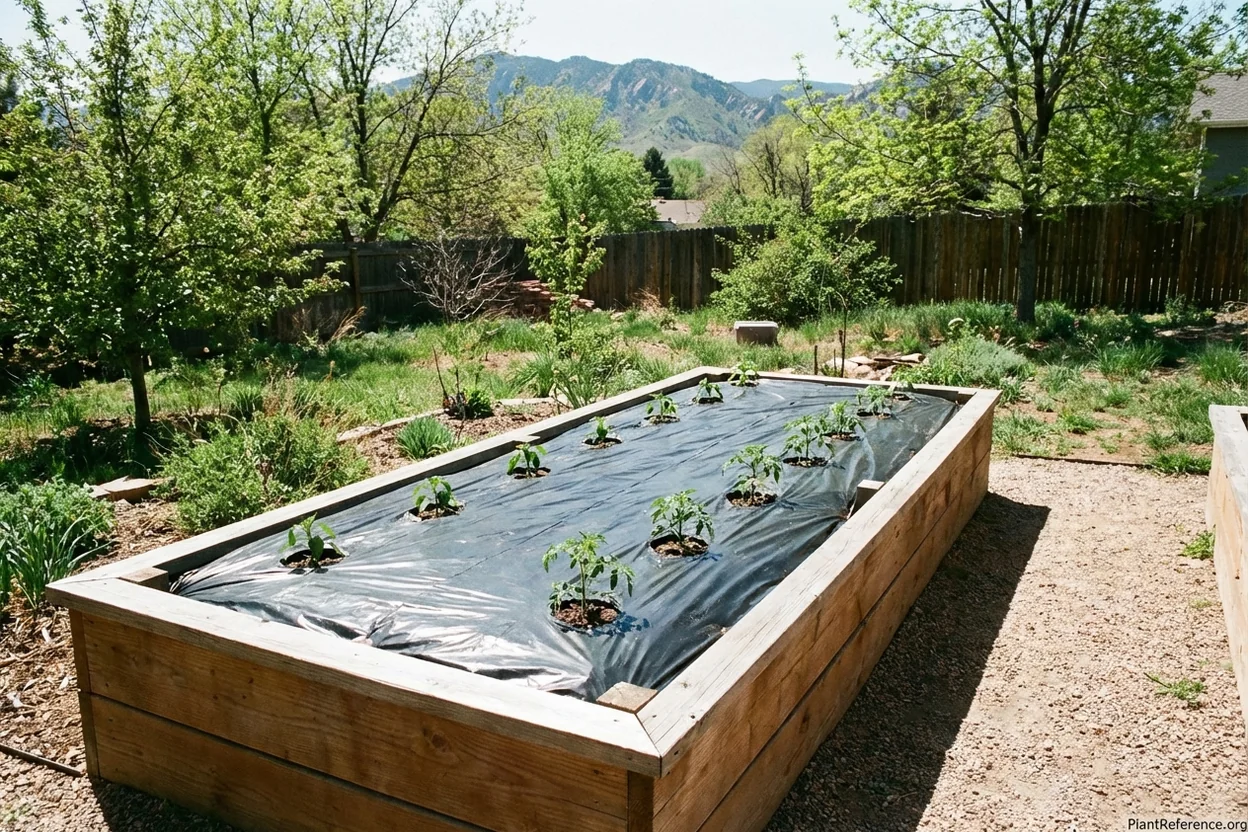
Raised beds are essential for Denver cucumber growing. They warm faster than in-ground plots in our cool spring, drain better than our heavy alkaline clay, and allow you to control soil pH from the start. Build from cedar or redwood (both last 15+ years in our dry climate) and fill with 60% topsoil, 30% compost, and 10% perlite. Denver's native heavy clay soils test alkaline at pH 7.5-8.5—cucumbers prefer 6.0-6.8, so raised beds with controlled soil bypass this problem entirely.
For in-ground plots, work 4-6 inches (10-15 cm) of compost into the top 12 inches (30 cm) and amend with elemental sulfur based on soil test results. The Colorado State University Extension provides testing for under $15. Our soils are mineral-rich when pH is corrected—don't assume you need heavy fertilization. How to Build a Raised Garden Bed: Step-by-Step Construction Guide
Heat and Season Extension
Black plastic mulch is essential for the first planting. It warms soil 5-10°F above ambient—critical when you're racing to hit 60°F in Denver's cool spring. Wall-o-Water plant protectors around individual transplants gain you 2 weeks of growing time by protecting against late May frost and warming the microclimate around each plant. In Denver's short season, those two weeks represent 14% of your total growing window.
Row covers extend the fall harvest past October 5 by 2-3 weeks. At our altitude, fall temperatures drop quickly once they start declining, so row covers are a worthwhile investment for squeezing the last cucumbers from the season.
Watering
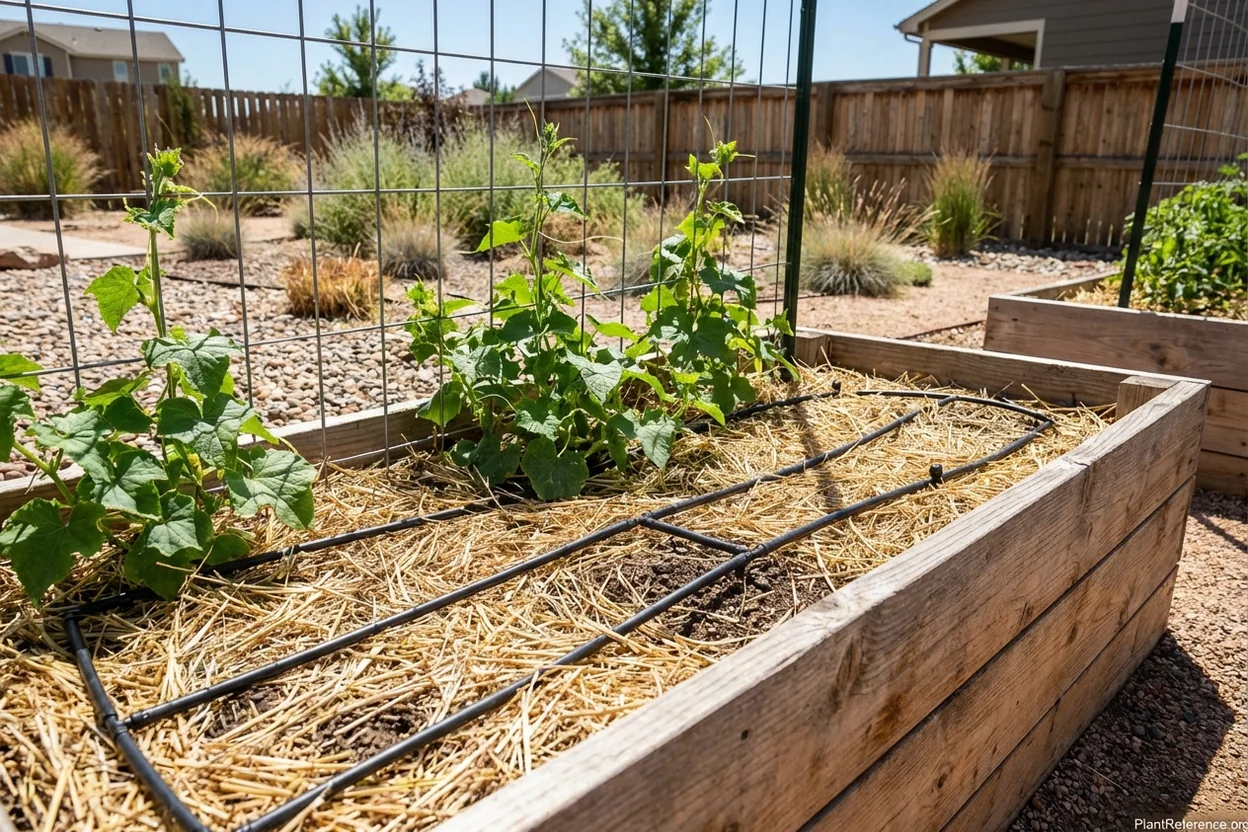
Denver averages 15 inches (38 cm) of annual precipitation—cucumbers need 1 to 1.5 inches (2.5-4 cm) per week, delivered almost entirely through irrigation. Drip irrigation on a timer is the only practical approach. Our dry air and intense sun drive evapotranspiration rates higher than at lower elevations. Mulch 3-4 inches (8-10 cm) with straw over the black plastic (once soil is warm) to reduce evaporation from our intense UV. Water in the early morning to warm root zones heading into Denver's sunny but cool-started days. 5 Best Drip Irrigation Kits for Raised Beds (Tested for Easy Installation)
Trellising
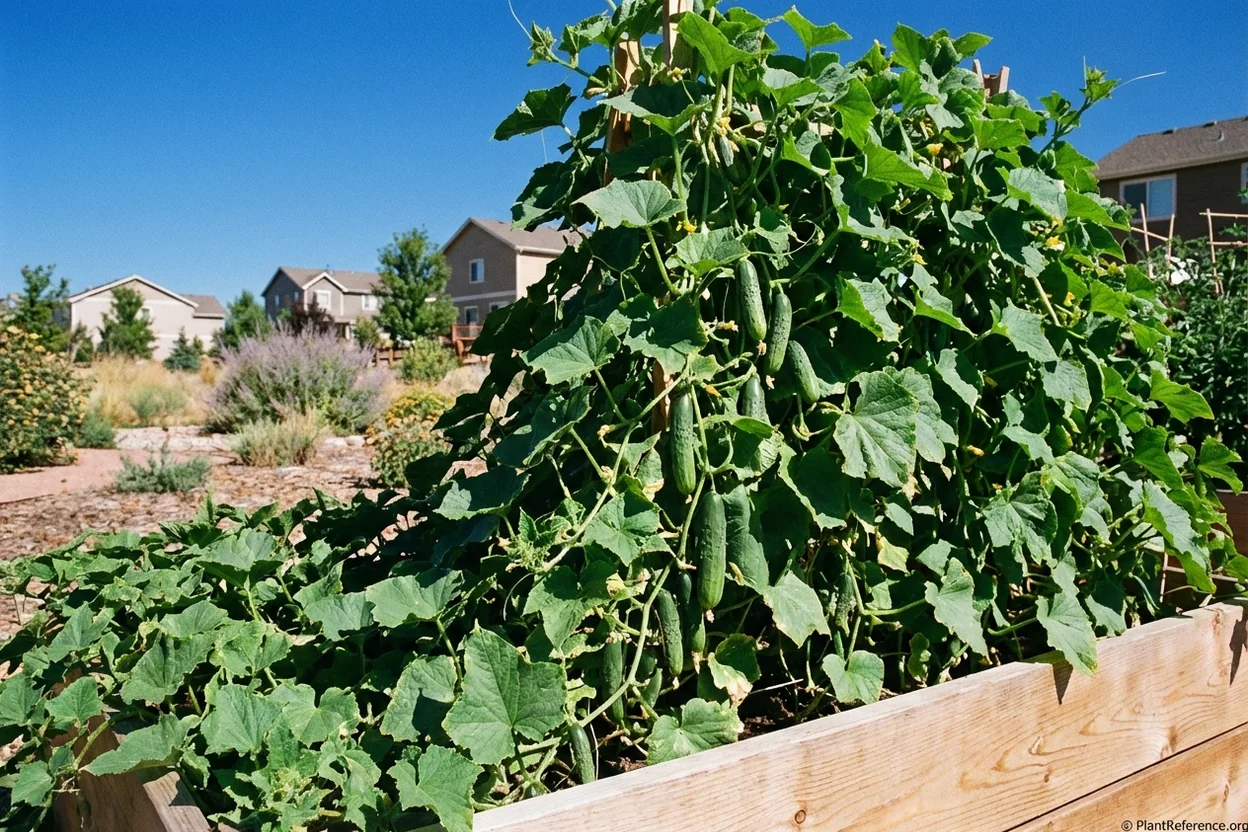
Vertical growing serves two purposes in Denver: maximizing sun exposure and providing fruit shade from our intense high-altitude UV. A 6-foot (1.8 m) trellis oriented north-south catches maximum sunlight while creating shade on the east face where fruit hangs. Trellised cucumbers warm faster because they're elevated above the cool ground layer that Denver's overnight temperature drops create. At 5,280 feet, nighttime temperatures drop 15-25°F from daytime highs—trellised plants recover faster in morning sun than ground-level vines because elevated foliage warms earlier.
Feeding
Side-dress with balanced fertilizer at flowering and every two weeks during production. Apply chelated iron if interveinal chlorosis appears—common in our alkaline conditions. Fish emulsion provides balanced nutrition without raising pH. Denver's intense photosynthesis rate (more UV energy at altitude) means plants process nutrients faster than at sea level during peak growth periods.
Pollination
Standard varieties need pollinators. Denver supports healthy bee populations, particularly in established neighborhoods and near parks. Our dry, sunny conditions are ideal for bee activity from June through September. Cucumis sativus 'Persian' parthenocarpic types provide insurance during cool May stretches when pollinators are less active—important when your season is already short and early fruit set matters. Plant sunflowers, lavender, and catmint near cucumber beds to attract native bees and improve pollination rates. Hand-pollinate with a small brush in the early morning if standard varieties aren't setting fruit within two weeks of female flower production—the compressed season means you can't afford to wait long for natural pollination to establish.
Hail Protection
Colorado hail is a real threat to cucumber vines from May through August. Hail events can shred foliage, damage fruit, and set plants back by weeks. Lightweight shade cloth (30%) over hoops provides some protection against smaller hail while also addressing sunscald. For gardens in hail-prone areas along the Front Range, having row covers or shade cloth ready to deploy when storms threaten protects the investment of time and water you've put into the crop. When to Plant Squash in Denver: Complete Guide + Best Varieties for Zone 5a
Troubleshooting Denver-Specific Problems
Late Spring Frost
The primary risk for Denver cucumbers. May 10 is the average last frost, but frost through late May is common at our altitude. Wall-o-Water protectors and floating row covers protect transplants through this volatile period. Never transplant without frost protection available. A single night of frost kills cucumbers, and in a 148-day season, replanting costs you 2-3 weeks you may not have. Raised Bed Too Hot in Summer: Protecting Plants from Heat Stress
Spider Mites
Denver's dry, dusty summers are ideal for spider mites—the primary cucumber pest at altitude. Stippled, bronzed leaves with fine webbing indicate infestation. Brief overhead misting from a hose raises leaf humidity and disrupts mite populations. Neem oil every 7-10 days provides preventative control. Insecticidal soap for active infestations. Monitor closely because heavy infestations defoliate vines and expose fruit to sunscald. Raised Bed Pest Problems: Identification and Organic Control Methods
Sunscald at Altitude
Denver's UV intensity at 5,280 feet is approximately 25% higher than at sea level. Exposed cucumber fruit develops white, papery sunscald patches. Choose varieties with heavy foliage (🌿Cucumis sativus 'Marketmore 76') for natural self-shading. Trellis so fruit hangs in shade created by foliage above. Apply 30% shade cloth if spider mites thin the canopy.
Alkaline Soil and Micronutrient Lockout
Denver's clay soils typically test pH 7.5-8.5. Interveinal chlorosis is common. Raised beds with controlled soil mix solve this. For in-ground plots, amend with elemental sulfur and apply chelated iron as foliar spray. Test soil through CSU Extension before amending. Best Soil Mix for Raised Beds: Creating the Perfect Growing Medium
Harvest & Storage
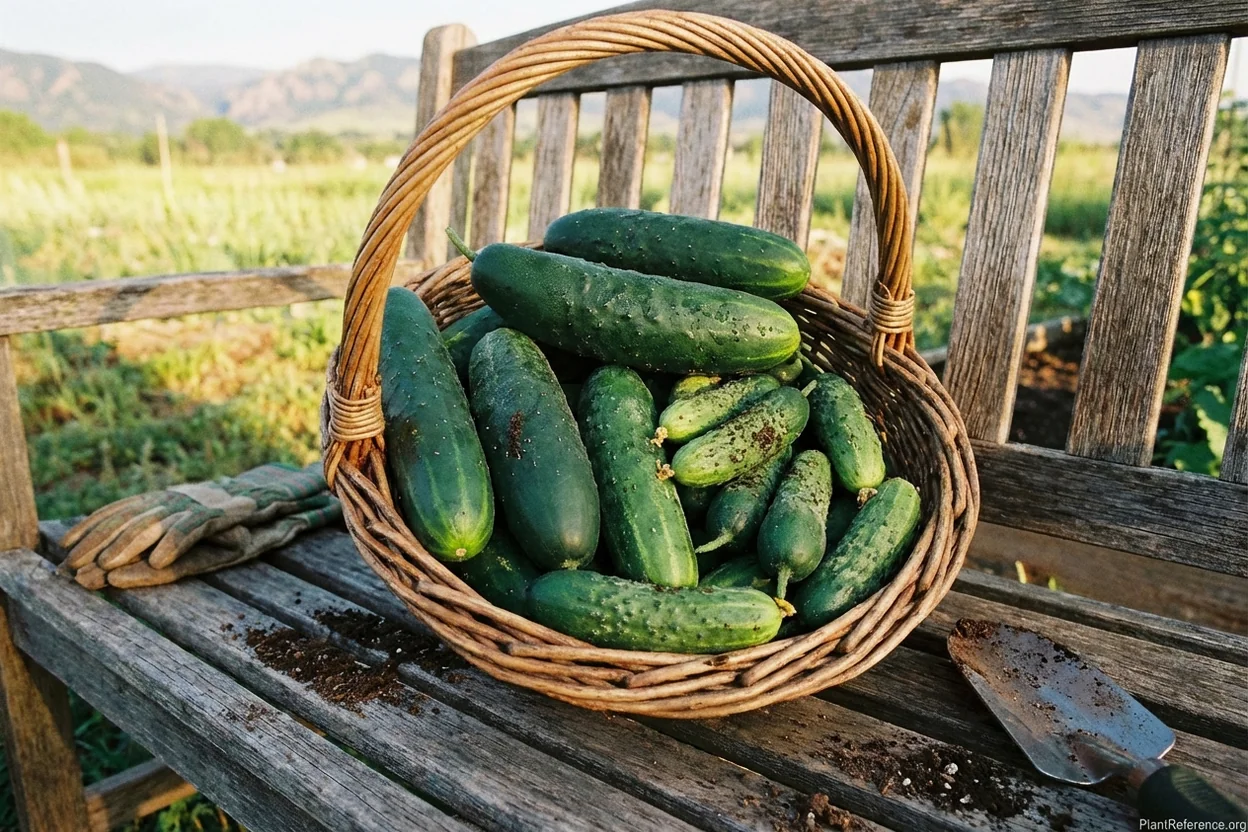
Harvest slicing cucumbers at 6-8 inches (15-20 cm) and pickling types at 2-4 inches (5-10 cm). Check vines every 2-3 days during peak production in July and August. Denver's dry heat drives moderate fruit development—faster than PNW cool-climate cities but slower than humid Southern gardens. Don't leave overripe fruit on vines—in a 148-day season, every productive day counts.
Cut with pruners rather than pulling. Harvest in the early morning before intense altitude sun heats fruit. A healthy 🌿Cucumis sativus 'Marketmore 76' plant produces 10-14 slicers in Denver; Cucumis sativus 'Persian' yields 12-18 snacking cucumbers. Cucumis sativus 'Boston Pickling' produces 15-20 small fruits with consistent picking.
Fresh cucumbers store 7-10 days refrigerated in a towel inside a loose bag. Denver-grown cucumbers develop excellent flavor from our intense sun and dry growing conditions—clean, concentrated taste without the bitterness that humid or water-stressed conditions create elsewhere. Colorado cucumbers from well-irrigated gardens are some of the best-tasting in the country. The Complete Guide to Raised Bed Gardening for Beginners (2025)
Reading about plants and recognising them are different skills. These three build the second.
- Daily PlantIdentify the day’s mystery plant from a close-up photograph.
- Keyed OutWork a dichotomous key, lead by lead, to name a hidden specimen.
- Name That PlantName a specimen from botanical clues dealt hardest first.
Free to play, no account needed
Nathan is a garden designer in Denver who focuses on water-wise plantings adapted to Colorado's Front Range climate. He grew up in Nebraska, studied environmental science in college, and fell into garden design after spending summers working at a native plant nursery in Fort Collins. Denver's climate is genuinely challenging—low humidity, intense UV, alkaline clay soil, and wild temperature swings that can go from 70°F to snow in 24 hours. Nathan designs gardens that handle all of that without supplemental irrigation once established. He writes about xeric gardening, native plant selection for the Front Range, and the practical realities of high-altitude growing.