When to Plant Cucumbers in Charlotte: Complete Guide + Best Varieties for Zone 7b
Pets & Toxicity
Recorded toxicity for plants linked in this guide. An unknown status is not a safety assessment.
No linked plant is recorded as toxicDetailsHide
Cucumis sativus 'Marketmore 76' — Toxicity
Non-toxicView Cucumis sativus 'Marketmore 76' plant profileCucumis sativus 'Straight Eight' — Toxicity
Non-toxicView Cucumis sativus 'Straight Eight' plant profileCucumis sativus 'Boston Pickling' — Toxicity
Non-toxicView Cucumis sativus 'Boston Pickling' plant profile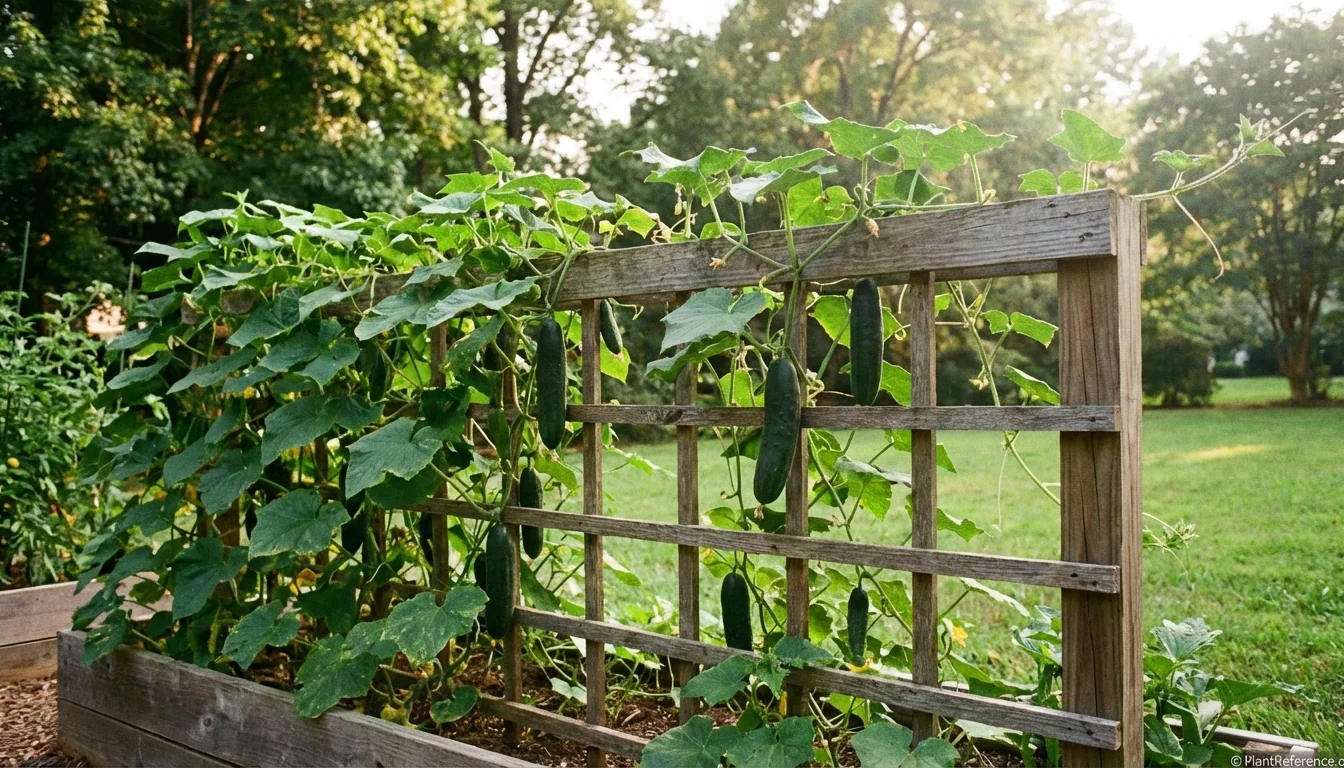
— Image © Plant Reference 2026
Charlotte's Piedmont climate gives you a long, warm growing season that cucumbers thrive in—214 days from last frost to first frost, with summer heat and humidity that drive vigorous vine growth. The challenge, as in all of the Carolina Piedmont, is managing disease pressure through that same humidity. I approach vegetable growing the way I approach garden design: with structure and intentionality. Cucumbers need a framework—vertical trellising for air circulation, succession plantings timed to replace vines as disease takes them, and variety selection based on performance rather than sentiment. The gardeners who harvest cucumbers from May through October in Charlotte are the ones who build that framework before the first seed goes in the ground. When to Plant Tomatoes in Charlotte: Complete Guide + Best Varieties for Zone 7b
Best Cucumber Varieties for Charlotte's Climate
Charlotte sits in USDA Zone 7b with an April 5 last frost and November 5 first frost—214 growing days. The Piedmont's combination of summer heat (regularly 90-95°F) and high humidity creates intense Downy Mildew (Pseudoperonospora cubensis) pressure that defines variety selection. Charlotte sits in the Eastern Seaboard migration corridor for Downy Mildew spores moving north from Florida each summer, with disease typically arriving by mid-June—earlier than Northern cities and roughly concurrent with the Raleigh area.
Variety | Type | Days to Harvest | Disease Resistance | Best For |
|---|---|---|---|---|
Slicing | 65 days | High (Scab, CMV, moderate DM/PM) | Essential for Charlotte disease pressure | |
Pickling | 55 days | Low-Moderate | Fast harvest, fall pickling | |
🌿Cucumis sativus 'Persian' (Beit Alpha) | Specialty | 55 days | Moderate (PM) | Containers, patios, compact gardens |
Specialty | 65 days | Moderate (Rust, drought tolerant) | Heat tolerance, visual interest | |
Slicing | 63 days | Low (CMV tolerance only) | Early spring before disease builds | |
🌿Cucumis sativus 'Marketmore 76' (fall crop) | Slicing | 65 days | High | August planting for fall harvest |
🌿Cucumis sativus 'Marketmore 76' is the foundation of any Charlotte cucumber planting. Its disease resistance package—Scab, Cucumber Mosaic Virus, and intermediate Downy and Powdery Mildew resistance—provides the extended productive life that susceptible varieties cannot achieve in our humidity. The "stay-green" gene maintains the dark green fruit appearance that makes for an attractive harvest even during heat stress. Consistent 8-inch (20 cm) slicers from first harvest through vine decline.
🌿Cucumis sativus 'Lemon' adds visual interest that I appreciate from a design perspective—the round, bright yellow fruit is striking in garden beds and on the table. Beyond aesthetics, its drought tolerance and heat-adapted genetics mean it produces through conditions that shut down 🌿Cucumis sativus 'Straight Eight'. It's genuinely burpless with mild flavor even under moderate stress.
🌿Cucumis sativus 'Straight Eight' produces excellent early-season fruit from April transplants but plan to remove it by mid-summer. It succumbs to Downy Mildew and produces bitter fruit under heat stress—both inevitable in Charlotte. Use it for the spring harvest window and transition to 🌿Cucumis sativus 'Marketmore 76' for sustained production.
🌿Cucumis sativus 'Boston Pickling' at 55 days is the fall crop variety every Charlotte gardener should plant. An August sowing matures into cooler September and October nights that enhance crispness and flavor for pickling. 🌿Cucumis sativus 'Persian' types work beautifully on patios and in container gardens, producing compact vines with thin-skinned fruit that doesn't need peeling. When to Plant Peppers in Charlotte: Complete Guide + Best Varieties for Zone 7b
Specific Planting Dates for Charlotte Gardens
Charlotte's April 5 last frost and November 5 first frost frame a generous 214-day season. The Piedmont warms steadily through spring with fewer late cold snaps than mountain or coastal North Carolina, making April planting dates reliable.
Indoor Seed Starting: March 15-22 (2-3 weeks before last frost). Start in biodegradable pots at 75°F (24°C) for 3-5 day germination. Charlotte homes warm early in spring and a south-facing window provides adequate light for stocky transplants by mid-March.
Transplant Outdoors: April 12-20 (one week after last frost, soil at 60°F/16°C). Harden off seedlings for 5-7 days. Charlotte's April weather is generally cooperative, but keep row covers available through mid-April for the occasional late cold front that drops nighttime temperatures into the upper 30s.
Direct Sow (spring): April 15-May 15. Piedmont soils warm to 60°F (16°C) by mid-April in most Charlotte gardens. Red clay holds warmth well once heated but drains poorly—check temperature at 4 inches (10 cm) deep with a thermometer rather than guessing.
Succession Plantings: Every 3 weeks from mid-April through late July. Charlotte's 214-day season supports 4-5 successions. This succession framework is essential—your April planting will decline to Downy Mildew by July, but your June and July successions carry production into fall with fresh, disease-free foliage.
Fall Planting: August 1-15. The fall crop in Charlotte consistently produces the best-quality fruit. Cooler temperatures from mid-September through October reduce disease pressure, restore reliable pollination, and develop the firm texture and clean flavor that heat-stressed summer fruit lacks. Plan specifically for this planting—it's not an afterthought.
Final Sowing Deadline: August 15. Quick-maturing 🌿Cucumis sativus 'Boston Pickling' (55 days) planted August 15 matures around October 9 with four weeks of harvest before frost. Row covers extend production 2-3 weeks into November. Raised Bed Vegetable Garden Layout: Planning for Maximum Production
Complete Growing Guide for Charlotte
Soil: Piedmont Red Clay Solutions
Charlotte's Piedmont red clay is mineral-rich but heavy, sticky, and poorly drained—the opposite of what cucumbers want. Approach soil preparation as building the foundation for the entire season. Work 4-6 inches (10-15 cm) of compost into the top 12 inches (30 cm) to improve structure and drainage. Most Piedmont soils test slightly acidic (5.5-6.5 pH), which falls within the 6.0-6.8 range cucumbers prefer. The NC State Extension Soil Lab tests for about $4—the best investment in Charlotte gardening.
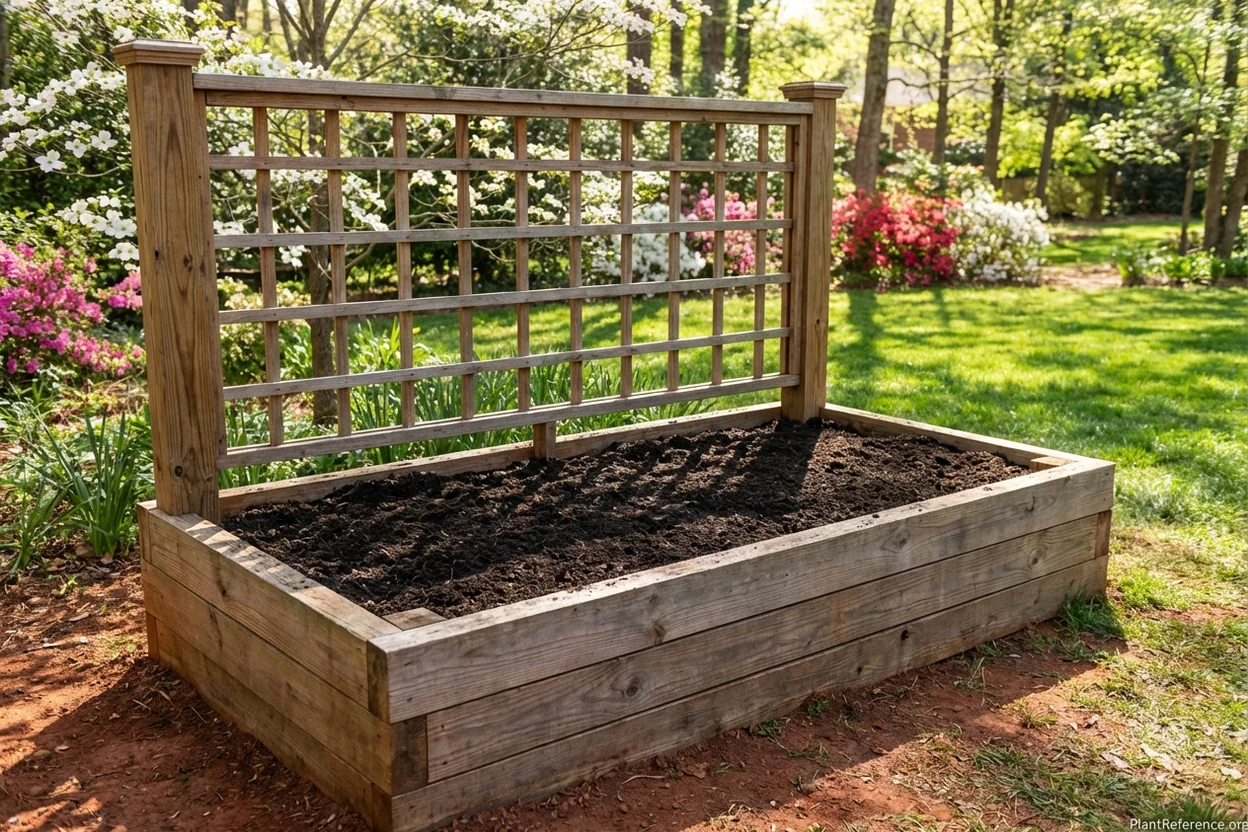
Raised beds provide the most reliable results. Build from cedar or rot-resistant lumber (untreated pine lasts only 2-3 years in Charlotte's humidity) and fill with 60% topsoil, 30% compost, and 10% perlite. The structure and drainage a raised bed provides are worth the upfront investment—you'll use it for years. The clay beneath serves as a natural water reservoir during dry stretches once roots grow deep enough to access it. How to Build a Raised Garden Bed: Step-by-Step Construction Guide
Trellising: Structure Matters
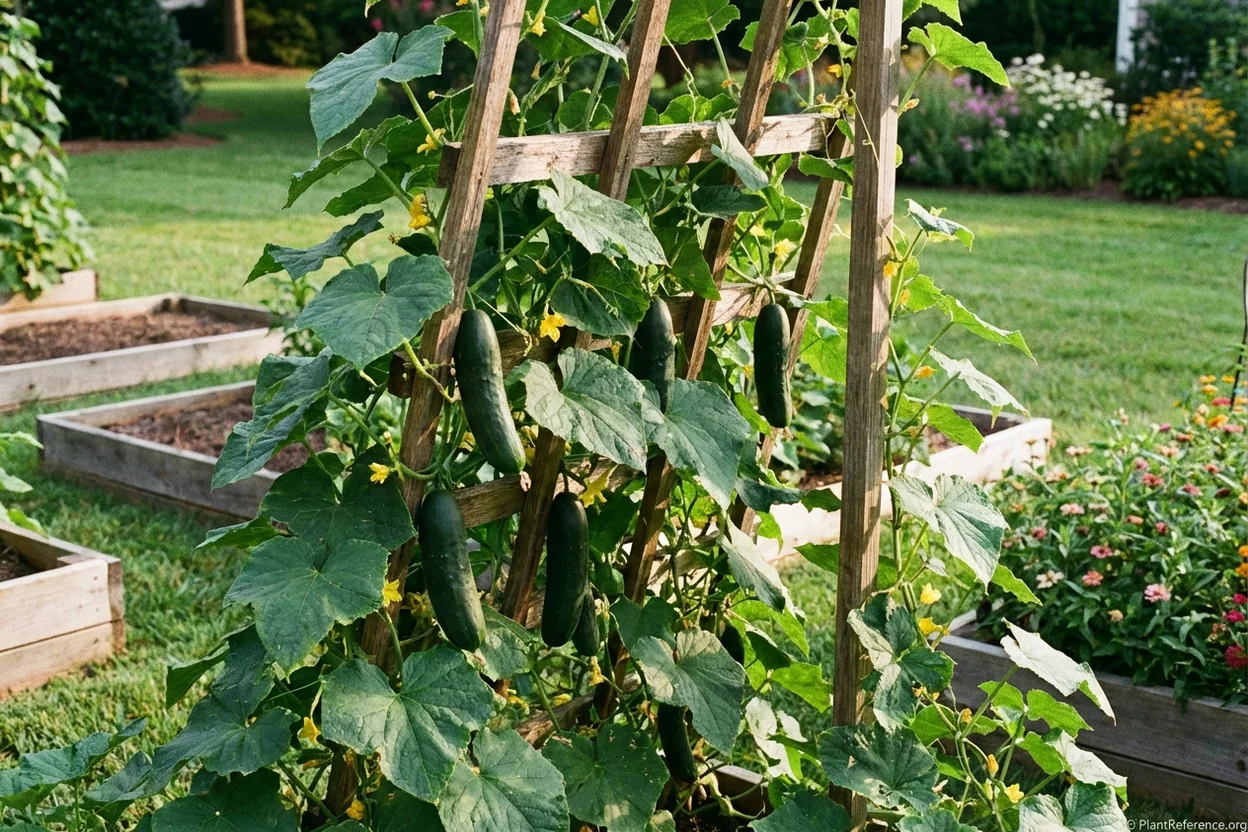
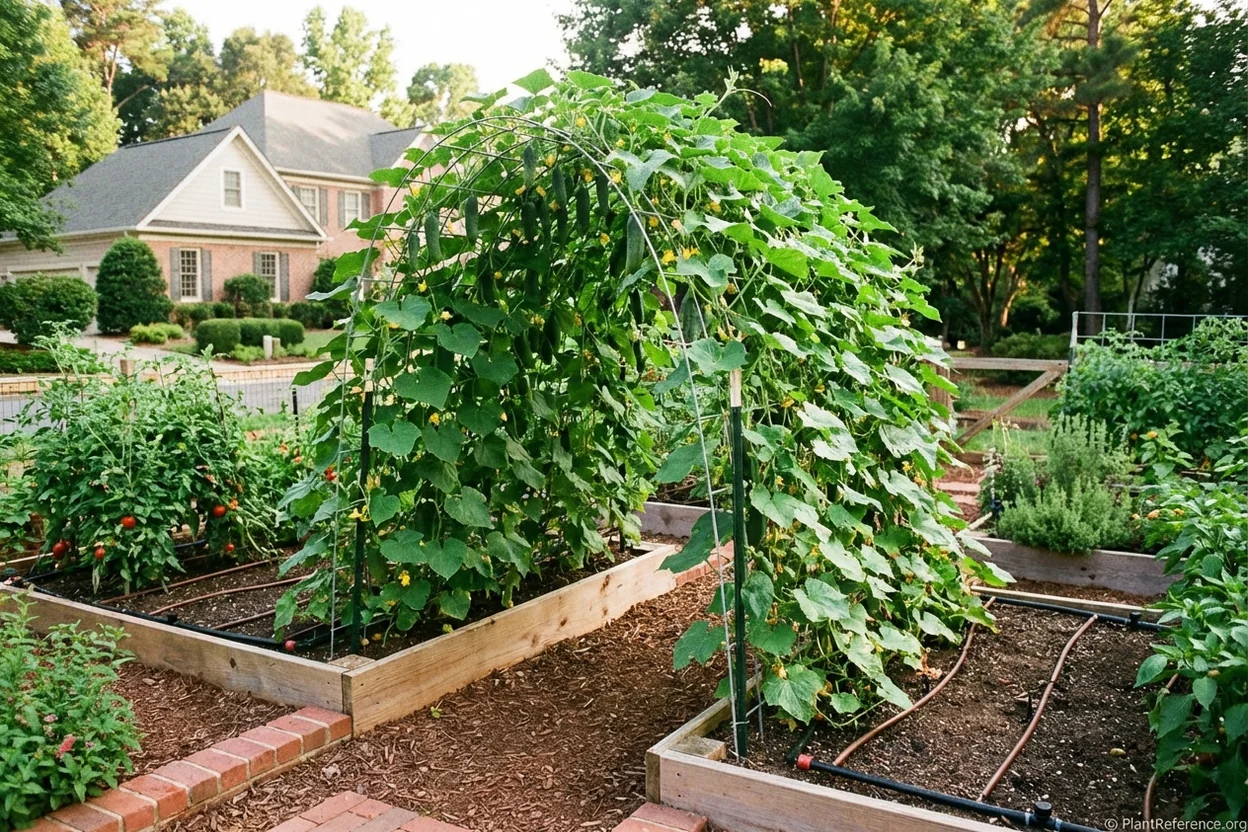
Vertical trellising isn't decorative in Charlotte—it's the most effective disease management tool available. Downy and Powdery Mildew thrive in the stagnant, humid air at ground level. A 6-foot (1.8 m) trellis lifts foliage into moving air where leaves dry faster after rain and morning dew. I design trellises as permanent garden structures—cattle panels on treated posts or steel wire on cedar frames. They serve the garden year-round as supports for beans, peas, and small-fruited tomatoes in addition to cucumbers. Invest in materials that last rather than rebuilding lightweight structures annually. A well-built trellis pays for itself in reduced disease losses over multiple seasons of use. 5 Best Drip Irrigation Kits for Raised Beds (Tested for Easy Installation)
Watering and Mulching
Cucumbers need 1 to 1.5 inches (2.5-4 cm) per week. Charlotte gets adequate annual rainfall but summer distribution is inconsistent—heavy thunderstorms followed by dry stretches. Drip irrigation at the soil line provides consistent moisture and keeps foliage dry. In Charlotte's humidity, overhead watering accelerates the foliar diseases that already threaten cucumber production.
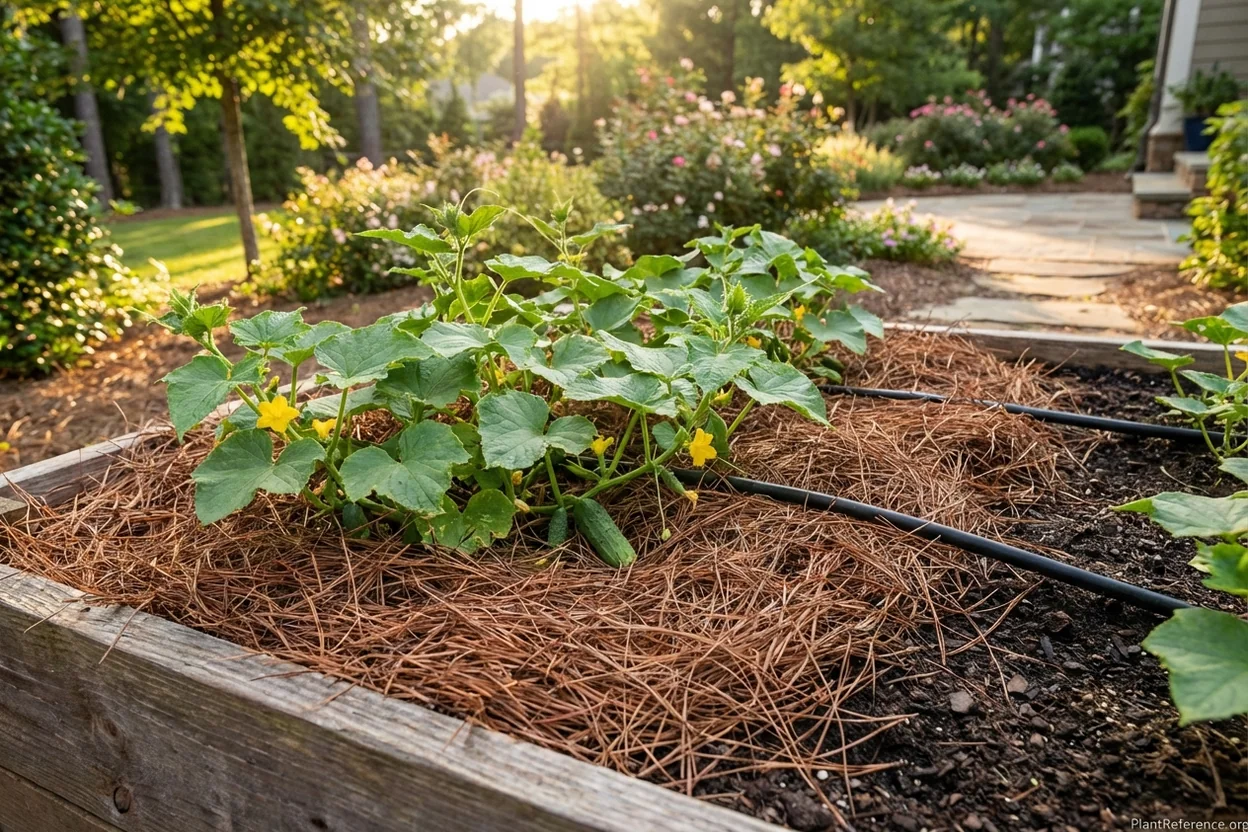
Mulch 3 inches (8 cm) with pine straw or shredded hardwood after transplanting. Mulch prevents soil splash onto lower leaves—a primary vector for soil-borne pathogens reaching cucumber foliage. Pine straw is abundantly available in the Charlotte area and decomposes slowly enough to maintain coverage through the entire growing season.
Side-dress with balanced fertilizer at flowering and again at first fruit set. Compost tea biweekly during production supports vine vigor through Charlotte's long, demanding growing season. Shift from nitrogen-heavy feeding to phosphorus and potassium once fruit begins forming.
Pollination
Standard varieties like 🌿Cucumis sativus 'Marketmore 76' and 🌿Cucumis sativus 'Straight Eight' need pollinator visits for fruit set. Charlotte generally supports healthy bee populations, especially in established neighborhoods with diverse plantings. During July and August heat waves above 90°F (32°C), pollen viability decreases and pollinators reduce activity—this is when 🌿Cucumis sativus 'Persian' parthenocarpic types outperform standard monoecious varieties. Plant flowering companions like zinnias and sunflowers near cucumber beds to support pollinator populations throughout the season. When to Plant Squash in Charlotte: Complete Guide + Best Varieties for Zone 7b
Troubleshooting Charlotte-Specific Problems
Downy Mildew
The dominant cucumber disease in Charlotte. Spores migrate north from Florida each growing season, reaching the Carolina Piedmont by mid-June. Angular yellow spots on upper leaf surfaces that darken to brown and kill foliage—progression is rapid in our humidity. Prevention: 🌿Cucumis sativus 'Marketmore 76' for resistance, vertical trellising for air circulation, drip irrigation to keep foliage dry, and prompt removal of infected leaves. Succession planting is the framework that makes Charlotte cucumber growing sustainable—when spring plantings decline in July, fresh June and July successions maintain production. Raised Bed Pest Problems: Identification and Organic Control Methods
Heat Stress and Bitter Fruit
Charlotte regularly exceeds 90°F (32°C) in July and August with humidity that amplifies heat stress. These conditions trigger cucurbitacin production in susceptible varieties—🌿Cucumis sativus 'Straight Eight' is particularly prone to bitterness. Consistent deep watering prevents the water stress that compounds heat-induced bitterness. 🌿Cucumis sativus 'Marketmore 76' maintains fruit quality at higher temperatures than any other open-pollinated variety. The fall crop sidesteps the worst heat entirely and produces consistently sweet, clean-flavored fruit. Raised Bed Too Hot in Summer: Protecting Plants from Heat Stress
Piedmont Clay Drainage
Heavy rain saturates Piedmont clay and suffocates cucumber roots. The symptoms—wilting despite wet soil—mimic drought and lead gardeners to water more, worsening the problem. Check soil moisture at 4 inches (10 cm) before watering a wilting plant. If saturated, drainage is the issue. Raised beds are the permanent solution. For in-ground plots, create planting mounds 6-8 inches (15-20 cm) above grade and amend with compost annually. Best Soil Mix for Raised Beds: Creating the Perfect Growing Medium
Cucumber Beetles
Present from April through October in Charlotte. Striped and spotted cucumber beetles vector bacterial wilt and feed on foliage, flowers, and fruit. Row covers over spring transplants provide early exclusion—remove at flowering. Trap cropping with Blue Hubbard squash concentrates beetles for targeted control. Monitor consistently because bacterial wilt is untreatable once established in a vine.
Harvest & Storage
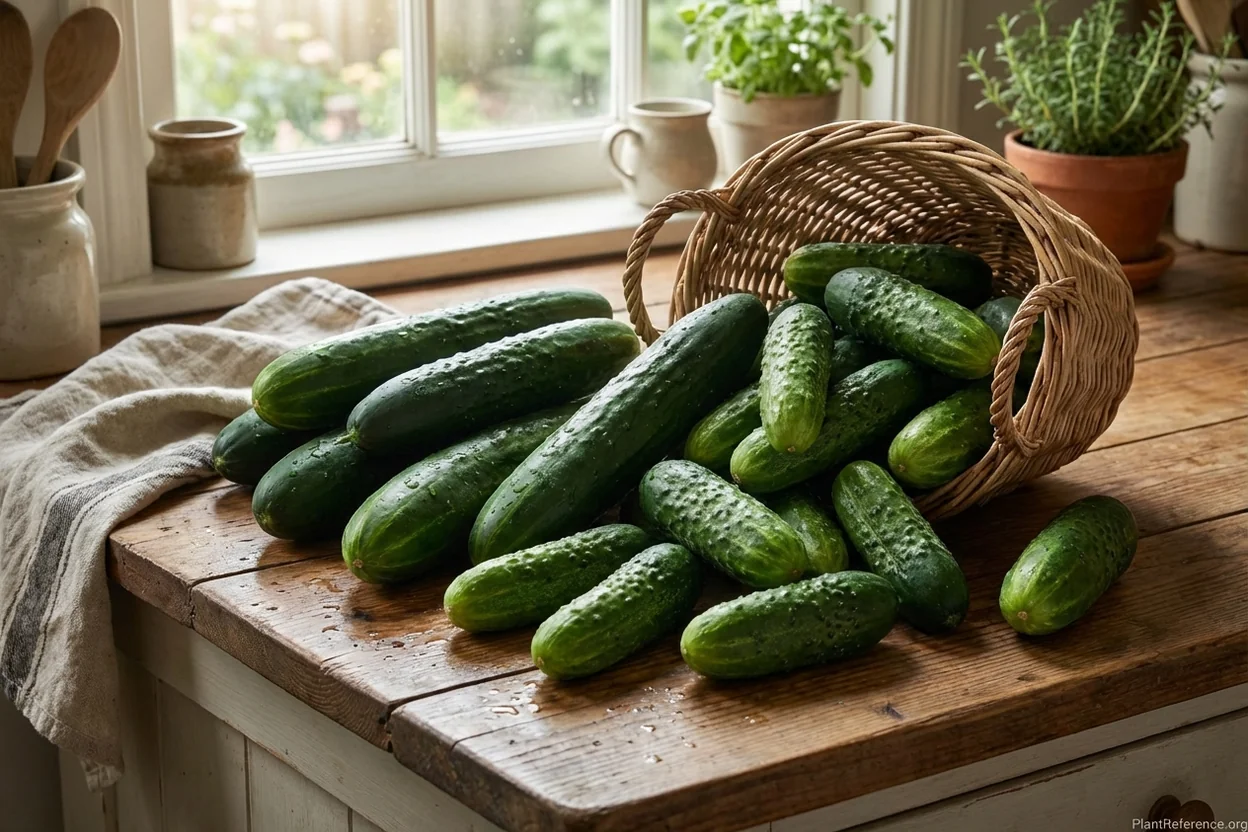
Harvest slicing cucumbers at 6-8 inches (15-20 cm) and pickling types at 2-4 inches (5-10 cm). Check vines daily during Charlotte's hot summer months—humid heat drives rapid fruit development and cucumbers go from ideal to overgrown in 36-48 hours. Every overripe fruit left on the vine signals reduced production. In a climate where disease already shortens productive life, consistent harvesting is essential for maximizing yield from each planting.
Cut with pruners rather than pulling to prevent vine damage. Harvest in the early morning before heat builds—fruit picked cool stores longer and maintains better texture. A healthy 🌿Cucumis sativus 'Marketmore 76' plant produces 10-15 slicing cucumbers per planting cycle. With 4-5 successions across the season, a single garden row yields 50+ cucumbers—more than enough for a family with plenty to share.
Fresh cucumbers store 7-10 days refrigerated in a towel inside a loose bag. 🌿Cucumis sativus 'Boston Pickling' from the fall crop makes the best refrigerator pickles—Piedmont fall nights develop the crisp texture and clean flavor that define quality pickles. The fall harvest is the culmination of the season's succession framework—the planned result of intentional timing that started with March seed starting. The Complete Guide to Raised Bed Gardening for Beginners (2025)
Frequently Asked Questions
Reading about plants and recognising them are different skills. These three build the second.
- Daily PlantIdentify the day’s mystery plant from a close-up photograph.
- Keyed OutWork a dichotomous key, lead by lead, to name a hidden specimen.
- Name That PlantName a specimen from botanical clues dealt hardest first.
Free to play, no account needed
Sophie is a garden designer in Charlotte who came to the U.S. from France about a decade ago. Her design sensibility blends the structured formality of French garden traditions with the looser, more naturalistic style that works well in the Southeast. She has a degree in landscape architecture and worked at several design firms in Charlotte before going independent. She specializes in year-round garden structure, mixed borders, and creating outdoor spaces that feel intentional without being rigid. Sophie writes about garden design principles, plant combinations, and creating visual interest across seasons—always grounded in what actually grows well in the Piedmont.