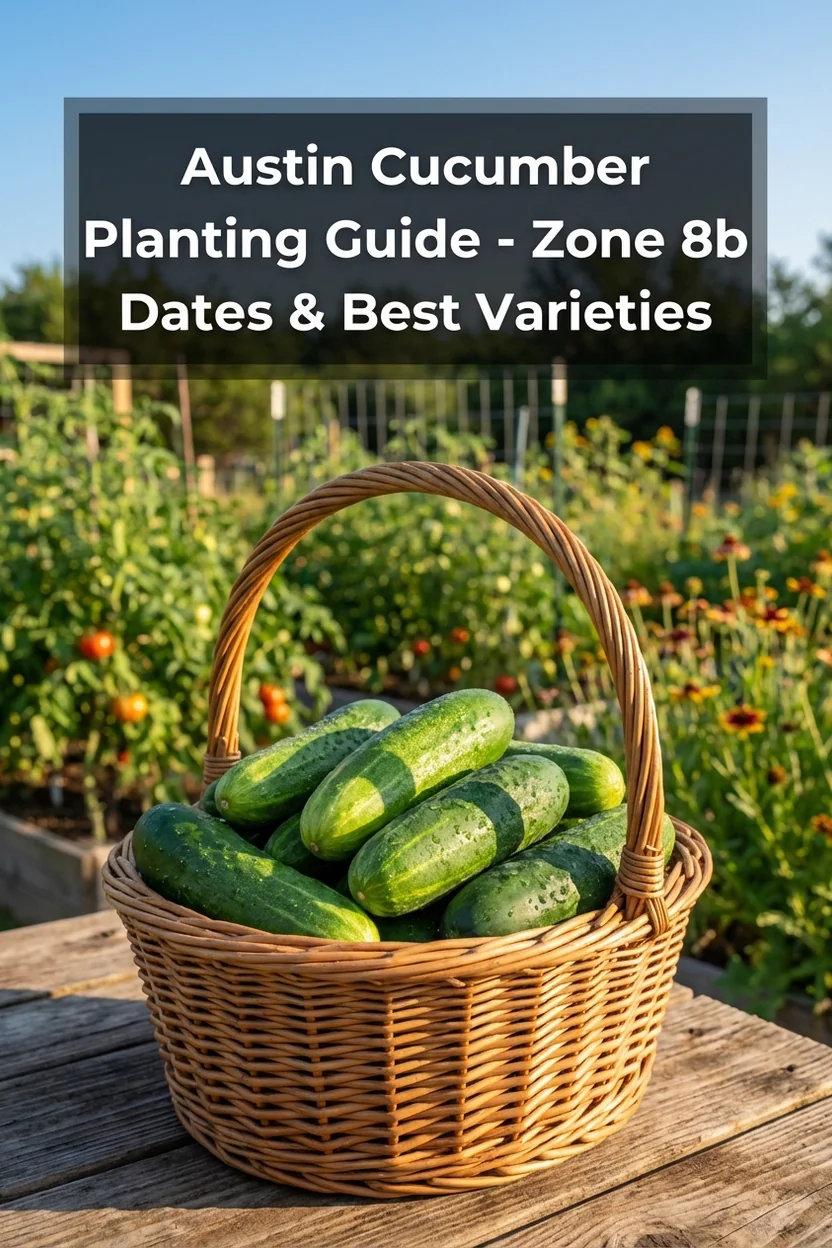
When to Plant Cucumbers in Austin: Complete Guide + Best Varieties for Zone 8b
Pets & Toxicity
Recorded toxicity for plants linked in this guide. An unknown status is not a safety assessment.
No linked plant is recorded as toxicDetailsHide
Cucumis sativus 'Marketmore 76' — Toxicity
Non-toxicView Cucumis sativus 'Marketmore 76' plant profileCucumis sativus 'Straight Eight' — Toxicity
Non-toxicView Cucumis sativus 'Straight Eight' plant profileCucumis sativus 'Boston Pickling' — Toxicity
Non-toxicView Cucumis sativus 'Boston Pickling' plant profile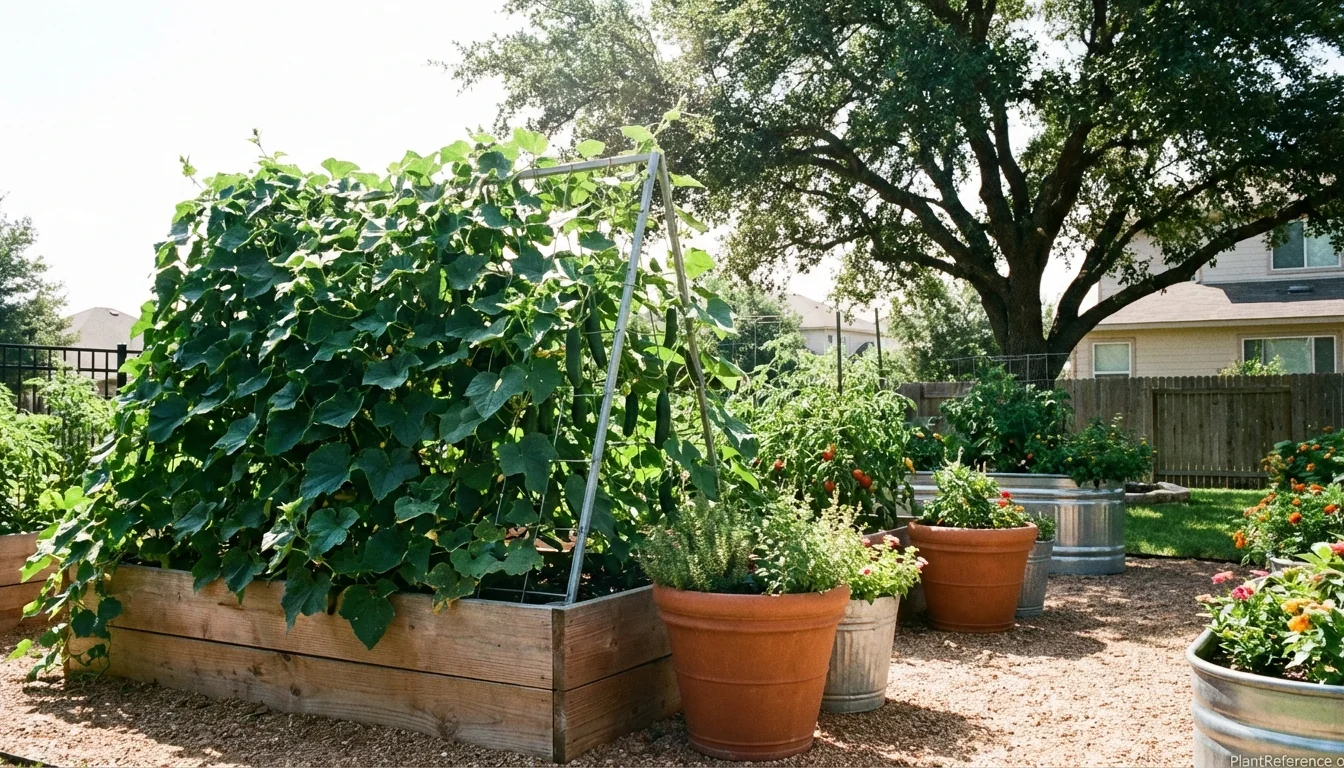
— Image © Plant Reference 2026
I killed my first cucumber planting in Austin by putting it out too late—direct sowed in May thinking I had plenty of time, and the vines produced three cucumbers before July heat shut them down. Lesson learned. Austin gives you 274 days on paper (March 1 to November 30), but cucumbers don't care about frost dates when the real problem is sustained 100°F+ heat from mid-June through August. The approach that works is treating cucumbers as a two-season crop: get plants in the ground as early as March allows, harvest hard through May and early June, then plant again in August for a fall crop that often outperforms spring. You don't need expensive equipment to make this work. Five-gallon buckets with drainage holes, homemade compost, and basic drip tubing produce cucumbers just as well as fancy raised bed systems—I've tested both extensively. When to Plant Tomatoes in Austin: Complete Guide + Best Varieties for Zone 8b
Best Cucumber Varieties for Austin's Climate
Austin sits in USDA Zone 8b with a March 1 last frost and November 30 first frost—274 growing days. The Texas Hill Country climate delivers extreme summer heat, alkaline limestone-derived soils, periodic drought, and unpredictable spring weather that can swing from 80°F to frost in 24 hours. Heat tolerance and drought resilience matter most here. Disease resistance is secondary because Austin's relatively low summer humidity reduces Downy Mildew pressure compared to the humid Southeast—though Powdery Mildew still appears in fall.
Variety | Type | Days to Harvest | Disease Resistance | Best For |
|---|---|---|---|---|
Slicing | 65 days | High (Scab, CMV, moderate DM/PM) | Best heat-tolerant slicer | |
Specialty | 65 days | Moderate (Rust, drought tolerant) | Superior Texas drought tolerance | |
🌿Cucumis sativus 'Persian' (Beit Alpha) | Specialty | 55 days | Moderate (PM) | Containers, hot-climate adapted |
Pickling | 55 days | Low-Moderate | Fast spring harvest, fall pickling | |
Slicing | 63 days | Low (CMV tolerance only) | Early spring only, bitters in heat | |
🌿Cucumis sativus 'Marketmore 76' (fall crop) | Slicing | 65 days | High | August planting for fall harvest |
🌿Cucumis sativus 'Marketmore 76' is the slicer I grow every year in Austin. Its "stay-green" gene prevents the yellowing and bitter fruit that heat stress causes in other varieties. It maintains quality longer than anything else at 100°F+ and the disease resistance provides fall-season insurance when Powdery Mildew appears in October.
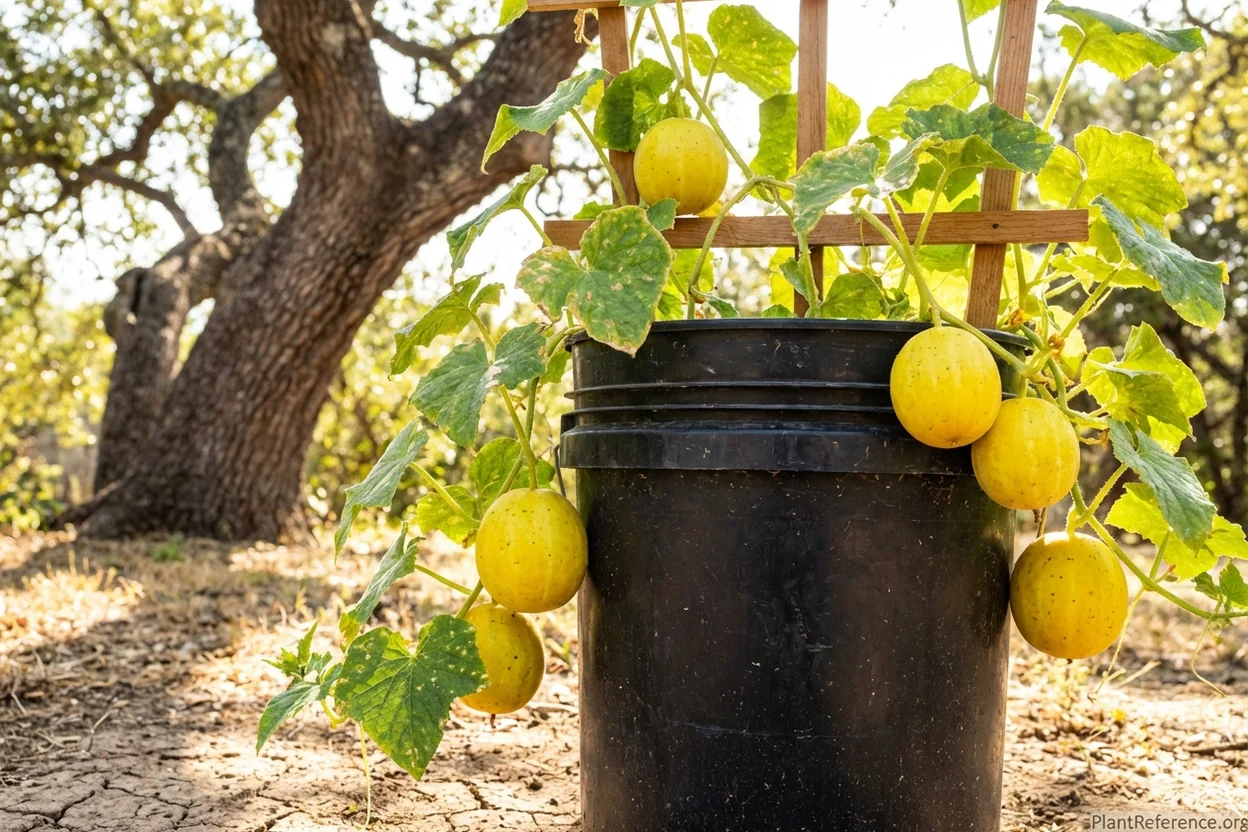
🌿Cucumis sativus 'Lemon' is my drought champion. When Austin's summer water restrictions kick in and I can only irrigate every other day, 🌿Cucumis sativus 'Lemon' keeps producing mild, burpless fruit while other varieties turn bitter or stop entirely. The round yellow fruit is also great for people new to gardening—it's forgiving of the mistakes we all make.
🌿Cucumis sativus 'Persian' types work exceptionally well in containers on my south-facing driveway. The Beit Alpha strains were bred for hot, dry Mediterranean climates that match central Texas conditions. Parthenocarpic fruit set means production continues even during peak heat when pollinators hide in the shade. At 55 days, they maximize both the spring and fall windows.
🌿Cucumis sativus 'Straight Eight' gives you good early spring fruit but plan to pull it by June. It's the first variety to produce bitter cucumbers in Austin heat, and it goes from decent to inedible faster than any other variety I've grown here. When to Plant Peppers in Austin: Complete Guide + Best Varieties for Zone 8b
Specific Planting Dates for Austin Gardens
Austin's March 1 last frost comes early for Zone 8b, but Hill Country spring weather is volatile—I've seen frost as late as March 20. The November 30 first frost gives a very long fall window that most Austin gardeners underutilize.
Indoor Seed Starting: February 10-20 (2-3 weeks before last frost). Start at 75°F (24°C) for 3-5 day germination. A sunny windowsill works fine in Austin houses that warm up fast in February.
Transplant Outdoors: March 8-15 (one week after last frost, soil at 60°F/16°C). Harden off 5 days. Watch forecasts closely through mid-March—Austin's spring cold fronts can drop temperatures 30°F overnight.
Direct Sow (spring): March 10-April 15. Austin's limestone-derived clay warms quickly in spring sun. Soil hits 60°F (16°C) by mid-March in most gardens. Don't sow after April 15—65-day varieties won't produce enough before June heat arrives.
Spring Production Window: Late April through mid-June. Harvest aggressively. Once daytime temperatures consistently exceed 100°F (38°C) and nighttime lows stay above 75°F (24°C), quality drops rapidly. Shade cloth extends this window by 2-3 weeks.
Fall Planting: August 1-September 1. Start seeds indoors or direct sow under 30-50% shade cloth. Transplants handle August heat better than seeds. The fall crop is often my best of the year—September and October temperatures drop into the ideal 75-85°F range and stay there.
Fall Production Window: September 15 through late November. Austin's long fall is a gift for cucumbers. While Northern cities are hitting frost in October, Austin gardeners are harvesting peak-quality fruit.
Final Sowing Deadline: September 1. A 55-day variety planted September 1 matures around October 26 with five weeks of harvest before the November 30 frost. Raised Bed Vegetable Garden Layout: Planning for Maximum Production
Complete Growing Guide for Austin
Soil and Budget-Friendly Approaches
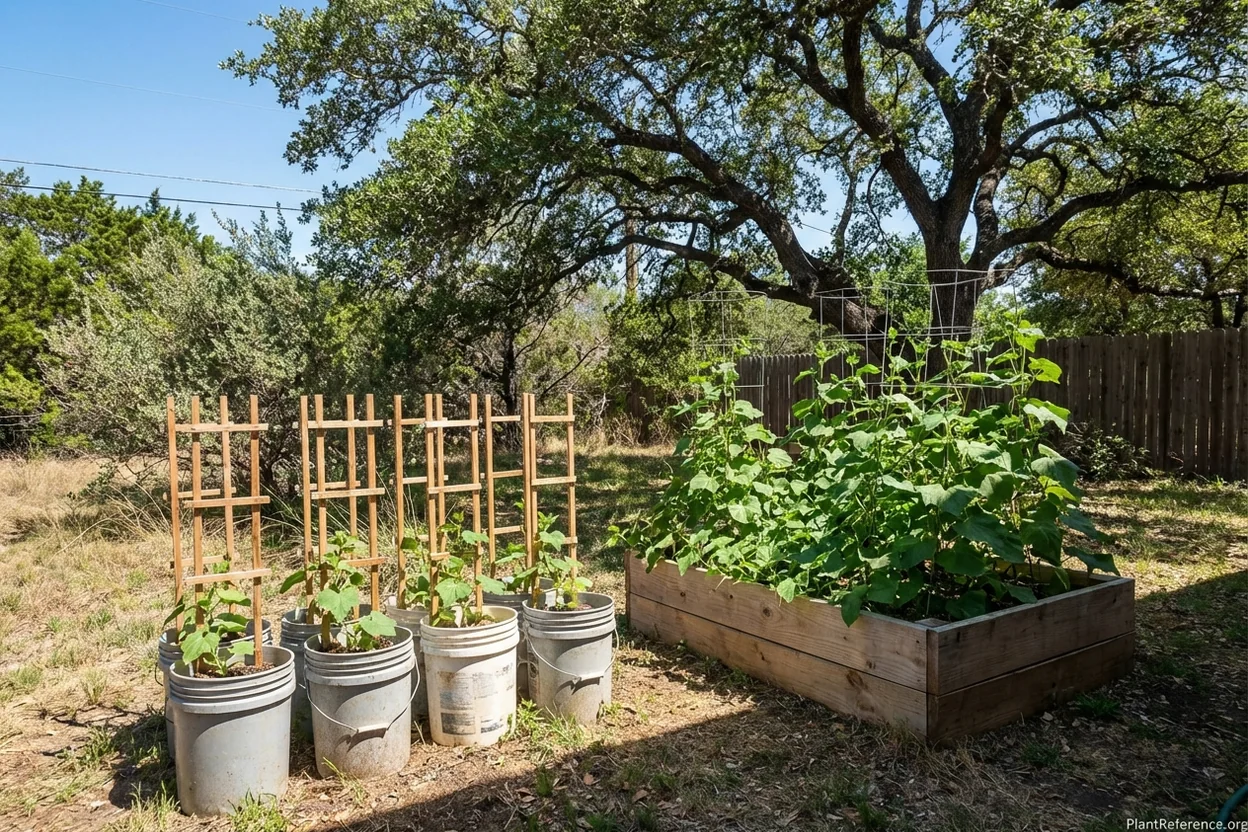
Austin sits on limestone bedrock with alkaline clay soil (pH 7.5-8.5). Cucumbers prefer 6.0-6.8, so managing alkalinity is important. Raised beds (60% topsoil, 30% compost, 10% expanded shale) bypass the alkalinity problem. But you don't need expensive raised beds—five-gallon buckets from hardware stores ($3-5 each) with four holes drilled in the bottom work great for 🌿Cucumis sativus 'Persian' and compact varieties. Fill with potting mix and you've got a perfectly controlled growing environment for under $10 per plant.
For in-ground plots, work 4-6 inches (10-15 cm) of compost into the top 12 inches (30 cm). Homemade compost from kitchen scraps and yard waste is free and addresses both pH and fertility over time. The Texas A&M AgriLife Extension provides soil testing for under $15—worth every penny before spending money on amendments you might not need. Austin's native soil is actually mineral-rich once the alkalinity is corrected. How to Build a Raised Garden Bed: Step-by-Step Construction Guide
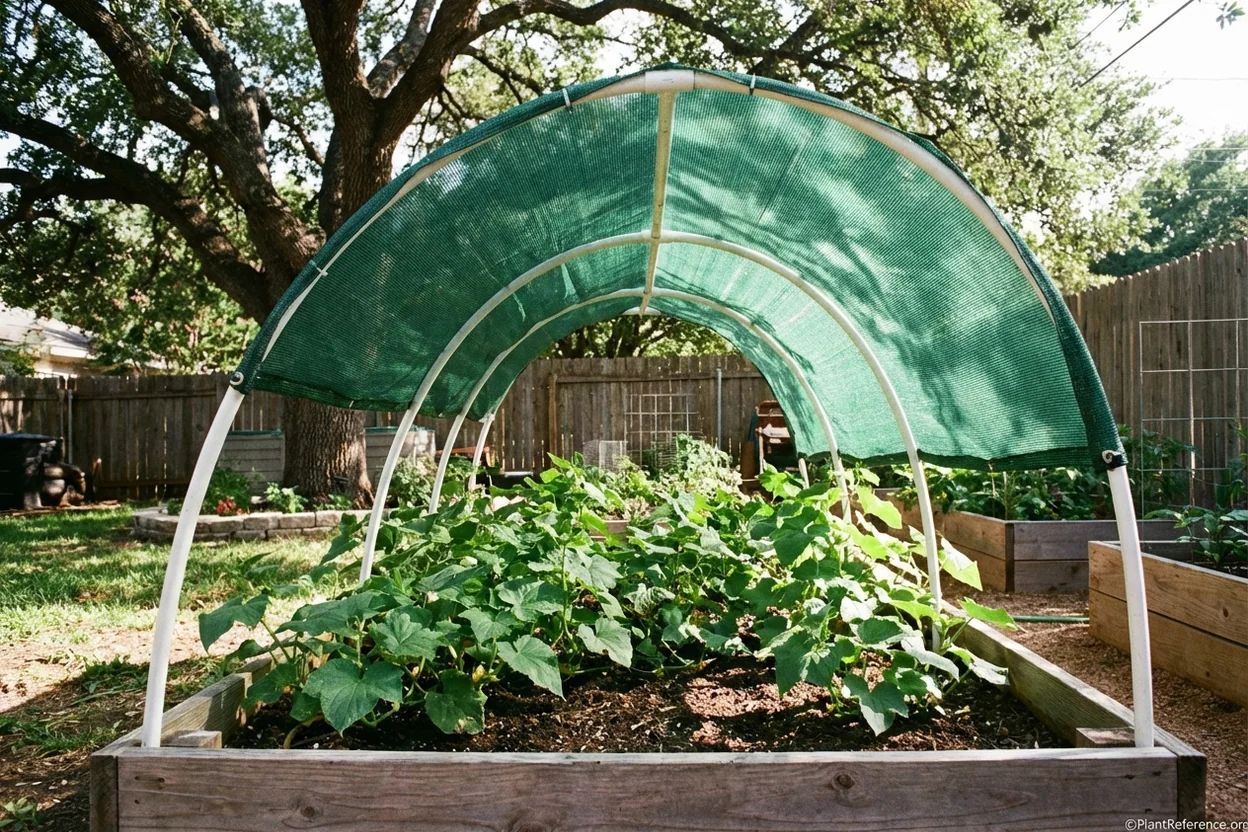
Shade Cloth for Summer Extension
Shade cloth (30-50%) extends spring production by 2-3 weeks and is essential for establishing fall transplants in August. It reduces leaf temperature by 10-15°F and decreases water demand by 20-25%. Install over spring vines in June and over fall transplants at planting. Remove from fall crops once daytime highs drop below 90°F consistently in late September. You can build a shade structure from PVC pipe and clips for under $30—no need for expensive greenhouse kits. 5 Best Drip Irrigation Kits for Raised Beds (Tested for Easy Installation)
Watering
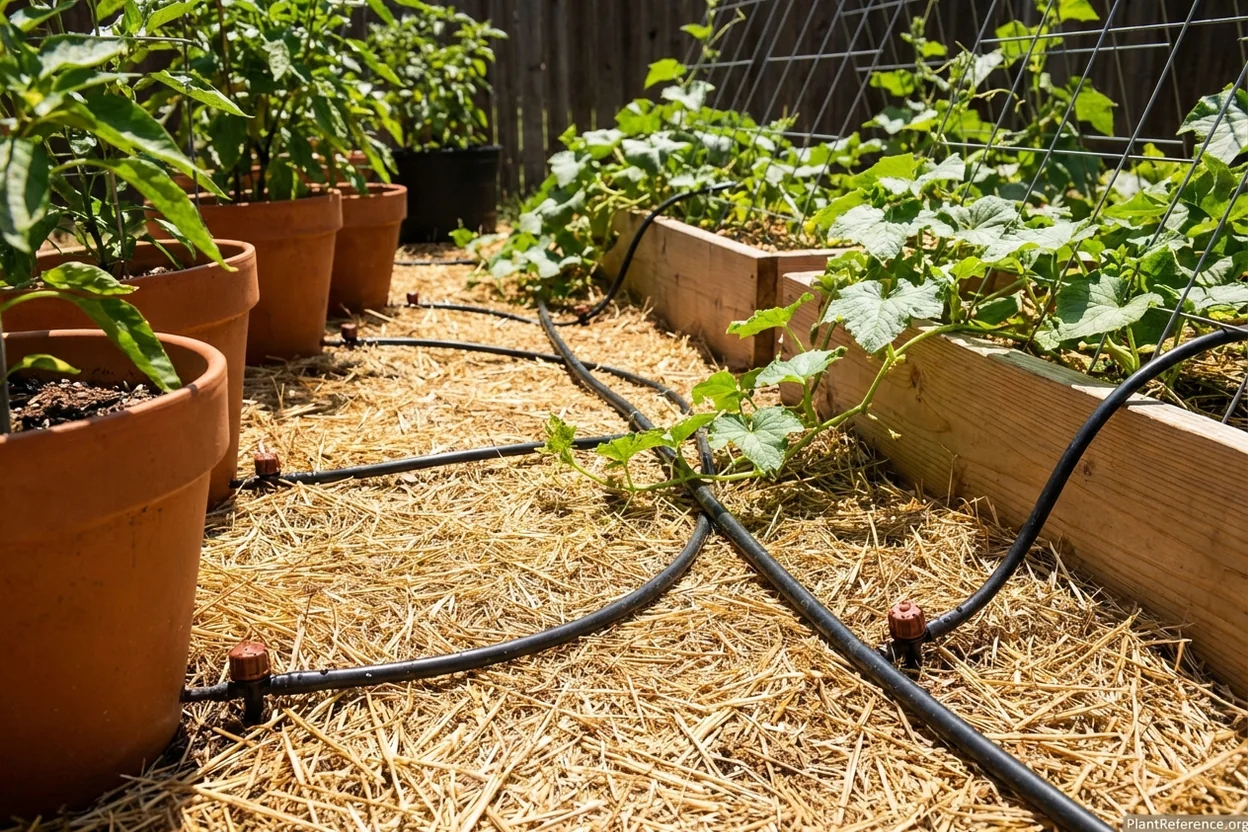
Austin averages about 35 inches (89 cm) of annual rainfall—more than Western cities but unreliably timed, with drought common from June through September when cucumbers need water most. Cucumbers need 1.5 to 2 inches (4-5 cm) weekly in Texas heat. Drip irrigation on a timer is the most water-efficient approach. A basic drip kit costs $40-60 and pays for itself in reduced water bills within one season.
Mulch 3-4 inches (8-10 cm) with straw or shredded hardwood bark. In Austin heat, unmulched soil surface temperatures can exceed 140°F (60°C). Mulch reduces irrigation needs by 25-30% and keeps roots alive when surface temperatures would otherwise cook them. For containers, self-watering inserts or water reservoirs help maintain consistent moisture between irrigations. Container soil dries faster than raised bed soil in Austin heat, so daily monitoring during summer is essential even with drip systems.
Trellising
Trellis vertically to keep fruit off scorching ground surfaces and provide airflow. A basic cattle panel section ($25) on two T-posts makes a sturdy trellis that handles Austin's spring thunderstorm winds and lasts for years. Trellised cucumbers produce straighter fruit, are easier to harvest, and use less garden space—important when your growing area is a driveway or small backyard. When to Plant Squash in Austin: Complete Guide + Best Varieties for Zone 8b
Feeding
Side-dress with balanced fertilizer at flowering and every two weeks. Fish emulsion is cheap and effective without raising soil pH further. Apply chelated iron if you see yellowing between leaf veins—that's alkaline pH locking up iron, not a watering problem. Compost tea from homemade compost provides free supplemental feeding that supports soil biology through our long, demanding growing season.
Pollination
Standard varieties need pollinators. Austin supports excellent bee populations, especially near wildflower areas (we're the wildflower capital, after all). During peak heat above 100°F, pollinators retreat to shade during midday. 🌿Cucumis sativus 'Persian' parthenocarpic types bypass this problem and keep producing through the hottest weeks. For standard varieties, hand-pollinate before 9 AM when temperatures are coolest. When to Plant Kale in Austin: Complete Guide + Best Varieties for Zone 8b
Troubleshooting Austin-Specific Problems
Extreme Heat and Pollen Sterility
Austin summers routinely exceed 100°F (38°C) with multi-week stretches above 105°F. These conditions cause pollen sterility, flower drop, and cucurbitacin-driven bitterness. Shade cloth, deep watering, and heavy mulch are the primary tools. 🌿Cucumis sativus 'Marketmore 76' handles heat better than other slicers. 🌿Cucumis sativus 'Persian' bypasses pollination failure entirely. Accept the mid-summer gap and focus on maximizing spring and fall windows—that's not giving up, it's smart planning. Raised Bed Too Hot in Summer: Protecting Plants from Heat Stress
Alkaline Soil and Iron Chlorosis
Austin's limestone soils test pH 7.5-8.5. Yellowing between green veins signals iron lockout. Apply chelated iron as a foliar spray for quick correction. Amend with elemental sulfur over time. Containers and raised beds with controlled soil mix bypass the problem entirely and are the most budget-effective solution for gardeners dealing with extremely alkaline native soil. Raised Bed Pest Problems: Identification and Organic Control Methods
Cucumber Beetles
Active from March through November in Austin. Row covers over spring transplants exclude beetles during establishment. Kaolin clay spray deters feeding on exposed plants. In fall, beetle pressure typically decreases. Monitor because cucumber beetles vector bacterial wilt, which is untreatable once established.
Powdery Mildew in Fall
The primary disease concern for Austin's fall crop when humidity rises in October and November. Space plants for airflow, trellis vertically, and apply neem oil preventatively every 7-10 days from October. 🌿Cucumis sativus 'Marketmore 76' has intermediate resistance that extends fall production. Best Soil Mix for Raised Beds: Creating the Perfect Growing Medium
Harvest & Storage
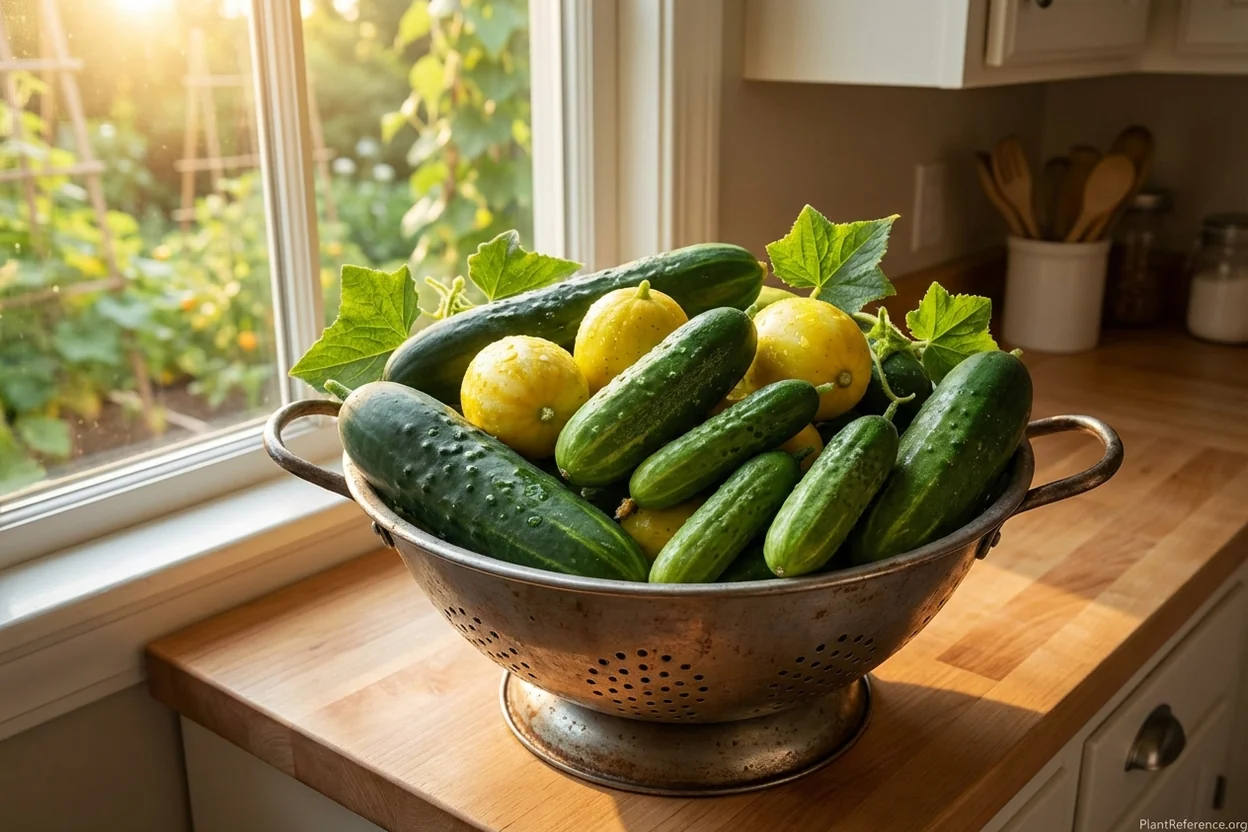
Harvest slicing cucumbers at 6-8 inches (15-20 cm) and pickling types at 2-4 inches (5-10 cm). During spring production, check vines daily—Austin heat drives rapid growth. In the fall window, every 2-3 days is sufficient. Don't leave overripe fruit—in a two-season system, every productive day counts.
Harvest before 8 AM in summer. Cut with pruners rather than pulling. A healthy 🌿Cucumis sativus 'Marketmore 76' in spring produces 8-12 slicers; in fall, 10-15 because temperatures stay in the sweet spot longer. 🌿Cucumis sativus 'Persian' in a five-gallon bucket produces 10-15 snacking cucumbers per season window. Total annual yield from a modest Austin setup (one raised bed plus a few containers) reaches 40-60 cucumbers across both seasons.
Fresh cucumbers store 7-10 days refrigerated in a towel inside a loose bag. 🌿Cucumis sativus 'Boston Pickling' from the fall crop makes excellent refrigerator pickles—Austin's October nights produce the crisp texture that makes great pickles. The fall harvest is the payoff for planning two seasons instead of fighting through one Texas summer. The Complete Guide to Raised Bed Gardening for Beginners (2025)
Frequently Asked Questions
Reading about plants and recognising them are different skills. These three build the second.
- Daily PlantIdentify the day’s mystery plant from a close-up photograph.
- Keyed OutWork a dichotomous key, lead by lead, to name a hidden specimen.
- Name That PlantName a specimen from botanical clues dealt hardest first.
Free to play, no account needed
Carlos grew up helping his abuelos tend their backyard garden in San Antonio, Texas, but didn't get serious about growing his own food until he bought his first house in Austin. He works as an HVAC technician during the day and gardens in the early mornings and evenings. Carlos specializes in heat-tolerant vegetables and container growing—essential skills for Texas summers and his south-facing driveway that gets intense sun. He's learned through plenty of failures (multiple dead fig trees, countless bolted lettuce crops) and now helps neighbors troubleshoot their own gardens. His YouTube channel documenting his container tomato experiments has a small but dedicated following. Carlos is passionate about growing food on a budget, often sourcing free containers and building his own compost.