When to Plant Carrots in Milwaukee: Zone 5b Dates + Best Varieties
Pets & Toxicity
Recorded toxicity for plants linked in this guide. An unknown status is not a safety assessment.
No linked plant is recorded as toxicDetailsHide
Daucus carota ssp. sativus 'Nantes' — Toxicity
Non-toxicView Daucus carota ssp. sativus 'Nantes' plant profileDaucus carota ssp. sativus 'Chantenay' — Toxicity
Non-toxicView Daucus carota ssp. sativus 'Chantenay' plant profileDaucus carota ssp. sativus 'Imperator' — Toxicity
Non-toxicView Daucus carota ssp. sativus 'Imperator' plant profileDaucus carota ssp. sativus 'Rainbow' — Toxicity
Non-toxicView Daucus carota ssp. sativus 'Rainbow' plant profile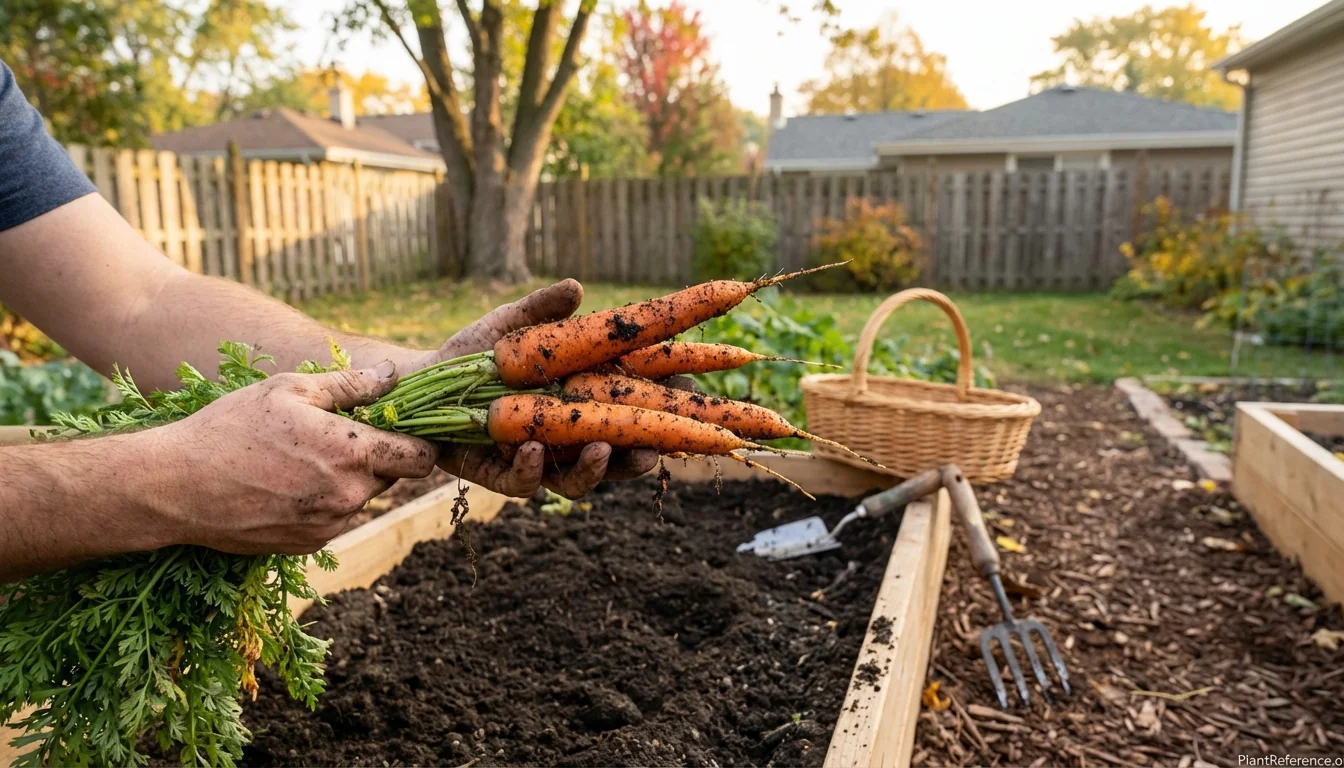
— Image © Plant Reference 2026
Growing carrots in Milwaukee means working with Zone 5b's 139-day frost-free window and the heavy clay soil that most of us Wisconsin gardeners know all too well. I've been growing carrots in the Milwaukee area for over thirty years, and the trick is understanding that this root crop needs you to think about what's happening underground, not just above it. With the right variety and proper soil preparation built around our May 15 last frost date, you can pull sweet, straight carrots from spring through a frost-sweetened fall harvest.
Best Carrot Varieties for Milwaukee's Zone 5b Climate
Milwaukee's heavy clay-loam soil and relatively short 139-day season mean you need varieties bred to handle resistance underground and mature before the cold shuts things down. 🌿Daucus carota ssp. sativus 'Nantes' (DAW-kus kah-ROH-tah) varieties fall into distinct groups, and picking the right one for your soil type is half the battle here in southeastern Wisconsin.
Daucus carota ssp. sativus 'Danvers' is my top pick for most Milwaukee gardens. This variety was literally bred to push through heavier soils. Its conical shape tapers to a pointed tip that wedges into clay-loam far better than cylindrical types. At 70-80 days to maturity, it fits comfortably within our growing season and stores beautifully through winter. If you have not amended your soil heavily, start here.
🌿Daucus carota ssp. sativus 'Nantes' is the variety you grow for eating quality. Cylindrical roots with a blunt tip produce sweet, crisp flesh with almost no woody core. The catch is that 🌿Daucus carota ssp. sativus 'Nantes' demands loose, friable soil. If you garden in raised beds with amended soil, this variety will reward you with the best-tasting carrots you have ever pulled from the ground. Maturing in 65-75 days, it is also a smart choice for succession planting.
🌿Daucus carota ssp. sativus 'Chantenay' is your insurance policy for tough Milwaukee soil. These short, stout roots grow only 4-5 inches (10-13 cm) long but can reach 2-3 inches (5-8 cm) across at the shoulder. They do not need deep soil, making 🌿Daucus carota ssp. sativus 'Chantenay' perfect for containers, shallow beds, or gardens where you are still working on improving clay subsoil. Sweet when harvested young, though they turn coarse if left too long.
🌿Daucus carota ssp. sativus 'Imperator' produces those long, slender supermarket-style carrots reaching 8-11 inches (20-28 cm). Beautiful roots, but demanding. 🌿Daucus carota ssp. sativus 'Imperator' needs deep, sandy, obstruction-free soil at least 12 inches (30 cm) deep. Unless you have a deeply amended raised bed, skip this one for your in-ground Milwaukee garden.
🌿Daucus carota ssp. sativus 'Rainbow' adds color and nutritional variety to your harvest. These mixes produce white, yellow, orange, coral, and purple roots from a single planting. Most Rainbow blends cross Nantes and Imperator traits, producing 7-9 inch (18-23 cm) tapered roots. They perform well in Milwaukee's raised beds and add visual interest to the kitchen. Plant 🌿Daucus carota ssp. sativus 'Rainbow' in your best-prepared soil for straight, colorful roots.
Variety | Days to Maturity | Best For | Notes for Milwaukee |
|---|---|---|---|
Daucus carota ssp. sativus 'Danvers' | 70-80 days | Storage & heavy soil | Best choice for unamended Milwaukee clay-loam |
65-75 days | Fresh eating | Needs raised beds or amended soil; top flavor | |
65-75 days | Shallow or clay soil | Short roots handle compacted soil and containers | |
75-85 days | Deep raised beds | Requires 12+ inches loose soil; not for clay | |
70-75 days | Color & variety | Multiple phytochemicals; needs good soil prep |

Specific Planting Dates for Milwaukee
Milwaukee's planting calendar for carrots revolves around two key dates: our May 15 average last frost and the October 1 first frost. Carrots are cool-season crops that actually grow best when temperatures sit between 60-70°F (16-21°C), so our spring and fall conditions are ideal. The trick in southeastern Wisconsin is getting seeds in the ground early enough for spring crops and timing fall crops to hit peak sweetness after the first frosts.
Spring carrots go in earlier than most people think. Because carrot seeds germinate in soil as cool as 40°F (4°C), you can direct sow as soon as the ground is workable in early to mid-April. That is a full month before our last frost date. The seeds will germinate slowly in cold soil—expect 14-21 days—but they tolerate light frost without trouble. Just be patient. I tell my garden club friends all the time: carrot seeds test your patience more than anything else in the garden.
For your fall storage crop, count backward from the October 1 first frost. A Daucus carota ssp. sativus 'Danvers' at 75 days needs to go in by mid-July at the latest. This timing puts the bulking phase in September's cooling temperatures, which concentrates sugars in the roots and produces the sweetest carrots of the year. Fall carrots left in the ground through several light frosts develop remarkable sweetness as the cold converts stored starch into sugar.
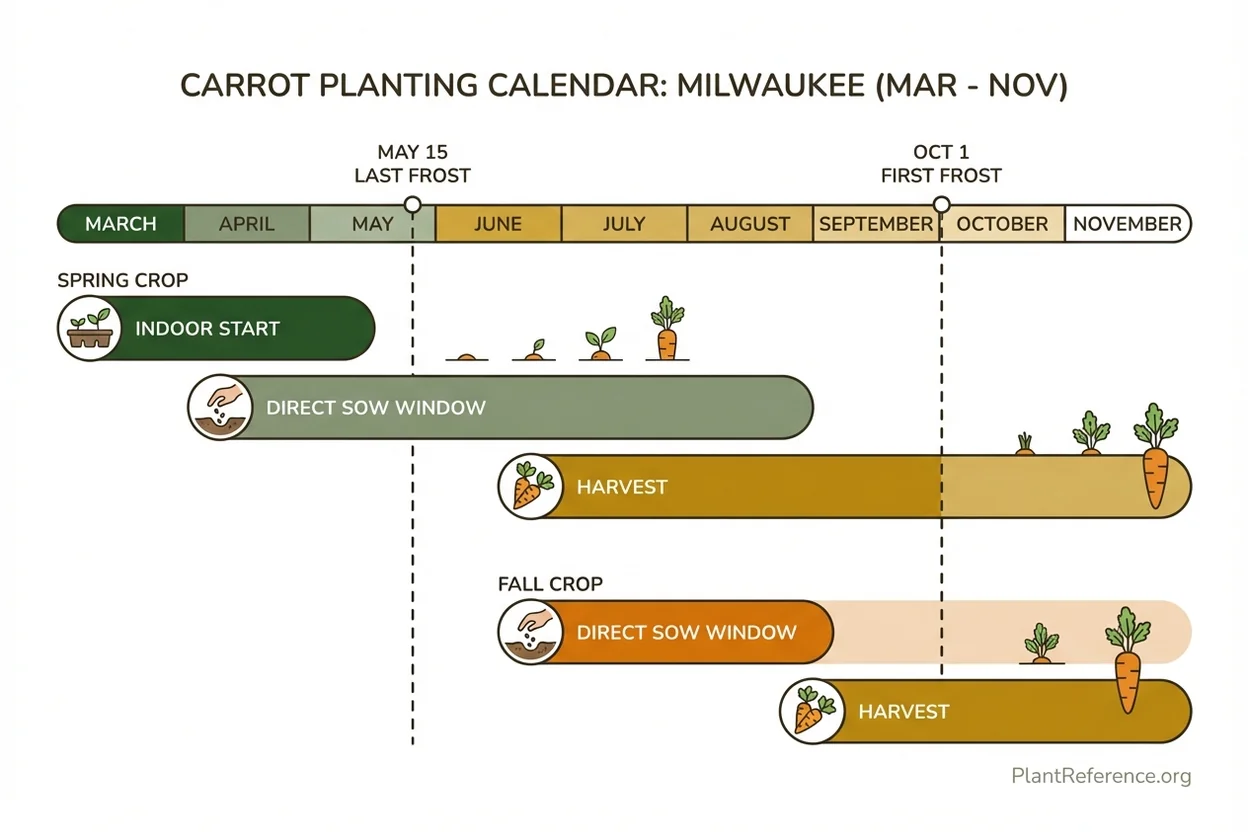
Spring direct sow: Early April to mid-May (as soon as soil is workable)
Succession sowing: Every 2-3 weeks through mid-May for staggered harvest
Fall storage crop: Late June to mid-July
Expected spring harvest: Late June through August
Expected fall harvest: Late September through November
Season ends: October 1 (first frost), though carrots tolerate light frost
Complete Growing Guide for Milwaukee
Soil Preparation
This is where Milwaukee gardeners either succeed or fail with carrots. Our native clay-loam soil is dense, compacts easily, and resists the downward growth that carrots need. If you plant carrot seeds directly into unamended Milwaukee clay and hope for the best, you will pull short, forked, twisted roots every time.
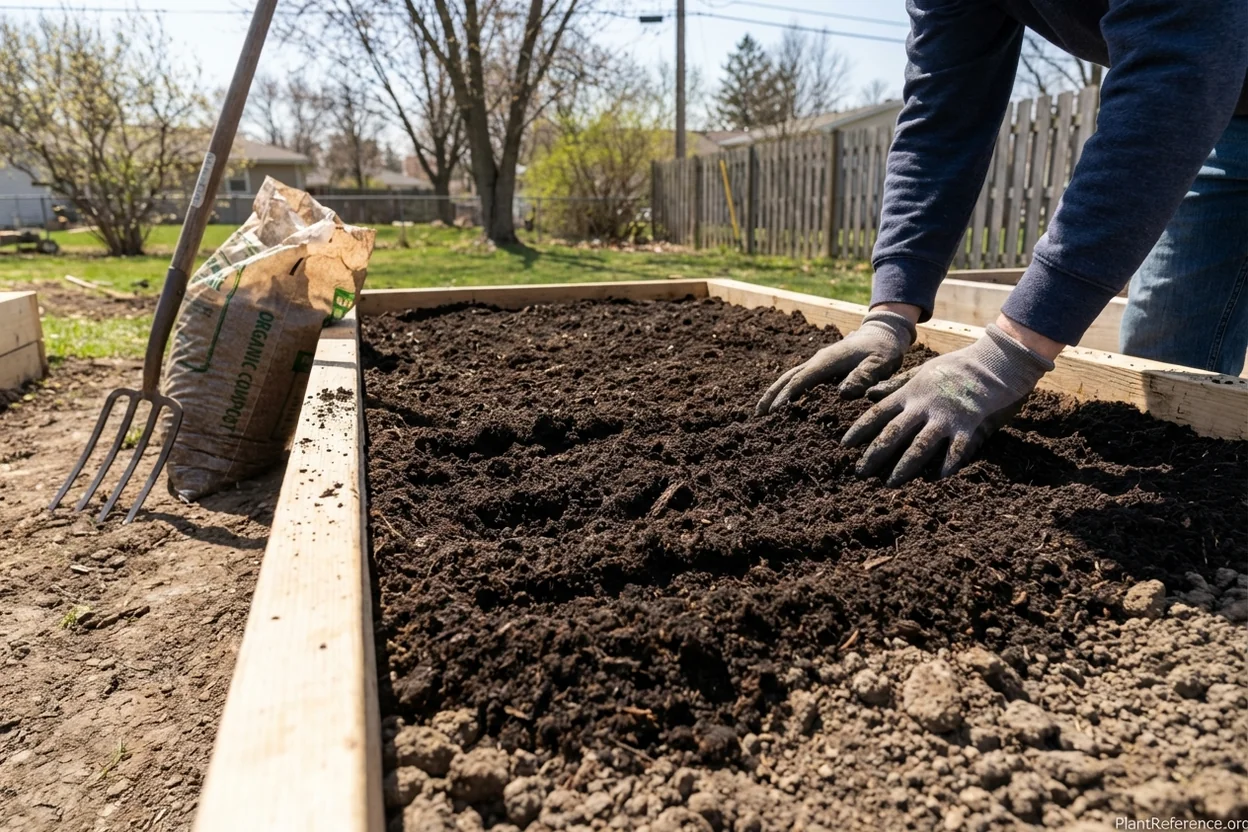
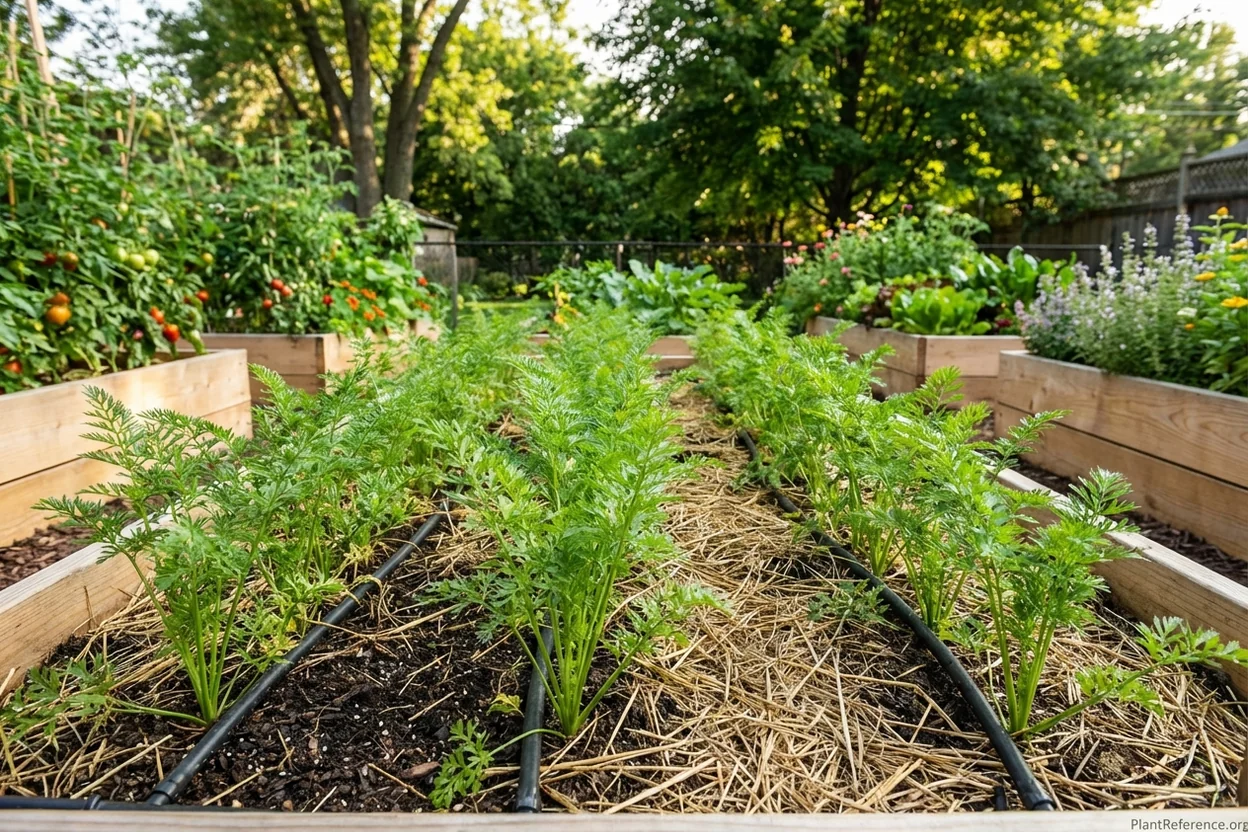
For in-ground beds, work the soil to at least 12 inches (30 cm) deep when it is dry enough to crumble, not smear, in your hand. Working wet clay destroys soil structure and creates the kind of compacted crust that carrot seedlings cannot break through. Mix in 3-4 inches (8-10 cm) of finished compost to improve drainage and tilth. Do not add fresh manure—the excess nitrogen causes hairy, forked roots and diverts energy to foliage instead of the taproot. If you composted last fall, your spring carrot bed will thank you.
Raised beds are the Milwaukee carrot grower's best friend. Fill them with a blend of topsoil, compost, and coarse sand for the loose, friable texture that 🌿Daucus carota ssp. sativus 'Nantes' and 🌿Daucus carota ssp. sativus 'Imperator' varieties demand. A 12-inch (30 cm) deep bed gives even the longest varieties room to grow straight. If your beds are shallower, stick with 🌿Daucus carota ssp. sativus 'Chantenay' or Daucus carota ssp. sativus 'Danvers' and you will still get a fine harvest. See our guide on Best Soil Mix for Raised Beds: Creating the Perfect Growing Medium for detailed recipes.
Seeding and Germination
Carrot seeds are tiny and need consistent moisture for 14-21 days to germinate. This is the most precarious phase, and it trips up more Milwaukee gardeners than anything else. Sow seeds 1/4 inch (6 mm) deep in shallow furrows spaced 12-18 inches (30-45 cm) apart. Instead of covering with garden soil that will crust over, top the furrow with fine sand, vermiculite, or screened compost. These materials stay loose and let the delicate seedlings push through.
Keep the seedbed constantly moist. In Milwaukee's spring, a stretch of warm, windy days can dry the soil surface in hours and kill germinating seeds. Light watering twice daily or a layer of damp burlap over the rows solves this. Remove any covering as soon as you see the first feathery green shoots emerging.
Thin carrots in two stages. First, snip seedlings to 1 inch (2.5 cm) apart when they reach about 2 inches (5 cm) tall. Use small scissors rather than pulling—tugging disturbs the taproots of neighboring plants. Second, thin to final spacing when tops are 4-5 inches (10-13 cm) tall: 2-3 inches (5-8 cm) for 🌿Daucus carota ssp. sativus 'Nantes' and Daucus carota ssp. sativus 'Danvers', 2 inches (5 cm) for 🌿Daucus carota ssp. sativus 'Chantenay'. Those second thinnings are real baby carrots—a reward for your patience.
Watering and Mulching
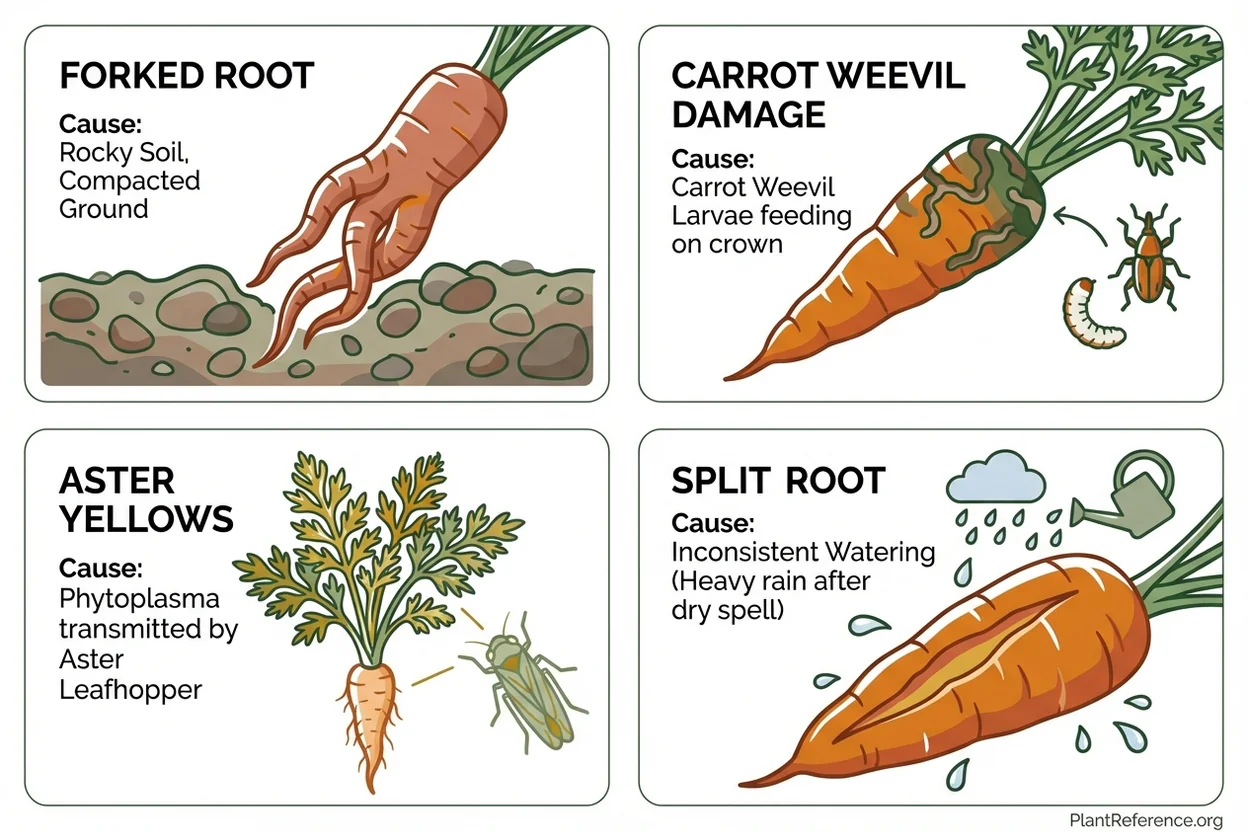
Carrots need about 1 inch (2.5 cm) of water per week, increasing to 2 inches (5 cm) as roots size up in late summer and fall. Consistency matters more than volume. A dry spell followed by heavy watering causes rapid cell expansion that splits roots lengthwise—a common frustration in Milwaukee when summer thunderstorms dump inches of rain after a dry stretch.
Drip irrigation or soaker hoses deliver water to the soil without wetting the foliage, which reduces fungal disease pressure. Mulch the bed with 2-3 inches (5-8 cm) of straw or shredded leaves once seedlings are established and thinned. Mulch holds moisture, moderates soil temperature during Milwaukee's hot July days, and suppresses weeds during that critical first six weeks when slow-growing carrot seedlings are easily shaded out. For more on managing moisture in raised beds, check out Poor Drainage in Raised Beds: Causes and Fixes for Waterlogged Soil.
Fertilizing
Carrots are light feeders that do best following a heavy-feeding crop like tomatoes or squash. The residual fertility is usually enough. If your soil needs a boost, work in a balanced organic fertilizer at planting time—something low in nitrogen. Too much nitrogen gives you lush tops and hairy, forked roots. Carrots are heavy potassium feeders, though. Potassium drives sugar production and helps roots push through soil. A side-dressing of wood ash or greensand mid-season supports root development without the nitrogen excess. Check your soil pH as well—carrots prefer 6.0-6.8, and Wisconsin soils sometimes run acidic enough to need a light lime application. See Raised Bed Soil pH Problems: Testing, Adjusting, and Maintaining Balance for testing guidance.
Troubleshooting Milwaukee-Specific Problems
Carrot Weevil
The carrot weevil (Listronotus oregonensis) is a real pest in the Great Lakes region, and Milwaukee gardens are squarely in its territory. This snout beetle tunnels into the upper portion of the root near the crown, leaving brown, scarred channels. Unlike the carrot rust fly common farther west, the weevil rarely flies—it walks between beds. Rotating your carrot patch at least 200 feet (60 m) from last year's location significantly reduces infestation. Floating row covers installed at seeding provide reliable physical exclusion.
Aster Yellows
Aster yellows is a phytoplasma disease carried by aster leafhoppers that migrate north from the Gulf states on spring wind currents. Infected carrots develop yellow, stunted tops and produce hairy, bitter, woody roots. There is no cure once a plant is infected. Pull and destroy affected plants immediately. Keeping the garden free of dandelion and wild carrot weeds removes reservoir hosts. Floating row covers block the leafhoppers entirely and are worth the investment here in Wisconsin where outbreaks happen regularly. For more on organic pest strategies, see Raised Bed Pest Problems: Identification and Organic Control Methods.
Soil Crusting and Poor Germination
Milwaukee's clay content means the soil surface crusts after rain or watering, sealing in germinating seeds. Weak carrot seedlings often cannot break through. Cover seeds with sand or vermiculite instead of garden soil, and keep the surface moist to prevent hardening. Mixing a few radish seeds into your carrot rows gives you a crust-busting companion—radishes germinate in 3-5 days and break the surface for the slower carrots.
Forking and Misshapen Roots
Rocks, compacted soil layers, and fresh manure all cause forked carrots. In Milwaukee's glacial till soil, small stones are everywhere. Sieving your bed to remove anything larger than 1 inch (2.5 cm) eliminates the most common mechanical cause. If forking persists despite amended soil, switch to 🌿Daucus carota ssp. sativus 'Chantenay' varieties—their short roots sidestep most underground obstacles. More information on soil preparation is available in Raised Bed Soil Settling and Compaction: Prevention and Solutions.
Harvest & Storage
Spring carrots are ready when the root shoulders reach about 3/4 to 1 inch (2-2.5 cm) in diameter at the soil line. 🌿Daucus carota ssp. sativus 'Nantes' types are ready when shoulders hit 1-1.5 inches (2.5-4 cm). Loosen soil alongside the row with a garden fork before pulling—yanking carrots from compacted Milwaukee soil snaps roots every time.
Fall carrots are where the real magic happens. Leave your late-planted crop in the ground through September and into October. When soil temperatures drop below 40°F (4°C), the roots convert stored starch into sugar as a natural antifreeze. These frost-sweetened carrots taste like candy compared to summer-harvested roots. You can extend the harvest well past the October 1 first frost by mulching the bed with 12-18 inches (30-45 cm) of straw once the ground starts to freeze. Pull carrots through the mulch as needed into November and even December.
For long-term storage, remove the tops immediately after harvest—the leaves keep transpiring and pull moisture from the roots. Do not wash carrots until you are ready to use them. Store unwashed roots in perforated plastic bags in the refrigerator at 32-38°F (0-3°C), or pack them in damp sand in a root cellar. Keep carrots away from apples, pears, and potatoes—these produce ethylene gas that makes carrots bitter. Properly stored Daucus carota ssp. sativus 'Danvers' can last 4-6 months, keeping your Milwaukee garden producing well into winter. See When to Plant Carrots in Chicago: Zone 6a Dates + Best Varieties and When to Plant Carrots in Minneapolis: Complete Guide + Best Varieties for Zone 4a for neighboring region comparisons.
Frequently Asked Questions
Reading about plants and recognising them are different skills. These three build the second.
- Daily PlantIdentify the day’s mystery plant from a close-up photograph.
- Keyed OutWork a dichotomous key, lead by lead, to name a hidden specimen.
- Name That PlantName a specimen from botanical clues dealt hardest first.
Free to play, no account needed
Pat has been gardening in Milwaukee for over thirty years, through every kind of Wisconsin weather. She worked as a school librarian and started gardening seriously when her kids were small—she wanted them to know where food came from. Now retired, she's a certified Master Gardener and runs the plant sale at her local garden club every spring. She specializes in cold-hardy perennials, native wildflower meadows, and the art of getting a vegetable garden producing in Wisconsin's short but intense growing season. Pat is practical and patient—she's seen enough Wisconsin winters to know that gardening here is a long game, and she writes with the steady confidence of someone who's been doing this a long time.