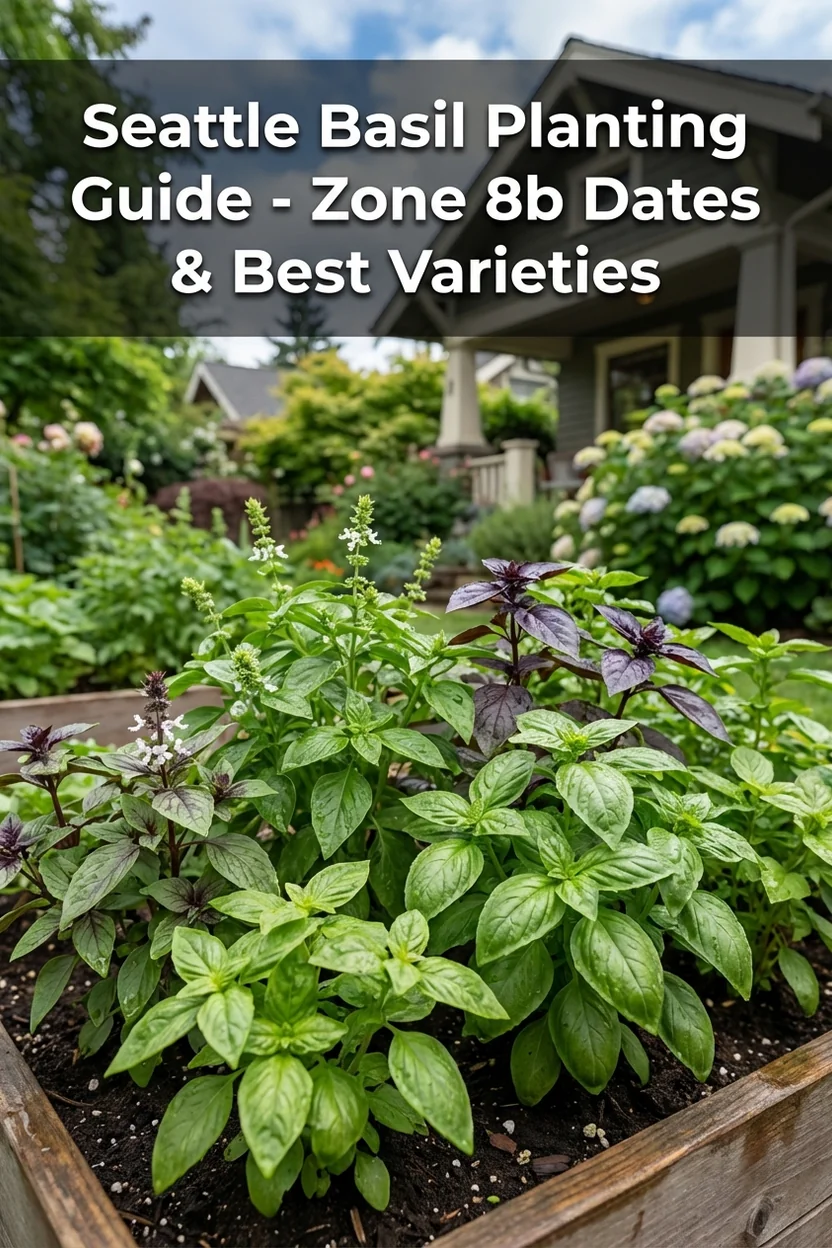
When to Plant Basil in Seattle: Complete Guide + Best Varieties for Zone 8b
Pets & Toxicity
Recorded toxicity for plants linked in this guide. An unknown status is not a safety assessment.
No linked plant is recorded as toxicDetailsHide
Ocimum basilicum 'Purple Ruffles' — Toxicity
Non-toxicView Ocimum basilicum 'Purple Ruffles' plant profile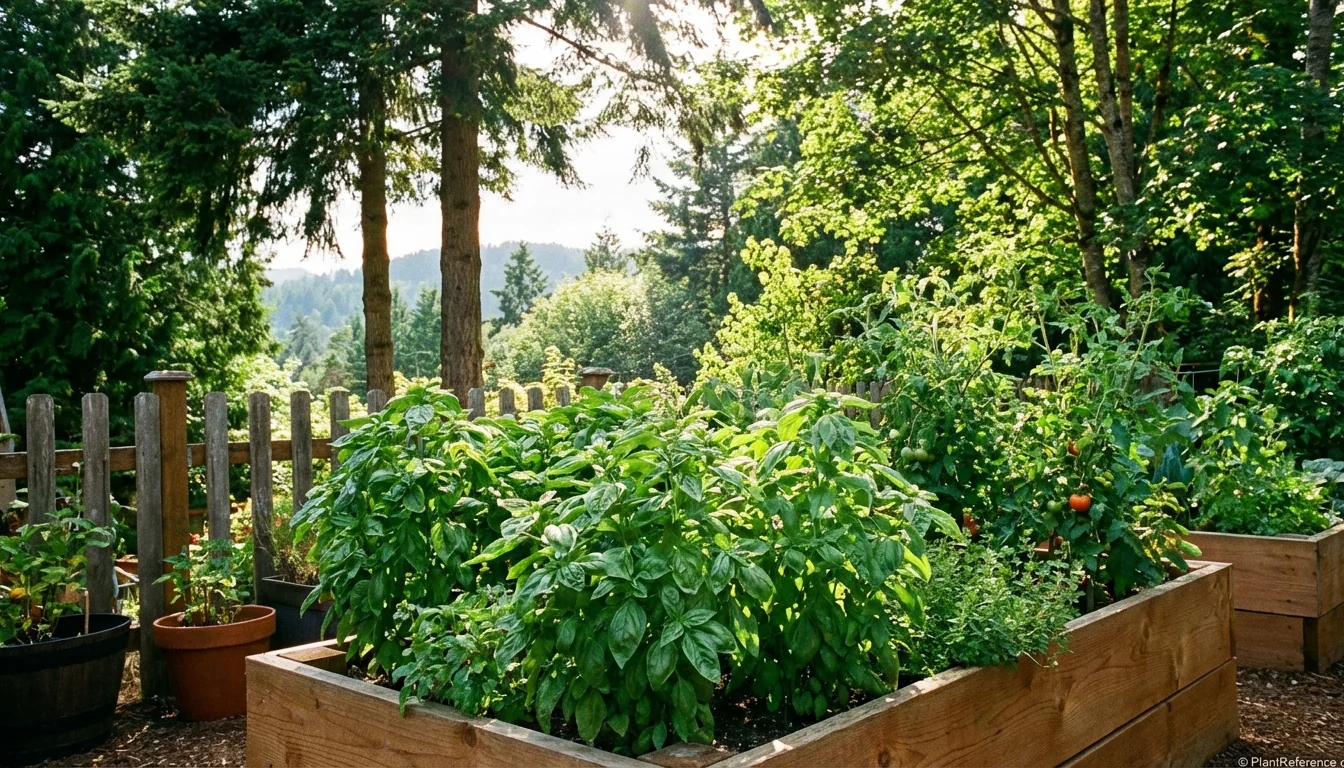
— Image © Plant Reference 2026
Seattle's 245-day frost-free season sounds like basil paradise until you realize that frost dates and basil dates are completely different things in the Pacific Northwest. Our March 15 last frost means nothing for basil because basil doesn't care about frost—it cares about warmth, and Seattle's marine climate delivers cool summers that challenge this tropical herb more than any other major US city. July averages just 76°F (24°C), and nighttime temperatures stay in the 55-60°F (13-16°C) range even during our warmest month. That's barely above basil's damage threshold. The honest truth is that Seattle is one of the harder places in America to grow great basil, but it's absolutely doable when you stop treating basil like the warm-season crop it is elsewhere and start treating it like a heat-seeking tropical that needs every microclimate advantage you can give it. South-facing walls, black containers that absorb heat, sheltered patios, and variety selection that matches our cool reality—these are the strategies that produce genuine basil harvests in the PNW. When to Plant Tomatoes in Seattle: Complete Guide + Best Varieties for Zone 8b
Best Basil Varieties for Seattle's Climate
Seattle sits in USDA Zone 8b with a March 15 last frost and November 15 first frost—245 days on paper. But basil's effective growing window is June through September—roughly 120 days of warm enough conditions. Cool marine air, overcast mornings, and nighttime temperatures in the 50s mean variety selection must prioritize cool-climate tolerance and fast maturity over the bolt resistance that hotter cities need. In Seattle, bolting is rarely a problem because we don't get enough sustained heat to trigger it.
Variety | Type | Days to Harvest | Cool Tolerance | Best For |
|---|---|---|---|---|
Lemon | 55 days | Moderate-Good | Best cool-climate performer | |
Holy (Tulsi) | 60 days | Moderate | Tea, medicinal, handles PNW conditions | |
Sweet | 60-70 days | Low | Pesto (needs warmest microclimate) | |
Ocimum basilicum var. thyrsiflora | Thai | 60 days | Moderate | Stir-fry, better PNW adaptation |
Purple | 65-70 days | Low | Garnish, vinegars (marginal in Seattle) |
🌿Ocimum × citriodorum (Lemon basil) is the best variety for Seattle—a departure from most US cities where it's a secondary choice. Its 55-day maturity maximizes our short warm window, and it tolerates Seattle's cool nights better than Genovese. The bright citrus flavor works in the light fish dishes, teas, and Asian-influenced cooking that Seattle food culture embraces. Lemon basil also produces smaller, thicker leaves that handle cool air better than Genovese's large, thin leaves which lose heat rapidly in our maritime evenings.
🌿Ocimum tenuiflorum (Holy Basil/Tulsi) handles Seattle's conditions surprisingly well because its clove-scented chemistry and slightly woodier stems tolerate cool nights better than sweet basil varieties. The growing wellness and herbal tea community in the Seattle area provides strong demand for this variety. It's more productive in our climate than most gardeners expect.
🌿Ocimum basilicum 'Genovese' is still growable in Seattle but requires your absolute warmest microclimate—south-facing walls, black containers on heat-absorbing patios, or cold frame protection. It grows more slowly here than in Midwest or East Coast gardens, and leaves are smaller. Still worth growing for pesto, but set expectations: you'll get less per plant than gardeners in warmer cities.
Ocimum basilicum var. thyrsiflora (Thai basil) handles Seattle's conditions better than Genovese because its tropical genetics tolerate the temperature swings between warm Seattle days and cool nights. The compact growth habit and sturdier stems handle our occasional summer wind better than Genovese's large leaves. Good for stir-fries and the Vietnamese and Thai cooking scenes that thrive in Seattle.
🌿Ocimum basilicum 'Purple Ruffles' is marginal in Seattle—slow growth in cool conditions makes it barely productive. Grow only if you have a very warm microclimate and accept that production will be limited. When to Plant Peppers in Seattle: Complete Guide + Best Varieties for Zone 8b
Specific Planting Dates for Seattle Gardens
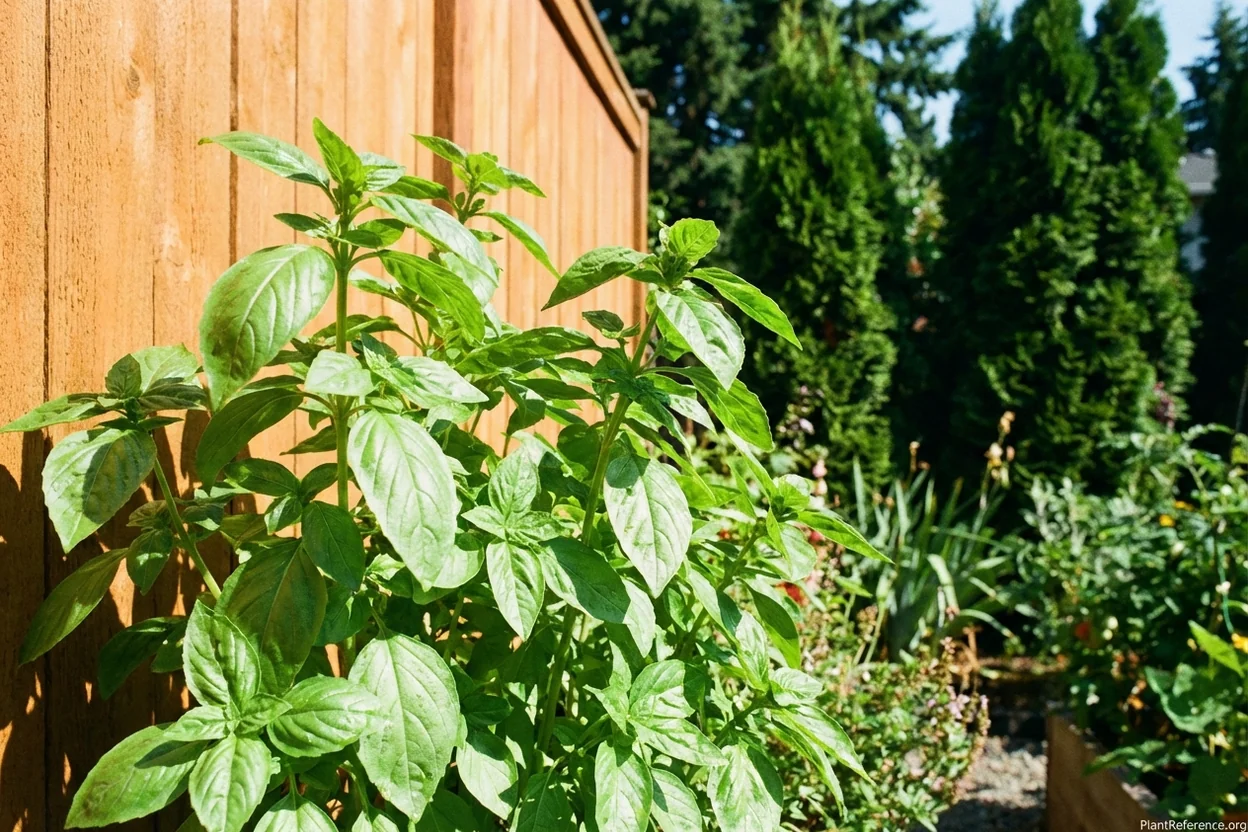
Forget Seattle's March 15 last frost for basil planning. Basil needs soil at 65°F (18°C) and consistent nighttime temperatures above 55°F (13°C)—conditions Seattle doesn't reliably deliver until June. Our cool, overcast spring (the infamous "Junuary") keeps temperatures well below basil's comfort zone through May.
Indoor Seed Starting: April 1-15 (6-8 weeks before transplanting). Start at 70-75°F (21-24°C) for 5-7 day germination. Indoor starts are essential—Seattle's spring soil is far too cold for basil germination, and even transplants struggle before June. Grow under supplemental lights because PNW spring daylight, while long, is often diffused through clouds.
Transplant Outdoors: June 1-15. This is dramatically later than most US cities, but it's the reality of Seattle's marine climate. Soil needs to be at 65°F (18°C) and nighttime air consistently above 55°F (13°C). In warm microclimates (south-facing patios, against heated buildings), June 1 is achievable. Open garden beds may need to wait until mid-June. Pre-warm soil with black plastic mulch for 2-3 weeks before transplanting.
Direct Sow: Not recommended. Seattle's soil doesn't reliably reach 65°F (18°C) until June, and the 5-7 day germination period wastes time in an already-compressed warm window. Transplants are the only practical approach.
Succession Plantings: One succession at most, by late June. Seattle's effective basil window (June-September) is too short for the multiple successions that warmer cities enjoy.
Final Sowing Deadline: June 25. A 55-day 🌿Ocimum × citriodorum started indoors June 25 matures by late August with one month of harvest before cool September nights slow production. Later plantings don't accumulate enough heat units. Raised Bed Vegetable Garden Layout: Planning for Maximum Production
Complete Growing Guide for Seattle
Microclimate: The Non-Negotiable Strategy
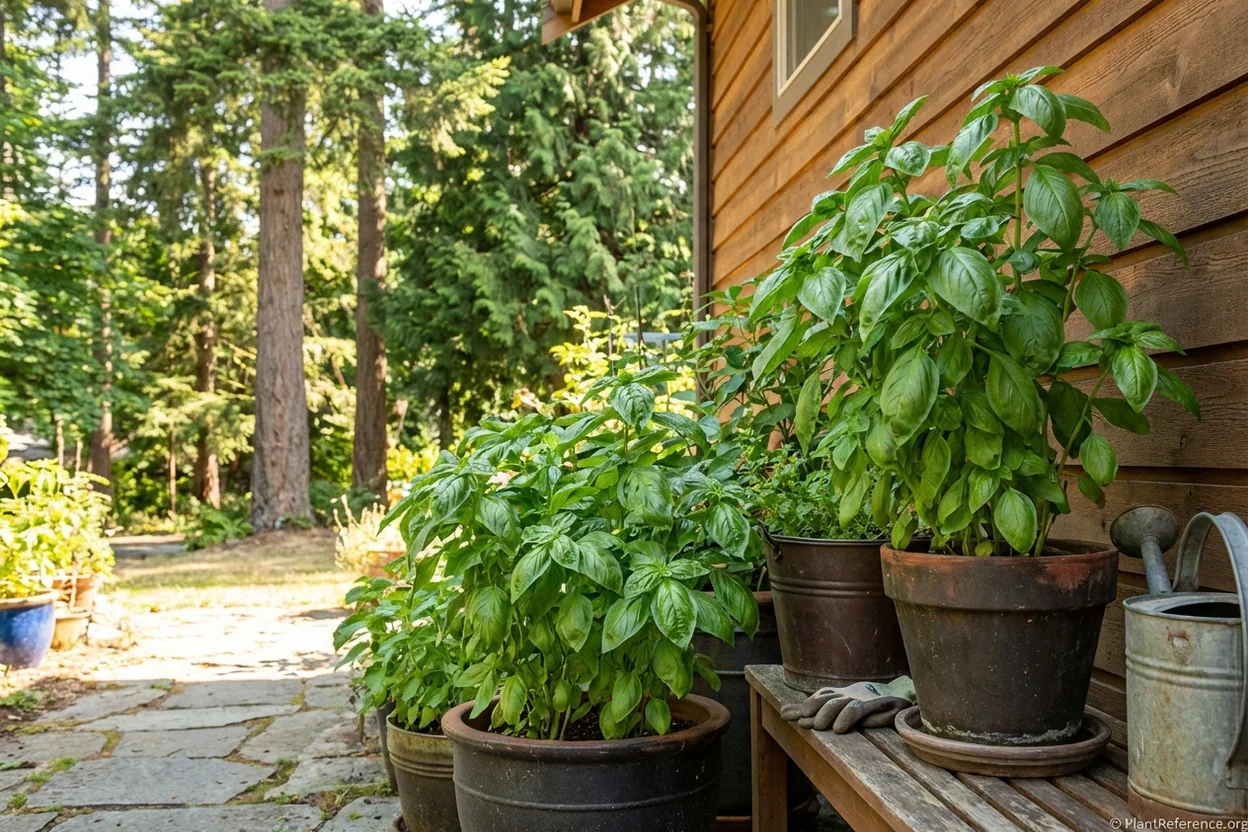
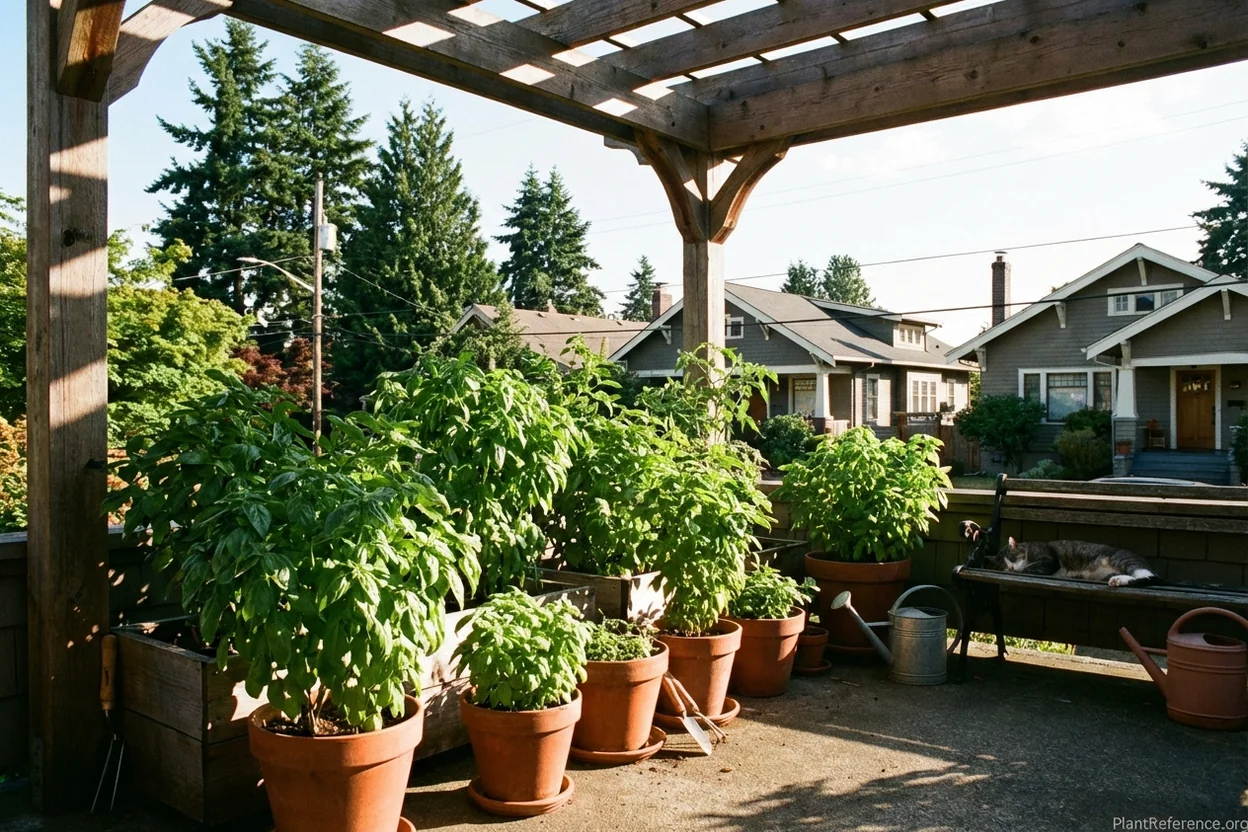
In Seattle, where you put basil matters more than any other factor. South-facing walls absorb and radiate heat, creating microclimates 5-10°F warmer than open garden areas. Dark-colored containers (black nursery pots, dark ceramic) absorb solar heat and warm root zones. Patios, driveways, and concrete surfaces near buildings store daytime heat and release it at night when basil needs warmth most. Place basil in these heat sinks—not in the middle of a raised bed in an open garden where cool marine air flows unobstructed. How to Build a Raised Garden Bed: Step-by-Step Construction Guide
Container Growing: Seattle's Primary Approach
Containers are the best approach for Seattle basil for three reasons: they warm faster than garden soil, they can be positioned in optimal microclimates, and they can be moved to shelter when cool stretches hit. A 12-inch (30 cm) dark-colored pot against a south-facing wall creates the warmest possible environment for basil roots. Use black nursery pots inside decorative containers—the black absorbs maximum heat. Five-gallon buckets painted black work well for budget growing.
Soil and Planting
Seattle soils are generally acidic (pH 5.5-6.5)—the lower end of basil's preferred range. Add a light application of garden lime if pH tests below 6.0. Well-drained soil is essential because Seattle's occasional summer rain events and heavy dew can waterlog basil roots. For in-ground planting, work 2-3 inches (5-8 cm) of compost into the top 8 inches (20 cm) and consider raised beds for improved drainage and warmer soil temperatures. 5 Best Drip Irrigation Kits for Raised Beds (Tested for Easy Installation)
Black Plastic Mulch for Soil Warming
Black plastic mulch is more important for Seattle basil than for any other city. Lay it 2-3 weeks before transplanting to pre-warm soil to the 65°F (18°C) threshold that basil demands. After transplanting, leave the plastic around plants (cut planting holes) to continue warming roots throughout the season. Switch to organic mulch only if soil temperatures are consistently warm—which in Seattle may not happen until mid-July.
Watering
Seattle gets about 37 inches (94 cm) of annual rainfall, but most falls from October through May. Summers are surprisingly dry—July and August average less than 1 inch per month. Basil needs consistent moisture during these dry summer months. Water at the base, 1 inch (2.5 cm) per week. Morning watering warms root zones heading into the day. Seattle's low humidity during summer means Downy Mildew is far less of a concern than in humid Eastern cities. When to Plant Squash in Seattle: Complete Guide + Best Varieties for Zone 8b
Feeding
Fish emulsion every 2 weeks provides balanced nutrition and supports the steady growth that Seattle's limited warmth requires. Don't overfeed—moderate feeding maintains flavor concentration while promoting the consistent growth that maximizes your compressed productive window.
Extending the Season
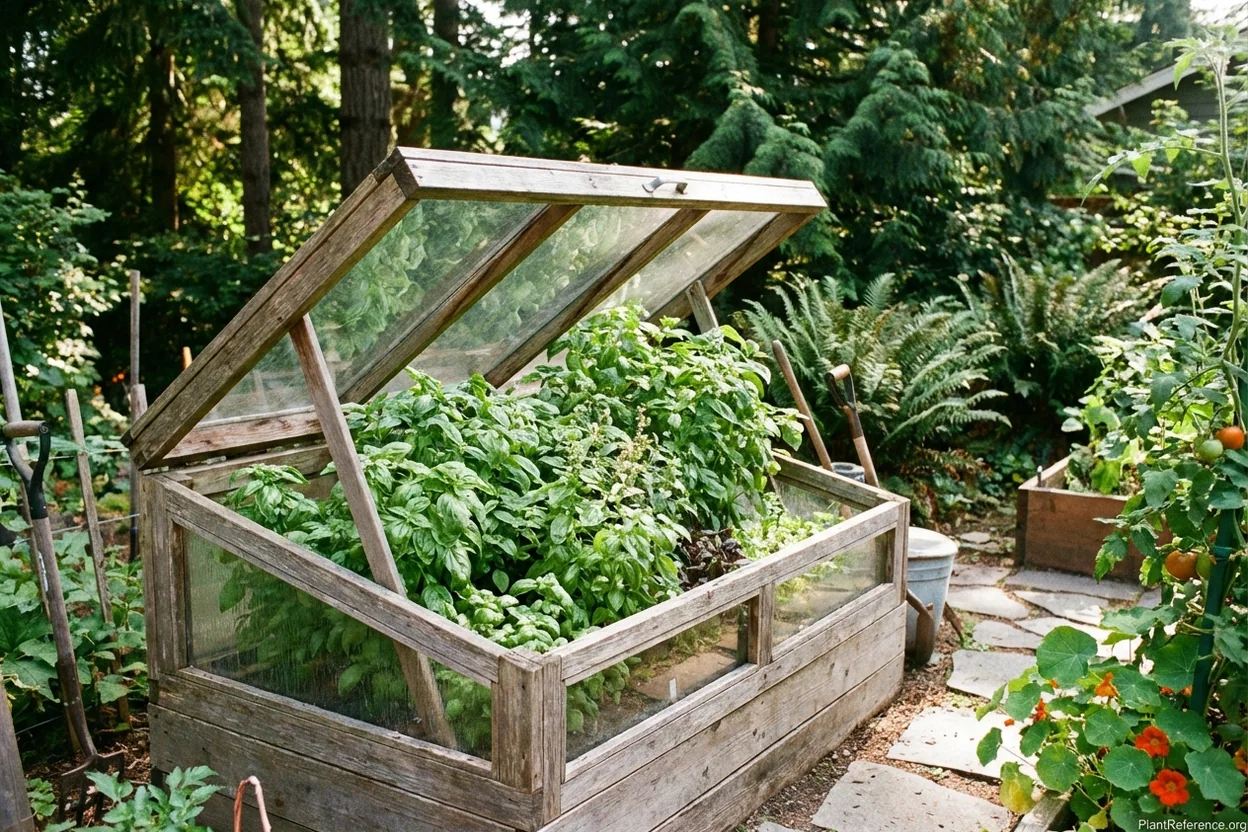
Cold frames or cloches extend Seattle basil by 3-4 weeks on each end—a significant gain when your effective window is only 120 days. Wall-o-Water protectors around early transplants create warm microclimates that allow May planting instead of June. Row covers provide 2-4°F of protection during cool September evenings. In Seattle, season extension is not a bonus—it's a core strategy for serious basil production. When to Plant Kale in Seattle: Complete Guide + Best Varieties for Zone 8b
Troubleshooting Seattle-Specific Problems
Cool Summer Temperatures (The #1 Challenge)
Seattle's defining basil problem. Average July highs of only 76°F (24°C) and nighttime lows in the 55-60°F (13-16°C) range provide barely enough heat for basil growth. Symptoms: slow growth, small leaves, purpling of stems and leaf undersides (a cold-stress response). Solutions: warmest possible microclimate, dark containers, black plastic mulch, cold frames, and 🌿Ocimum × citriodorum or 🌿Ocimum tenuiflorum varieties that tolerate cool conditions better than Genovese. Accept that Seattle basil grows more slowly and produces smaller leaves than warmer-climate basil—quality is still excellent when conditions are optimized. Raised Bed Too Hot in Summer: Protecting Plants from Heat Stress
"Junuary" — Cool Overcast June Weather
Some Seattle summers start cold and overcast well into June, delaying basil establishment. If June delivers persistently cool, cloudy conditions, keep transplants in cold frames or bring containers indoors until weather breaks. Don't force basil into cold soil—it sets plants back further than waiting a week or two for warmth.
Slugs
Seattle's maritime humidity supports robust slug populations that devour basil seedlings overnight. Copper tape around containers, iron phosphate slug bait, and evening hand-picking protect transplants during establishment. Once basil plants reach 8-10 inches tall, slug damage becomes less threatening. The first two weeks after transplanting are the critical period for slug protection. Raised Bed Pest Problems: Identification and Organic Control Methods
Powdery Mildew in Fall
As September nights cool and morning dew increases, Powdery Mildew can appear on late-season basil. Space plants for airflow and apply neem oil preventatively from early September. Seattle's low summer humidity makes Downy Mildew rare—a significant advantage over humid Eastern cities. Best Soil Mix for Raised Beds: Creating the Perfect Growing Medium
Harvest & Storage
Harvest by cutting stems just above a leaf pair. Begin when plants have 6 sets of leaves. In Seattle, don't harvest aggressively early—let plants establish fully before taking more than a few leaves. Once July warmth arrives and plants hit their stride, harvest once or twice weekly. Seattle basil grows more slowly than warm-climate basil, so take no more than one-quarter of the plant per harvest.
A single 🌿Ocimum × citriodorum plant in a warm Seattle microclimate produces 1-2 cups of leaves per week during peak July and August—less than the 2-3 cups warm-climate gardeners expect from Genovese. Four to six plants provide enough for regular cooking through summer. The flavor of Seattle-grown basil is excellent—essential oil concentration is actually higher in slower-growing plants because the oils concentrate in smaller, thicker leaves.
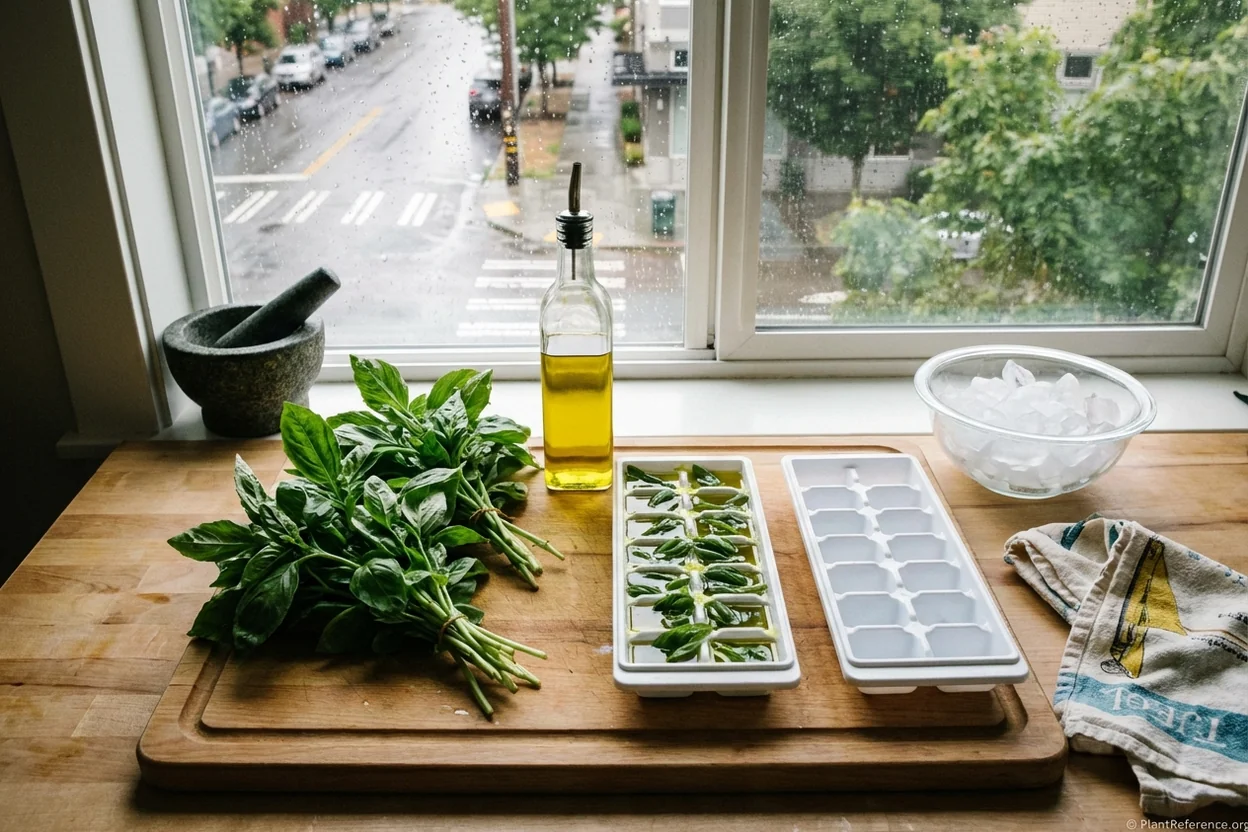
Fresh basil blackens in the refrigerator. Store stems in water on the counter for 5-7 days. For winter, blend leaves with olive oil and freeze in ice cube trays. Process your entire harvest by late September when cool nights slow production significantly. Seattle's long, cool, wet winter (October through May) makes frozen basil cubes particularly valuable—seven months of pesto from a few summer plants. The Complete Guide to Raised Bed Gardening for Beginners (2025)
Frequently Asked Questions
Reading about plants and recognising them are different skills. These three build the second.
- Daily PlantIdentify the day’s mystery plant from a close-up photograph.
- Keyed OutWork a dichotomous key, lead by lead, to name a hidden specimen.
- Name That PlantName a specimen from botanical clues dealt hardest first.
Free to play, no account needed
Mike's been designing residential landscapes in the Seattle area, with a particular focus on Pacific Northwest natives and sustainable practices. He's a Washington State Master Gardener and worked in construction before landscaping, which gives him a practical edge when it comes to building raised beds and hardscaping projects. He runs a small side business propagating and selling unusual perennials at farmers markets on weekends. His property serves as a testing ground for low-maintenance, wildlife-friendly garden designs. Mike's philosophy: if it requires weekly maintenance, it's not sustainable.