Plant Care

Best Propagation Stations for Pothos and Other Vining Plants (2025)
Last updated: October 30, 2025
Compare the 7 best propagation stations for pothos, philodendrons, and trailing plants. Glass vessels, test tube stands, and wall-mounted options tested for root visibility, stability, and style.
HHelen Cho
October 30, 2025
Share:
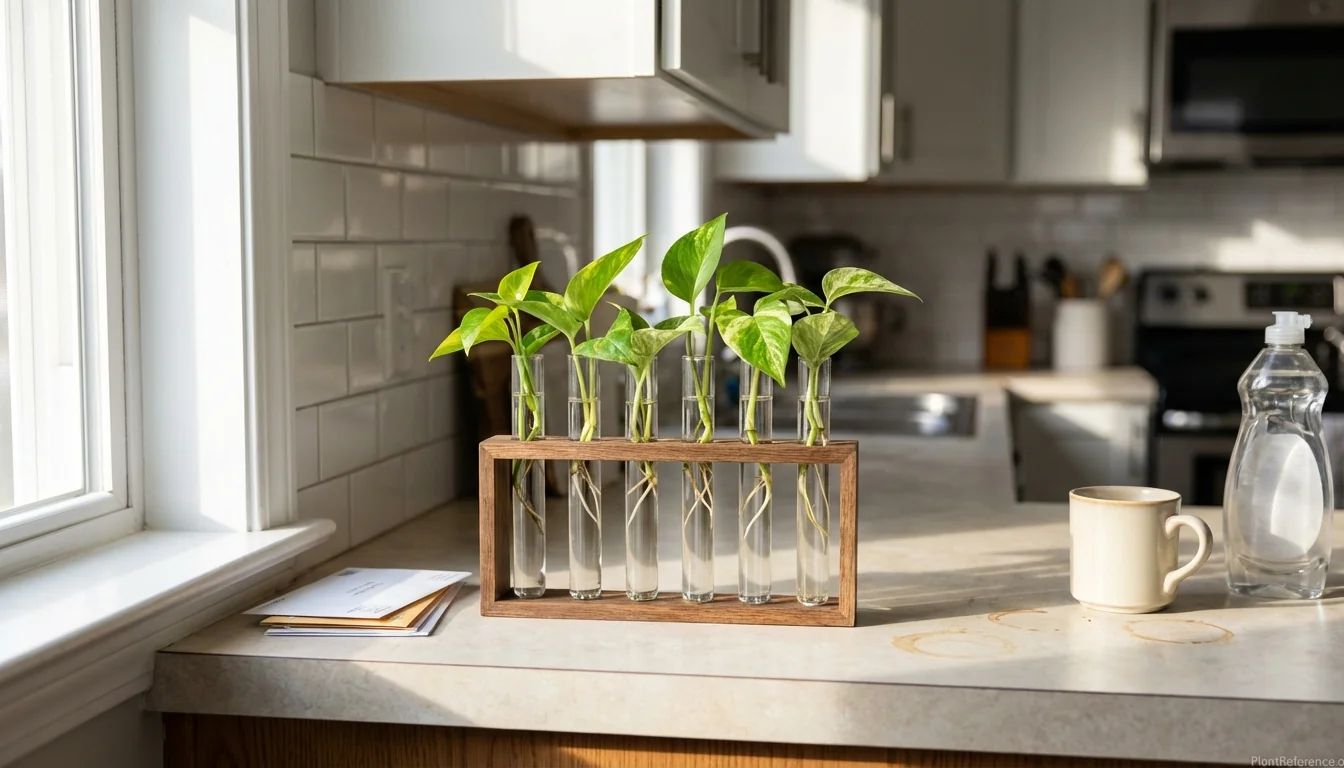
Glass propagation station with pothos cuttings showing roots in bright kitchen window setting

Image © PlantReference.org 2026
Quick Answer
The Mkono 3-Tiered Station ($15-20) excels with 15 tubes and wall-mounting flexibility. Kingbuy Desktop Station ($12-18) offers great beginner value with stability and easy maintenance.
TL;DR
Mkono 3-Tiered Propagation Station ($15-20) tops our tests with 15 glass tubes, excellent stability, and wall-mounting versatility. Kingbuy Desktop Station ($12-18) offers the best value for beginners with 3 bulbs and wooden stand. Individual glass vessels ($8-15) provide budget flexibility for small-scale propagation.
Frequently Asked Questions

What size propagation station is best for beginners?

A 3-6 vessel station like the Kingbuy Desktop Station offers the perfect starting size for beginners. This capacity lets you test propagation success with multiple varieties without overwhelming maintenance requirements. You can propagate 6-12 cuttings total (2-3 per vessel), which provides enough variety for learning while remaining manageable for daily care. Once you master basic techniques, larger 15+ vessel stations become practical for collection expansion.

How often should I change the water in propagation stations?

Change water every 5-7 days for test tube stations and every 7-10 days for larger glass vessels. Smaller volumes concentrate minerals and bacteria faster, requiring more frequent changes. If water turns cloudy, develops an odor, or shows algae growth between scheduled changes, refresh immediately and increase frequency. Use room-temperature water that has sat 24 hours to allow chlorine evaporation, or filtered water if your tap water is heavily treated.

Can propagation stations work for plants other than pothos?

Yes, most propagation stations work excellently for philodendrons, monsteras, tradescantia, and other vining houseplants. The key is matching cutting thickness to vessel size—thin stems like tradescantia work in narrow test tubes, while thick monstera cuttings need wider glass vessels. Succulent propagation typically requires different setups since they prefer less water contact. For [[Best Pothos Varieties to Buy: Beginner to Collector Guide]], propagation stations handle all varieties equally well.

Where should I place my propagation station for best results?

Position stations in bright, indirect light where your hand casts a soft but visible shadow. East-facing windows provide ideal morning light without harsh afternoon sun. Avoid south-facing windows unless you can place stations 3-4 feet (90-120 cm) back from the glass. Maintain consistent temperatures between 65-80°F (18-27°C) and avoid locations near heating vents or air conditioning units where temperatures fluctuate dramatically throughout the day.

How long does it take for cuttings to root in propagation stations?

Pothos cuttings typically root within 1-2 weeks in optimal conditions, with 2-3 inch (5-8 cm) transplant-ready roots developing in 3-4 weeks. Faster-rooting varieties like golden pothos show roots in 7-10 days, while slower varieties like marble queen may take 14-21 days. Temperature, light, and cutting maturity affect timing significantly. Wait until roots reach 2-3 inches with multiple branching points before transplanting to soil for best success rates.
NEW PLANT DAILY

Think you know your plants?

Test your botanical knowledge with a new plant identification challenge every day. Build your streak, learn fascinating plant facts, and become a plant identification expert!

Build your streak
One chance per day
Learn as you play

Free account required • Takes less than 30 seconds

Written By
H

Helen Cho

Helen is an interior plant stylist in Los Angeles who works with restaurants, offices, and residential clients to select and maintain indoor plants. She studied design in college and got into plants when a client asked her to "green up" a mid-century modern home. Helen's expertise sits at the intersection of design and plant care—she thinks about light, scale, texture, and color, but she also knows which plants will actually survive in a given space. She's killed enough fiddle leaf figs in dark corners to know better. Helen maintains her own collection of over 80 houseplants in her apartment and writes about indoor plant selection, styling, and the practical side of keeping plants alive in interior environments.
Related Plants

Other Articles You May Enjoy