Overview
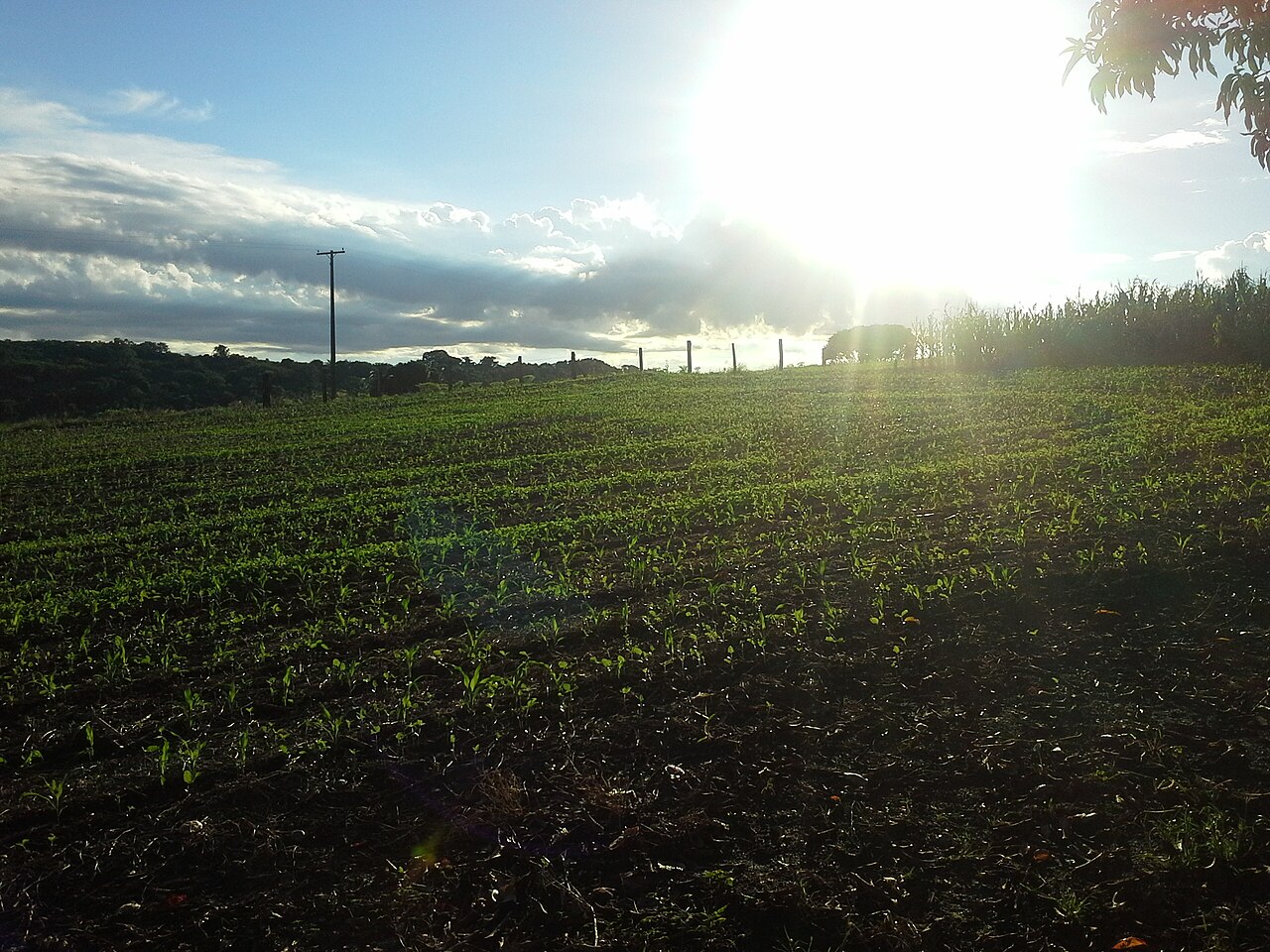
Zea mays is an annual grass grown as a warm-season crop, forming a single unbranched stem 4-10 feet (1.2-3 m) tall topped by a terminal tassel. Leaves are alternate and strap-shaped, 12-40 inches (30-100 cm) long and 2-5 inches (5-13 cm) wide, with a white midrib and finely toothed margins. The plant is monoecious: staminate flowers occur in the terminal tassel, while pistillate flowers form in lateral ears enclosed by husks, each silk being an elongated style. Pollination is by wind, so plants set full ears only when grown in blocks of four or more short rows rather than a single line. Ears mature 60-100 days after sowing depending on cultivar, carrying 300-800 kernels in 12-20 rows on a woody cob. The root system is shallow and fibrous, concentrated in the top 12-18 inches (30-45 cm), with prop roots arching from the lower nodes into the soil. Z. mays demands high nitrogen and steady moisture through tasseling and grain fill; a two-week drought at silking cuts kernel set sharply. Stems lodge in exposed sites after heavy rain once ears are filling, and sugar in sweet cultivars converts to starch within hours of harvest unless the ears are chilled.
Native Range
Zea mays was domesticated from teosinte, Zea mays ssp. parviglumis, in the Balsas River valley of southwestern Mexico roughly 9,000 years ago. No wild population of the domesticated form exists; it persists only in cultivation. It spread through the Americas before European contact and is now grown on every continent except Antarctica.Suggested Uses
Grown in vegetable gardens and allotments as a summer crop, planted in blocks of four by four plants or larger at 10-12 inch (25-30 cm) spacing. The 6-8 foot (1.8-2.4 m) stems are used as a seasonal screen along garden boundaries and as living support in three-sisters plantings with beans and squash. Ornamental and popcorn cultivars are grown for dried ears used in autumn arrangements.How to Identify
Appearance
Size & Dimensions
Height4' - 10'
Width/Spread1'6" - 2'
Bloom Information
Tassels emerge 50-70 days after sowing and shed pollen for 5-8 days, usually across July and August in temperate gardens. Silks appear 1-3 days after pollen shed begins, and each silk must receive a pollen grain to set a kernel. Flowering in most modern cultivars responds to accumulated heat rather than daylength, so sowing date largely sets the timing. Pollen viability falls above 95F (35C), producing gappy ears in hot dry seasons.
Detailed Descriptions
Flower Description
yellow-green tassels with yellow anthers; silks pale green ageing to red-brownFoliage Description
medium green to blue-greenGrowing Conditions
Sun Requirements
Requires 6-12 hours of direct sunlight daily
• Full Sun: 6+ hours of direct sunlight
• Partial Shade: 3-6 hours of direct sunlight
• Full Shade: Less than 3 hours of direct sunlight
Water & Climate
Water Needs
Care & Maintenance
Care Guide
Grows in full sun with 6-8 hours of direct light and warm soil; germination is erratic below 55F (13C) and even at 60-70F (16-21C). Seed is sown 1-2 inches (2.5-5 cm) deep at 8-12 inches (20-30 cm) spacing in rows 30-36 inches (75-90 cm) apart, arranged in blocks of four or more rows for wind pollination. Deep loam at pH 5.8-7.0 with high organic matter suits the crop; nitrogen uptake peaks at knee height and again at tasseling, commonly met with 1-2 lb per 100 sq ft (0.5-1 kg per 9 sq m) of balanced feed split across those two stages. Water use runs 1-1.5 inches (25-40 mm) per week and rises during silking and grain fill. Corn earworm, Helicoverpa zea, enters through the silk channel and feeds on the ear tip, while common rust and northern corn leaf blight appear in humid summers. Feeder roots sit within 2 inches (5 cm) of the surface, so deep hoeing between rows severs them.Pruning
No pruning is carried out on Zea mays. Tillers arising from the base are left in place; their removal has not been shown to raise ear yield and creates wounds that admit smut fungi. Spent stalks are cut at ground level after harvest and shredded or composted.Toxicity
Non-toxicPlanting Guide
Planting Methods & Timing
Planting Method
direct sow
Direct Sow Timing
2-3 weeks after the last spring frost, once soil at 2 inches (5 cm) depth holds 60F (16C)
Days to Maturity
60–100 days
Plant Spacing
10 inches
Companion Planting
Good Companions
Avoid Planting With