Paeonia, Genus, 'Watermelon Wine', Cultivar,
- Genus
- Cultivar
watermelon wine itoh peony
Central and eastern Asia (parent species)
Overview
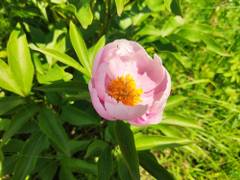
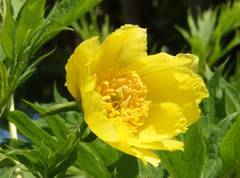
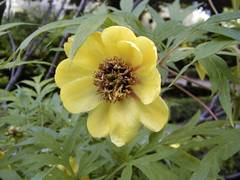
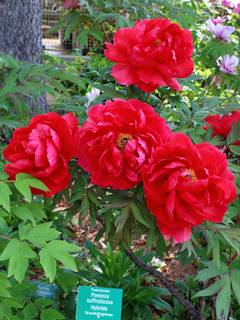
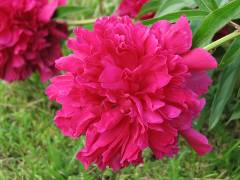
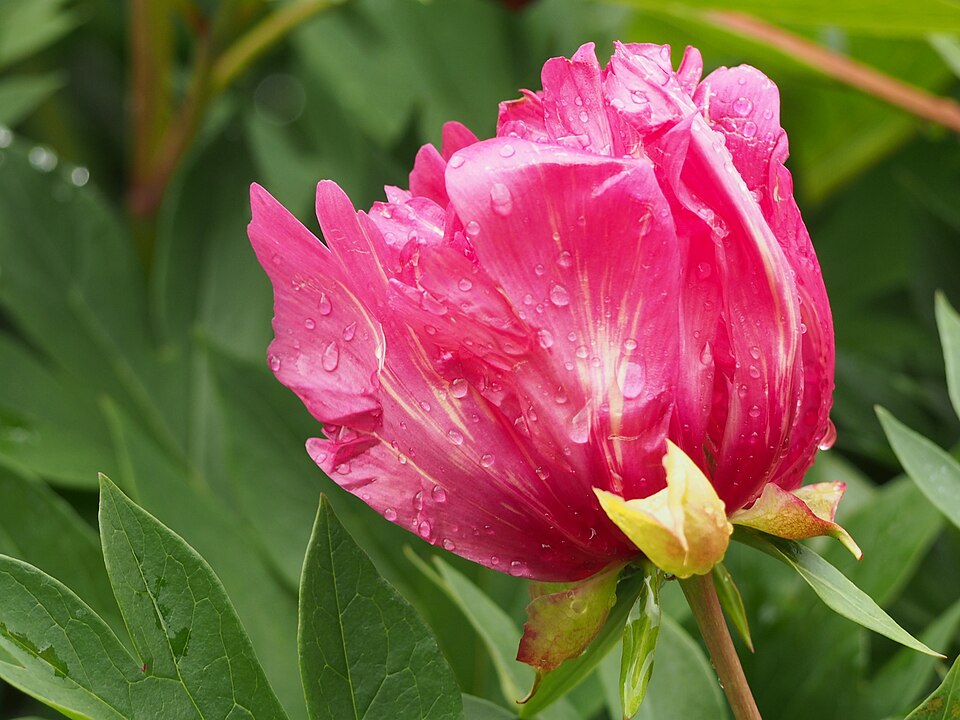
Paeonia 'Watermelon Wine' is an intersectional (Itoh) peony reaching 28-32 inches (71-81 cm) tall and 32-36 inches (81-91 cm) wide at maturity. Foliage forms an upright shrubby mound of deeply lobed, dark green compound leaves that emerge bronze-tinted in spring and turn yellow-bronze in autumn. Stems are semi-woody with strong horizontal branching and remain self-supporting without staking. Flowers open in late spring as 6-8 inch (15-20 cm) wide semi-double to double blooms in watermelon-pink, with a deeper rose-pink edge, light yellow flares at the base of the inner petals, and a small cluster of yellow stamens at the center. Bloom lasts 2-3 weeks per plant; each flower persists 5-7 days. Itoh peonies do not retain top growth through winter; stems die back to a low woody crown rather than to ground level. Crowns require 6-8 weeks of below-40°F (4°C) winter chill to bloom reliably. Botrytis blight develops in cool wet springs; affected buds fail to open and turn brown. Plants are long-lived (20+ years) and seldom require division.
Native Range
Paeonia 'Watermelon Wine' is an intersectional hybrid between herbaceous Paeonia lactiflora-derived parents and woody Paeonia (tree peony) parents from the P. suffruticosa group. Herbaceous Paeonia species are native to grasslands, scrub, and open woodlands of central and eastern Asia and southern Europe; tree peony parents are native to mountain slopes and gorges of central China at 3,000-9,000 feet (900-2,700 m).Suggested Uses
Used in mixed perennial borders, dedicated peony beds, and partial-shade woodland edges at 36-42 inch (90-105 cm) spacing. Grows in containers of at least 15 gallons (57 L) with consistent moisture and winter chill. Cut flowers hold 5-7 days in water and are cut in tight bud, just as the petals begin to show color.How to Identify
Appearance
Size & Dimensions
Height2'4" - 2'8"
Width/Spread2'8" - 3'
Bloom Information
Late May through mid-June in zones 4-7. In zones 8-9, bloom shifts to early to mid-May. Each plant flowers for 2-3 weeks; individual flowers persist 5-7 days. Bloom occurs slightly later than herbaceous peonies and slightly earlier than woody tree peonies, extending the genus bloom window when planted alongside both.
Detailed Descriptions
Flower Description
Watermelon-pink with deeper rose-pink edge and yellow basal flaresFoliage Description
Dark green; bronze-tinted on new growth; yellow-bronze in fallGrowing Conditions
Sun Requirements
Requires 6-10 hours of direct sunlight daily
• Full Sun: 6+ hours of direct sunlight
• Partial Shade: 3-6 hours of direct sunlight
• Full Shade: Less than 3 hours of direct sunlight
Care & Maintenance
Care Guide
Water deeply once weekly during the first growing season. Established plants tolerate 3-4 weeks without rain in well-drained soils. Apply a balanced low-nitrogen fertilizer (5-10-10) at 1/2 cup per plant in early spring as new growth emerges. Botrytis blight develops on buds and emerging stems in cool wet springs; affected stems are cut to ground level and discarded to limit spread. Crown rot occurs in waterlogged soils. Crowns are planted with the woody base 1-2 inches (2.5-5 cm) below soil level; deeper planting suppresses bloom for 2-3 years. Plants resent disturbance and seldom require division; replace declining plants rather than splitting them.Pruning
Cut herbaceous green stems to 4-6 inches (10-15 cm) above the ground in late autumn after the first hard frost; the woody portion of the crown remains and resprouts in spring. Do not cut into the woody base. Remove botrytis-affected stems at ground level during the growing season and discard separately from compost.Pruning Schedule
Prune: October–November
fall
Container Growing
Suitable for container growing
Minimum container size: 15 gallons