Paeonia, Genus, rockii, Species,
- Genus & species
Rock's tree peony
Qinling mountains of central China, in Gansu, Shaanxi, Henan, and Hubei
Overview
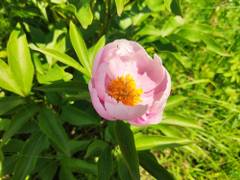
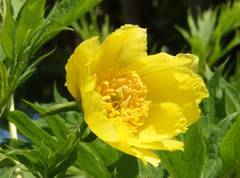
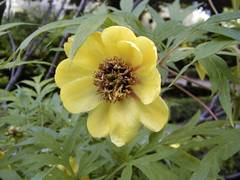
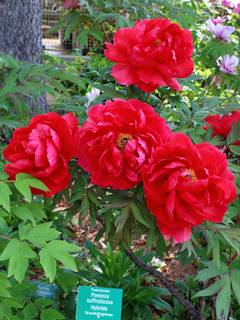
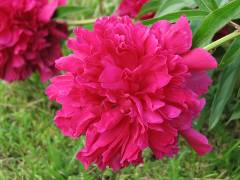
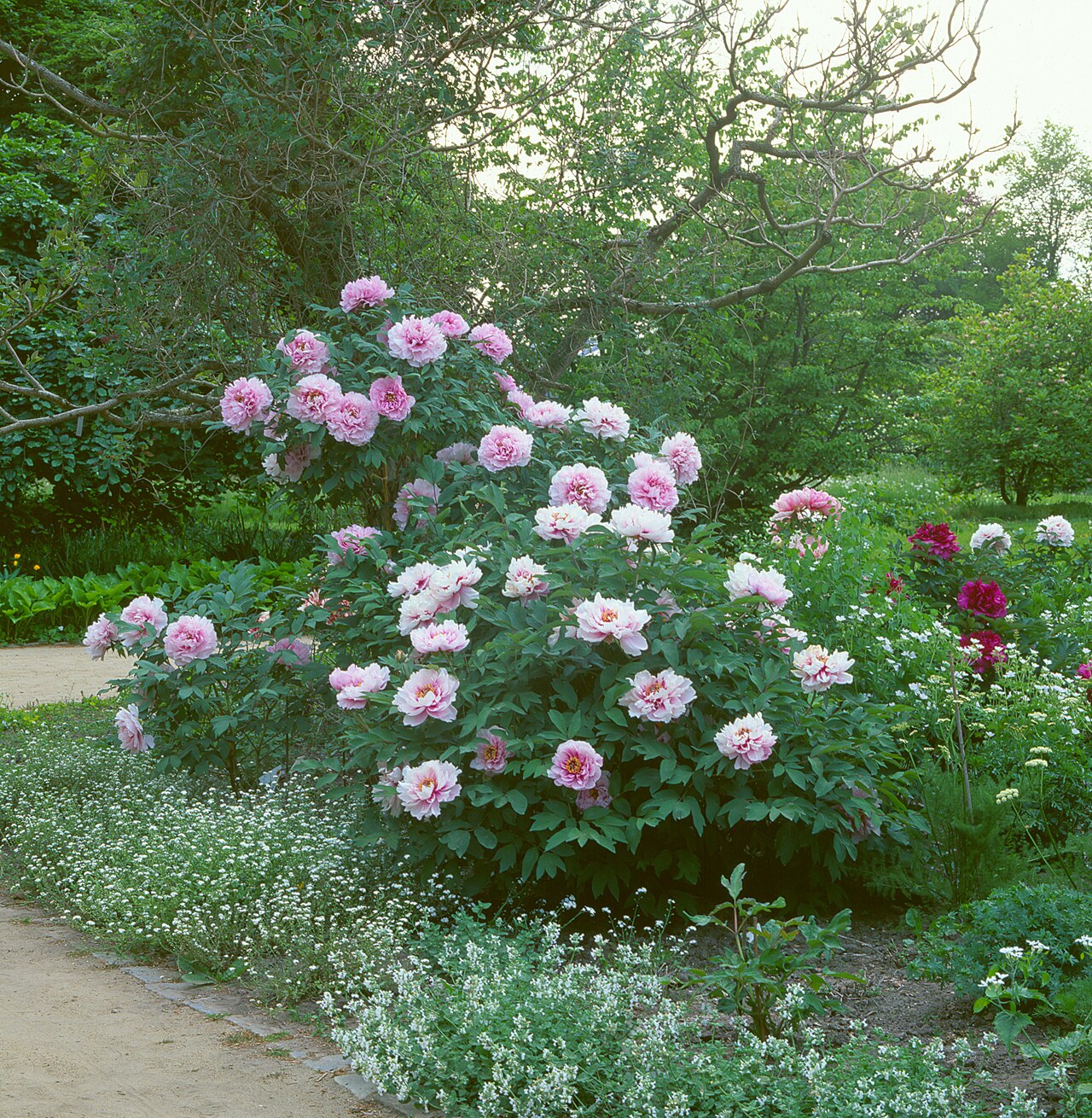
Paeonia rockii is a deciduous shrub with persistent woody stems, reaching 4-7 feet (1.2-2.1 m) tall and 4-6 feet (1.2-1.8 m) wide over 10-15 years, occasionally to 10 feet (3 m) in old plantings. Unlike herbaceous peonies, the stems do not die back in winter; they hold their height and carry buds through the cold months. Leaves are bipinnate, 8-14 inches (20-35 cm) long, divided into 15 or more lance-shaped leaflets that are blue-green above and paler beneath. Flowers are 6-10 inches (15-25 cm) across, single to semi-double, with white to pale pink crinkled petals each marked at the base by a deep maroon-purple flare, so the centre of the open flower shows a ring of dark blotches around a boss of yellow stamens on purple filaments. Scent is sweet and carries several feet on still mornings. Seed pods split in late summer to release large black seeds. Flowering lasts only 7-14 days, and plants take 4-6 years from a grafted young plant to reach full flowering size. Wet springs bring botrytis blight, which blackens buds before they open. It is hardy in USDA zones 4-8 but flower buds are damaged by late frosts below 28F (-2C).
Native Range
Paeonia rockii is native to central China, in the Qinling and adjacent mountain ranges of southern Gansu, Shaanxi, Henan, and Hubei, growing in open scrub and forest margins at 3,600-9,200 feet (1,100-2,800 m). Wild populations are small and fragmented, and the plant is listed as threatened in China. Nearly all garden plants trace to cultivated stock rather than wild collection, with the Gansu group of cultivars developed around Lanzhou over several centuries.Suggested Uses
Grown as a specimen shrub in mixed borders and courtyards in USDA zones 4-8, spaced 5-6 feet (1.5-1.8 m) from neighbouring shrubs to allow the framework to develop. It is planted with early bulbs and hostas that occupy the ground beneath the open framework in spring and summer. Cut stems last 3-5 days in water and are used for short-lived indoor arrangements.How to Identify
Appearance
Size & Dimensions
Height4' - 7'
Width/Spread4' - 6'
Bloom Information
Flowering falls in mid to late spring, usually from late April to mid May, about a week before herbaceous peonies open in the same garden. The display lasts 7-14 days, with individual flowers open for 3-5 days and shortened to 2-3 days by heat above 80F (27C) or heavy rain. Mature shrubs carry 20-50 flowers in a season; young grafted plants produce 1-5 for their first few years. Afternoon shade extends the life of each open flower by 1-2 days.
Detailed Descriptions
Flower Description
White to pale pink with a maroon-purple basal flareFoliage Description
Blue-greenGrowing Conditions
Sun Requirements
Requires 4-6 hours of direct sunlight daily
• Full Sun: 6+ hours of direct sunlight
• Partial Shade: 3-6 hours of direct sunlight
• Full Shade: Less than 3 hours of direct sunlight
Care & Maintenance
Care Guide
Growth and flowering are steadiest with 4-6 hours of morning sun and shade through the afternoon, which slows fading of the white petals. Soil should be deep, free-draining loam or clay loam at a pH of 6.5-7.5; standing water in winter kills the root system. Grafted plants are set with the graft union 4-6 inches (10-15 cm) below the soil surface so the tree peony forms its own roots, and suckers arising from the herbaceous rootstock below that point are removed at their origin. Watering deeply every 10-14 days in the first two seasons establishes the root system, after which established shrubs manage on rainfall in most temperate climates. A single application of balanced fertilizer in early spring and a low-nitrogen feed after flowering is sufficient; heavy nitrogen produces soft shoots and increases botrytis. Removing and discarding fallen leaves and blighted buds each autumn reduces the botrytis carryover into spring.Pruning
P. rockii needs little pruning and resents hard cutting back, since flower buds form on wood made the previous season. Cutting out dead, damaged, and crossing stems at their base in early spring, before growth starts, keeps the framework open. Spent flowers are cut back to the first full leaf, which prevents seed set and keeps the plant putting resources into next year buds. Stems cut into old bare wood below the lowest living bud generally fail to resprout.Pruning Schedule
Prune: March
early spring