Paeonia, Genus, lactiflora, Species, 'Gay Paree', Cultivar,
- Genus & species
- Cultivar
Gay Paree peony
East Asia (species origin); cultivar of garden origin
Overview
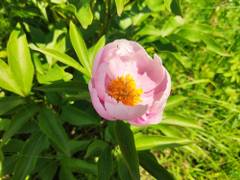
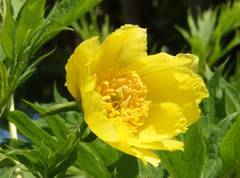
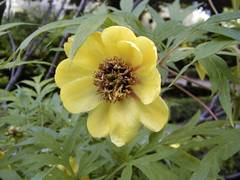
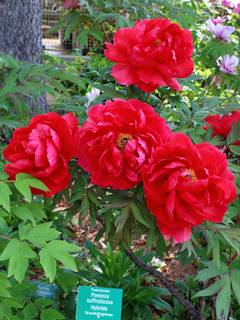
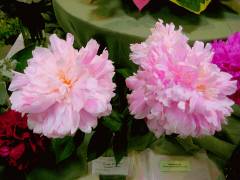
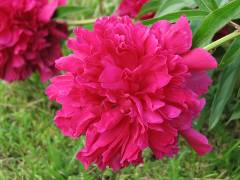
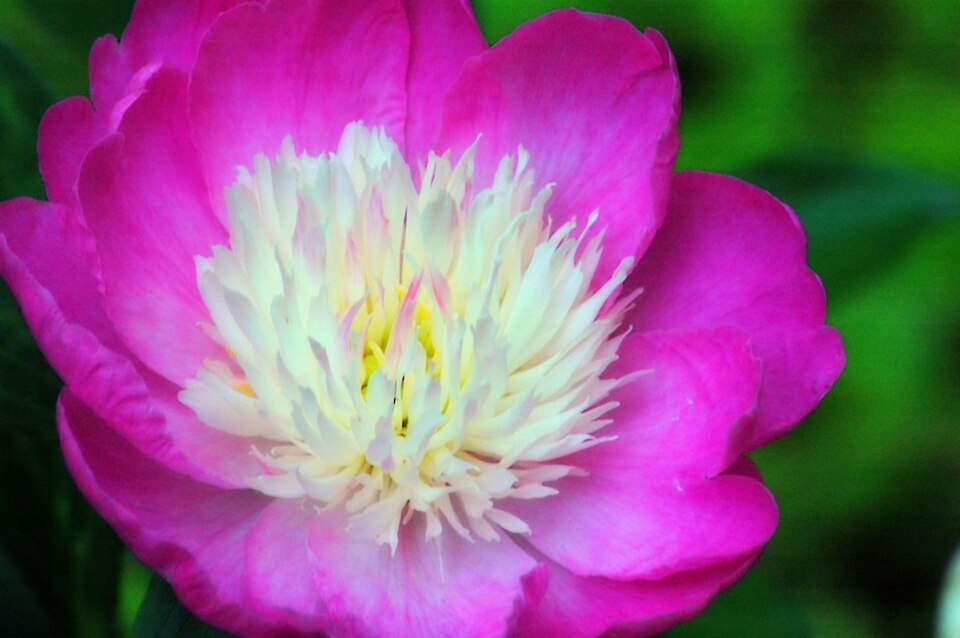
Paeonia lactiflora 'Gay Paree' is a herbaceous peony of Japanese flower form, reaching 30-36 inches (75-90 cm) tall and 30-36 inches (75-90 cm) wide at maturity. Stems are sturdy and upright, rising in early spring from a tuberous crown and dying back to ground level in fall. Foliage is glossy, deeply lobed, and dark green; new growth emerges red-tinted and matures by early summer. Flowers measure 5-7 inches (13-18 cm) across with a single ring of rose-pink to magenta-pink guard petals surrounding a dense pompon of cream to pale pink narrow staminodes (modified stamens). Each clump produces 15-25 flowers over a 2-3 week mid- to late-season bloom in late May through mid-June in zones 5-7. Each flower lasts 5-7 days. The Japanese form is more rain-tolerant than full double cultivars because the lighter center sheds water rather than collapsing. Roots are tuberous and brittle; transplanting damage delays bloom for 1-2 years. All parts contain paeonol and other compounds; ingestion causes vomiting, diarrhea, and depression in dogs, cats, and horses.
Native Range
Paeonia lactiflora is native to East Asia, including northern China, Mongolia, Tibet, eastern Russia, and Korea, growing in open meadows and forest margins at 1,500-7,500 feet (450-2,300 m) elevation. 'Gay Paree' was registered in 1933 by Edward Auten Jr. in Illinois, USA, and does not occur in the wild.Suggested Uses
Used in mixed perennial borders, cottage gardens, cut-flower rows, and as long-lived specimens at 36-42 inch (90-105 cm) spacing, with no companion planting closer than 18 inches (45 cm) due to surface root spread. Combines with Iris, Nepeta, late tulips, and ornamental grasses that share its sun and drainage needs. Container culture is possible in pots of at least 15 gallons (57 L) with well-drained mix; container plants require winter protection in zones 4-5 to prevent root freeze.How to Identify
Appearance
Size & Dimensions
Height2'6" - 3'
Width/Spread2'6" - 3'
Colors
Bloom Information
Blooms late May through mid-June in zones 5-7, mid-May to early June in zones 8-9, and into late June in zones 3-4. Total clump bloom spans 2-3 weeks. Each flower lasts 5-7 days. Heavy rain shortens the display, though the Japanese form is less prone to rain damage than full double peonies. Sustained heat above 90°F (32°C) reduces individual flower life to 2-3 days.
Detailed Descriptions
Flower Description
rose-pink to magenta-pink guard petals around cream to pale pink staminode center (Japanese form)Foliage Description
glossy dark green; red-tinted new growthGrowing Conditions
Sun Requirements
Requires 6-8 hours of direct sunlight daily
• Full Sun: 6+ hours of direct sunlight
• Partial Shade: 3-6 hours of direct sunlight
• Full Shade: Less than 3 hours of direct sunlight
Care & Maintenance
Care Guide
Container or bare-root divisions are set with the buds (eyes) 1-2 inches (2.5-5 cm) below soil level in well-drained, humus-rich soil and at least six hours of direct sun. Watering is weekly during the first growing season; established plants tolerate brief drought but bloom is reduced under prolonged dry conditions. A 2-inch (5 cm) layer of compost is applied annually in spring; high-nitrogen fertilizer is avoided as it produces lush foliage and reduces bloom. Botrytis blight, leaf blotch, and ants on flower buds are the main issues; ants do not damage the plant. Clumps are long-lived (50+ years) and rarely need division; division is performed only in early fall when necessary, with each section retaining 3-5 eyes.Pruning
Spent flowers are removed at the base of the stem after petals drop to direct energy back to root reserves. All foliage is cut to 2-3 inches (5-7.5 cm) above ground level after the first hard frost in fall, and the cuttings are removed from the bed to reduce Botrytis inoculum. Damaged stems can be pruned out at any time during the growing season.Pruning Schedule
Prune: October–November
fall
Container Growing
Suitable for container growing
Minimum container size: 15 gallons