Paeonia, Genus, officinalis, Species,
- Genus & species
common peony
Overview
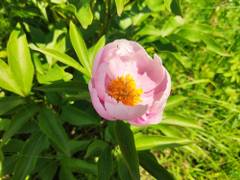
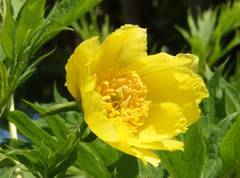
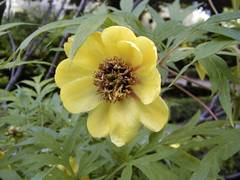
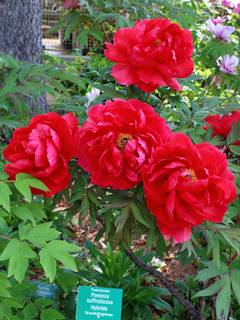
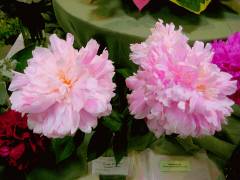
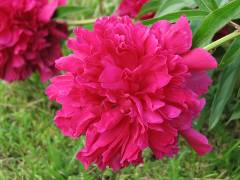
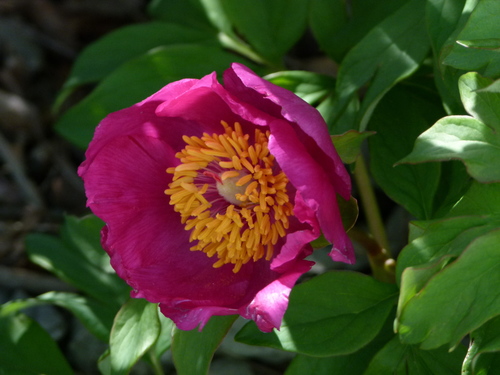
Paeonia officinalis is a long-lived herbaceous perennial in the Paeoniaceae, forming an upright clump 18–30 inches (45–75 cm) tall and about as wide from thickened, tuberous roots. The dark green leaves are divided into many lance-shaped to elliptic segments, with the lower leaves cut into roughly twenty or more parts. In late spring each stem bears a single bowl-shaped flower 4–5 inches (10–13 cm) across; in the wild species the petals are deep crimson-red around a centre of golden stamens, while garden forms include pink, white, and double types. Flowering lasts about two weeks in May and June, followed by star-like clusters of pods that split to reveal black and red seeds. It grows on rocky slopes, scrub, and open woodland in the mountains of southern Europe. The display is brief, and the heavy double-flowered forms often flop and need support after rain. Plants resent disturbance and may take two or three years to flower well after being moved.
Native Range
Native to the mountains of southern Europe, from France and Switzerland through Italy to the Balkans. It grows on rocky slopes, scrub, and open woodland on well-drained soils.Suggested Uses
Grown in mixed and herbaceous borders, cottage gardens, and as a long-lived specimen clump. The flowers are also cut for indoor display, and the seed pods are used in dried arrangements.How to Identify
Appearance
Size & Dimensions
Height1'6" - 2'6"
Width/Spread2' - 3'
Bloom Information
Flowers in late spring, from May to June, with each clump in bloom for about two weeks. The large single or double flowers open over a short period, after which seed pods develop and ripen by late summer.
Detailed Descriptions
Foliage Description
dark greenGrowing Conditions
Sun Requirements
Requires 5-8 hours of direct sunlight daily
• Full Sun: 6+ hours of direct sunlight
• Partial Shade: 3-6 hours of direct sunlight
• Full Shade: Less than 3 hours of direct sunlight
Care & Maintenance
Care Guide
Grows in full sun to light shade on deep, fertile, free-draining soil that stays moist in spring. Water needs are moderate, with most water required during growth and flowering. The tuberous crown is planted shallowly, with buds no more than 1–2 inches (2.5–5 cm) below the surface, since deep planting suppresses flowering. Established clumps are left undisturbed for many years and resent division. Heavy flower heads on tall stems may flop after rain and can be held up with rings. It is hardy to roughly USDA zone 3.Pruning
Spent flowers can be removed after bloom to prevent seeding and tidy the clump. Stems are cut to ground level in late autumn once the foliage has died back. Old leaves are cleared away to reduce overwintering fungal spores.Pruning Schedule
Prune: November
fall
Container Growing
Suitable for container growing
Minimum container size: 5 gallons