Paeonia, Genus, ×, Hybrid, 'Bartzella', Cultivar,
- Genus
- Hybrid
- Cultivar
Bartzella peony
Hybrid of horticultural origin (Itoh intersectional hybrid); raised by Roger Anderson, Wisconsin, 1986
Overview
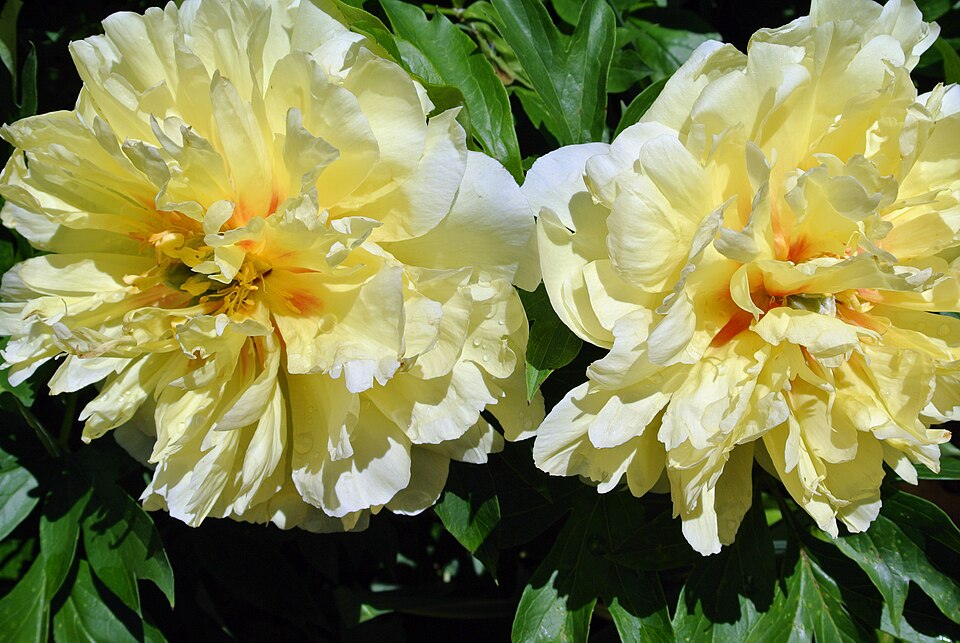
Paeonia × 'Bartzella' is an Itoh, or intersectional, hybrid peony reaching 30-36 inches (76-91 cm) tall and 36-42 inches (91-106 cm) wide. Its stems are herbaceous and die back each fall, but they are stiffer than typical Paeonia lactiflora stems and often stand without staking. The compound leaves are 8-12 inches (20-30 cm) long with nine to twelve deeply lobed leaflets, each 3-5 inches (7.5-13 cm), dark green through the season and turning yellow-green to bronze before frost. Semi-double to double flowers 6-8 inches (15-20 cm) across are sulfur-yellow with red-purple flares at the petal bases, and a mature plant carries 30-50 flowers a season with a light, lemony scent. Flowers open over 3-4 weeks in late spring, each lasting 5-7 days. Cold hardiness reaches zone 4 at minus 30 F (minus 34 C), between that of the herbaceous and tree peony parents. The stems do not keep woody structure over winter as tree peonies do; growth returns from crown buds in spring. The plant is slow to settle, taking 4-5 years to full flowering rather than the 2-3 of P. lactiflora. Botrytis blight and powdery mildew show up in humid, still air but stay cosmetic on established plants.
Native Range
'Bartzella' is a horticultural Itoh hybrid raised by Roger Anderson in Wisconsin and registered in 1986, crossing herbaceous Paeonia lactiflora hybrids with tree peony hybrids of Paeonia × suffruticosa or Paeonia delavayi. The parent species come from East Asia, P. lactiflora from northern China, Mongolia, and Siberia, and the tree peonies from central and southwestern China.Suggested Uses
Grown in perennial borders, cottage gardens, and as a cut flower, spaced 3-4 feet (90-120 cm) apart in zones 4-7. Mass plantings of three to five give a sustained yellow bloom in late spring. The crown needs a permanent spot, since mature plants recover slowly from transplanting and may not flower for 2-3 years after a move. Foliage is toxic to pets.How to Identify
Appearance
Size & Dimensions
Height2'6" - 3'
Width/Spread3' - 3'6"
Bloom Information
Flowering runs mid-May through mid-June in zones 4-7, peaking in late May. Each flower lasts 5-7 days, and the whole display stretches 3-4 weeks as new buds open in sequence. Bloom comes 1-2 weeks later in zones 4-5 than in zones 6-7, and cool spring temperatures below 60 F (16 C) add 5-7 days to the run.
Detailed Descriptions
Flower Description
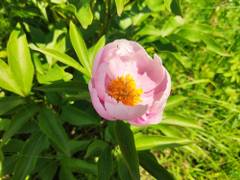
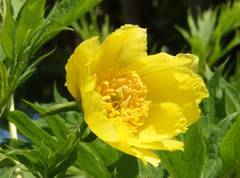
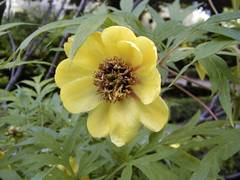
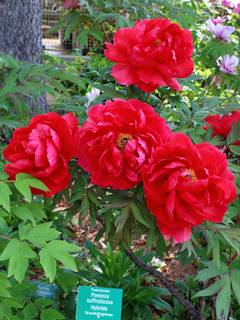
Sulfur-yellow with red-purple flares at the petal bases; semi-double to double; 6-8 inches (15-20 cm) acrossFoliage Description
Dark green, compound, 8-12 inches (20-30 cm) long with nine to twelve deeply lobed leaflets; turns yellow-green to bronze before frostGrowing Conditions
Sun Requirements
Requires 6-10 hours of direct sunlight daily
• Full Sun: 6+ hours of direct sunlight
• Partial Shade: 3-6 hours of direct sunlight
• Full Shade: Less than 3 hours of direct sunlight
Care & Maintenance
Care Guide
Grow in full sun in well-drained soil at pH 6.0-7.5. Water deeply once a week through the first two seasons; established plants take 1-2 weeks without rain. Set the crown buds 1-2 inches (2.5-5 cm) below the surface, as deeper planting cuts flowering. Feed with a low-nitrogen fertilizer in early spring, since high nitrogen pushes leaves at the expense of flowers. Botrytis blight shows up in cool, wet springs; remove and destroy affected stems. Mature crowns flower for 50 years or more without division.Pruning
Cut all stems to 2-3 inches (5-7.5 cm) above the ground in late fall after the first hard frost, and clear the debris to reduce overwintering Botrytis spores. Deadhead spent flowers at the petiole, since cutting into the leaf stem lowers next year's bloom. Crown division is poorly tolerated; if needed, divide in early fall every 8-10 years. Leave the foliage intact through summer, as early removal weakens the crown buds.Pruning Schedule
Prune: October–November
fall