Viola, Genus, rostrata, Species,
- Genus & species
long-spurred violet
Overview
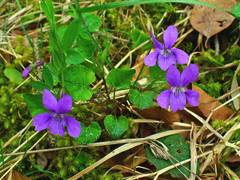
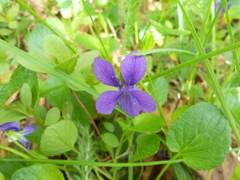
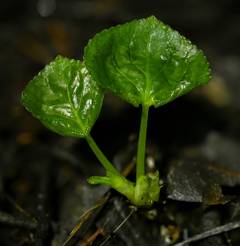
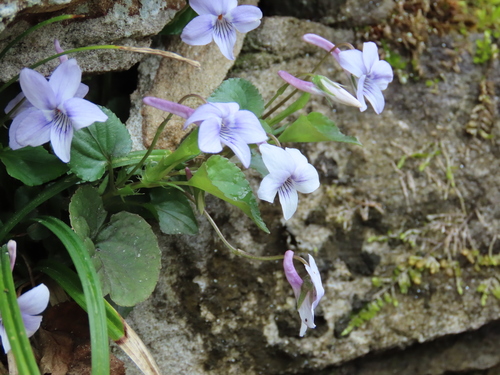
Viola rostrata is a low, clump-forming woodland perennial reaching 4-8 inches (10-20 cm) tall, with leafy aboveground stems rather than a basal rosette. Heart-shaped leaves 1-2 inches (2.5-5 cm) long have toothed margins and pointed tips, carried along the stems. The pale lilac to lavender flowers, about 0.75 inch (2 cm) across, have five petals marked with darker purple lines toward the center and no beard. A slender backward-pointing spur up to 0.5 inch (1.3 cm) long gives the plant its common name. Flowering runs from April to May. Later in the season the plant also produces closed, self-pollinating flowers near the ground that set seed without opening. Small capsules split to fling seeds a short distance, and ants carry seeds farther. The species grows in moist, rich deciduous woods, shaded slopes, and ravines, often on rocky or limestone soils. It spreads slowly into small patches. Foliage may yellow and fade by midsummer in dry shade.
Native Range
Viola rostrata is native to eastern North America, from Quebec and Ontario south through the Appalachians to Georgia and west to the Great Lakes and Arkansas. It grows in moist, rich deciduous forests, wooded ravines, and shaded rocky slopes.Suggested Uses
Used as a spring groundcover in woodland and shade gardens, planted in drifts 6-10 inches (15-25 cm) apart. Suited to naturalizing under deciduous trees and along shaded paths. The early flowers feed small native bees in spring.How to Identify
Appearance
Size & Dimensions
Height4" - 8"
Width/Spread6" - 10"
Bloom Information
Pale lilac flowers with long spurs open from April to May in the spring woods. The open flowers last one to two weeks but often set little seed. Later, hidden self-pollinating flowers near the base produce most of the season's seed.
Detailed Descriptions
Flower Description
Pale lilac to lavenderFoliage Description
GreenGrowing Conditions
Sun Requirements
Requires 2-6 hours of direct sunlight daily
• Full Sun: 6+ hours of direct sunlight
• Partial Shade: 3-6 hours of direct sunlight
• Full Shade: Less than 3 hours of direct sunlight
Care & Maintenance
Care Guide
Grow Viola rostrata in part to full shade on moist, humus-rich woodland soil. It prefers the cool, damp conditions of spring and tolerates drier shade in summer, though foliage may fade early. A slightly acidic to neutral pH from 5.5 to 7.0 suits it, including the limestone soils of its range. Plants spread slowly into small clumps and self-sow from the hidden summer flowers. Leaf litter left in place keeps roots cool and supplies humus. Little care is needed beyond shade and steady spring moisture.Pruning
No pruning is needed for this small woodland perennial. Faded foliage can be left to die back or tidied in summer. Self-sown seedlings are easily moved or thinned in spring.Container Growing
Suitable for container growing
Minimum container size: 1 gallons