Viola, Genus, pedata, Species,
- Genus & species
bird's foot violet
Overview
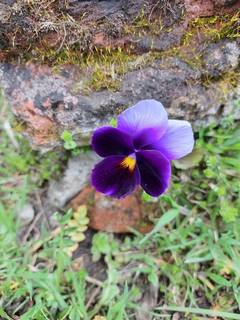
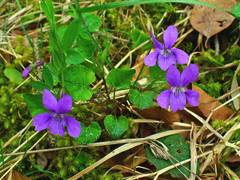
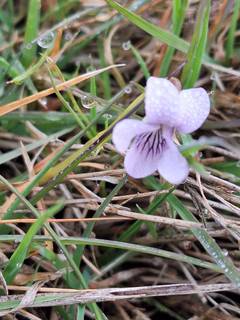
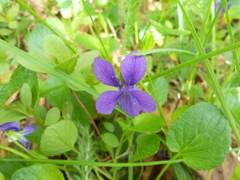
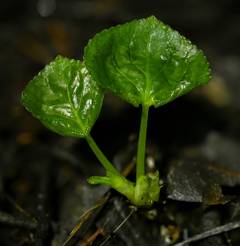
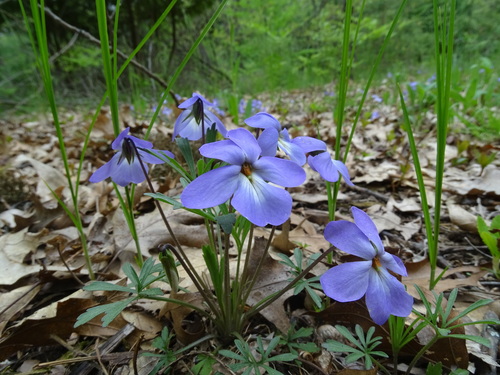
Viola pedata, bird's foot violet, is a low, clump-forming herbaceous perennial in the violet family, reaching 4-6 inches (10-15 cm) tall and wide. Its name comes from the leaves, which are deeply cut into narrow segments resembling a bird's foot. In spring it produces flat-faced, five-petaled flowers about 1-1.5 inches (2.5-4 cm) across, large for a native violet, in shades of lilac to blue-violet; some plants have the two upper petals deep purple. Unlike many violets, the flowers lack the tuft of hairs at the throat, and the plant does not spread by runners. It grows from a short, vertical rootstock in dry, sandy or rocky, acidic soils on sunny banks, barrens, and open woods. V. pedata needs sharp drainage and full sun and declines quickly in rich, moist, or shaded garden soil. It does not form the hidden self-pollinating flowers typical of other violets. It is grown in rock gardens, sandy beds, and native plantings with sharp, fast drainage.
Native Range
Viola pedata is native to eastern North America, from Ontario and Maine south to Florida and west to Minnesota and Texas. It grows in dry, sandy or rocky acidic soils on open banks, prairies, barrens, and thin woodlands. It is widespread but localized to well-drained, sunny sites.Suggested Uses
Bird's foot violet is grown in rock gardens, sand beds, gravel gardens, and dry native or prairie plantings. It is a larval host for fritillary butterflies, whose caterpillars feed on violet foliage. Spring bees and other insects visit the flowers for nectar and pollen.How to Identify
Appearance
Size & Dimensions
Height4" - 6"
Width/Spread4" - 6"
Bloom Information
Flowering occurs mainly in spring, roughly April through May, with a lighter rebloom possible in fall. Flowers open over three to four weeks above the leaves. Seed capsules split and eject seed, which ants then carry and disperse.
Detailed Descriptions
Flower Description
Lilac to blue-violetFoliage Description
GreenGrowing Conditions
Sun Requirements
Requires 6-12 hours of direct sunlight daily
• Full Sun: 6+ hours of direct sunlight
• Partial Shade: 3-6 hours of direct sunlight
• Full Shade: Less than 3 hours of direct sunlight
Care & Maintenance
Care Guide
Grow bird's foot violet in full sun in sharp-draining sandy, gravelly, or rocky acidic soil. It tolerates heat and drought once established but fails in rich, moist, heavy, or shaded ground, which is the main reason it is hard to keep in gardens. Fertilizer and mulch encourage crown rot and are not used. It is hardy in USDA zones 4-8 and forms a tight clump rather than spreading. Division is difficult because of its deep rootstock, so plants are usually grown from seed. It has few pests but is prone to crown rot in wet soil.Pruning
No routine pruning is needed. Spent flower stalks can be removed, though leaving some allows self-seeding. Clearing taller plants nearby keeps the low rosette in sun.Container Growing
Suitable for container growing
Minimum container size: 1 gallons