Viola, Genus, adunca, Species,
- Genus & species
early blue violet
Overview
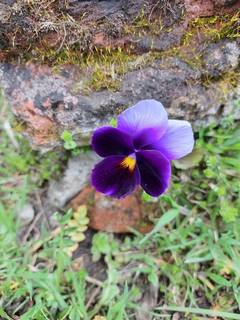
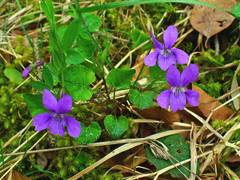
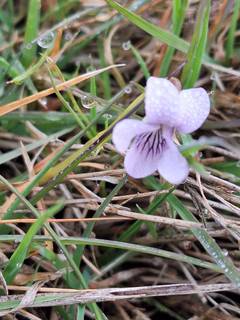
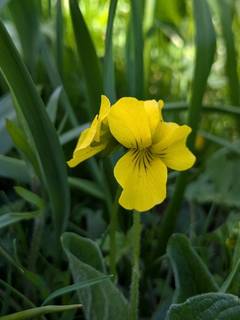
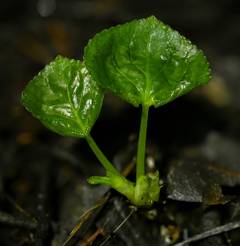
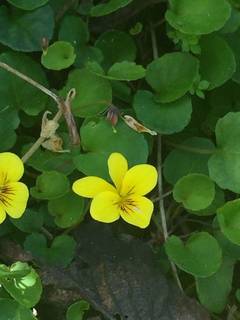
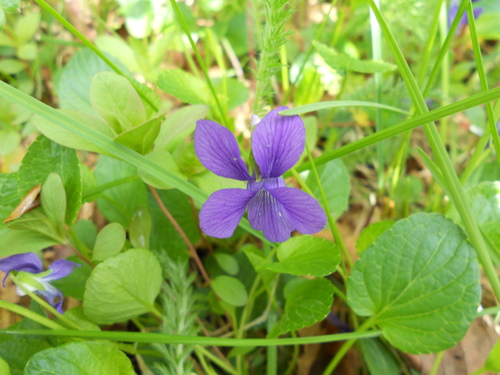
Viola adunca is a low-growing herbaceous perennial reaching 1-4 inches (2.5-10 cm) tall and 4-8 inches (10-20 cm) wide, forming a small clump from a short rhizome or stoloniferous base. Leaves are heart-shaped to oval, 0.5-1.5 inches (12-38 mm) across, with shallowly scalloped margins, on long petioles. Blue-violet flowers about 0.5-0.75 inch (12-19 mm) across appear on slender stalks slightly above the foliage from April through August across the range, with peak bloom from May through June at most sites. Each flower has five petals: two upper, two lateral with white beards, and a lower petal with darker veining and a backward-projecting hooked spur 0.1-0.2 inch (2.5-5 mm) long. Plants also produce inconspicuous self-pollinating cleistogamous flowers near the base from midsummer through fall; these set seed without opening. Capsules ripen July through September and explosively eject seeds 3-6 feet (90-180 cm) from the parent plant. Foliage may stay semi-evergreen in mild coastal climates (zones 8-9) or die back in colder zones. Self-seeds and spreads by short stolons, producing 5-15 seedlings annually around established clumps. Lifespan 4-8 years.
Native Range
Native across most of North America from Alaska and northern Canada south through the western United States to California, Arizona, and New Mexico, and east in scattered populations to the Great Lakes and northern New England. Found in open meadows, forest clearings, prairie margins, dune swales, and mountain meadows at elevations from sea level to 11,000 feet (3,400 m).Suggested Uses
Used in native meadow restorations, oak savanna plantings, lawn alternatives, and butterfly habitat gardens across western North America. Spaced 6-10 inches (15-25 cm) apart in groupings of 15-30 plants for visible coverage. Functions as the primary larval host plant for the Oregon silverspot, the Mardon skipper, and several other declining fritillary butterflies.How to Identify
Appearance
Size & Dimensions
Height1" - 4"
Width/Spread4" - 8"
Bloom Information
Flowers from April through August across the range, with peak bloom from May through June at most sites. In high-elevation or far-northern populations, flowering may not begin until late June or July. Each individual flower lasts 3-5 days; total bloom on a single plant lasts 6-10 weeks. Cleistogamous (self-pollinating) flowers continue to form and set seed from midsummer through fall.
Detailed Descriptions
Flower Description
blue-violet with darker veining and white-bearded lateral petalsFoliage Description
medium greenGrowing Conditions
Sun Requirements
Requires 4-8 hours of direct sunlight daily
• Full Sun: 6+ hours of direct sunlight
• Partial Shade: 3-6 hours of direct sunlight
• Full Shade: Less than 3 hours of direct sunlight
Care & Maintenance
Care Guide
Plant container-grown stock or sow seed in fall in well-drained loamy or sandy soils with full sun to part shade. Water weekly during the first growing season; established plants tolerate seasonal drought of 3-4 weeks. Tolerates a soil pH range from 5.5 to 7.0 and a wide range of soil types. Slugs may damage foliage in moist coastal gardens; iron phosphate baits reduce damage. Crowns persist 4-6 years and self-seeding maintains populations long-term. Cleistogamous seed production in summer and fall produces 50-200 seedlings annually per established colony in open soil.Pruning
No structural pruning is required. Remove dead foliage in late fall as old leaves brown. Volunteer seedlings can be transplanted in early spring or removed by hoeing if the colony has expanded beyond the desired area.Pruning Schedule
Prune: November
fall
Container Growing
Suitable for container growing
Minimum container size: 1 gallons