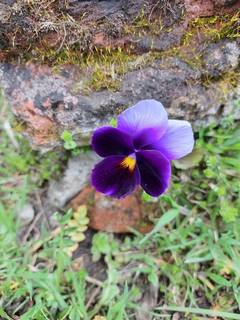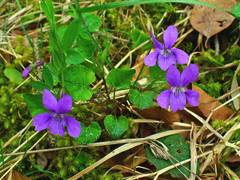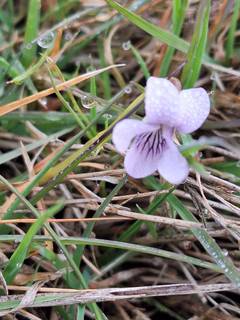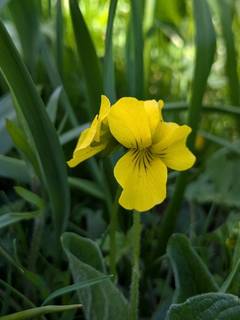
Viola, Genus, arvensis, Species,
- Genus & species
European field pansy
SunFull Sun – Part Shade
WaterLow
Overview
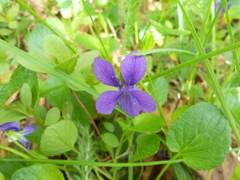
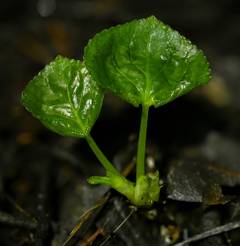
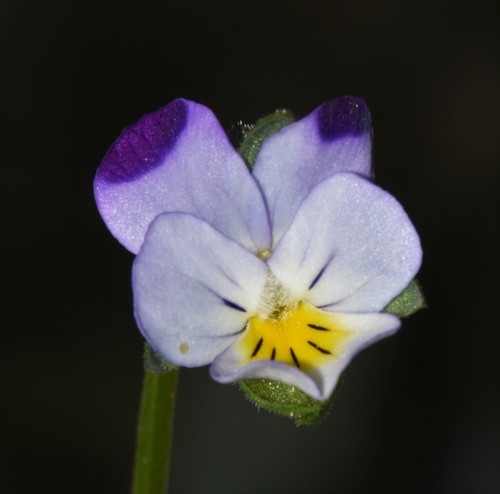
Viola arvensis is a small annual in the violet family, growing 2-12 inches (5-30 cm) tall with a branching, upright to sprawling habit. The leaves are oval to lance-shaped with rounded teeth, and each leaf has a pair of large, deeply lobed leaflike stipules at its base. From spring through fall it produces small five-petalled flowers about 0.4-0.6 inch (10-15 mm) across, usually creamy white to pale yellow, often with a yellow throat and faint violet markings on the upper petals; the petals are shorter than or about equal to the surrounding sepals. The flowers are followed by capsules that split into three sections and fling out the small seeds. Viola arvensis self-pollinates freely and sets seed quickly, so it appears as a weed of arable fields, gardens, and disturbed ground across much of the temperate world. It completes its cycle in a single season, sometimes producing two generations in one year. Plants tolerate poor soil but stay small and short-lived in dry, hot conditions. The species hybridizes with the related V. tricolor, producing intermediate forms that can complicate identification.
Native Range
Viola arvensis is native to Europe and western Asia. It has naturalized across North America, southern Africa, Australia, and other temperate regions, growing in cultivated fields, roadsides, and waste ground.Suggested Uses
Seldom grown by choice; it is mainly recorded as a weed of crops and gardens. It has a minor history in herbal use, sharing some traditions with V. tricolor. The flowers give pollen and nectar to small bees in agricultural settings.How to Identify
Appearance
Size & Dimensions
Height2" - 1'
Width/Spread4" - 10"
Bloom Information
Flowers from spring through fall, often April to October, with peaks in late spring and again in cooler autumn weather. Individual blooms are short-lived but are produced continuously while the plant grows. Most seed is set by self-pollination, so flowering reliably leads to seed.
Detailed Descriptions
Flower Description
cream to pale yellow with violet markingsFoliage Description
greenGrowing Conditions
Sun Requirements
Requires 4-10 hours of direct sunlight daily
• Full Sun: 6+ hours of direct sunlight
• Partial Shade: 3-6 hours of direct sunlight
• Full Shade: Less than 3 hours of direct sunlight
Water & Climate
Water Needs
Care & Maintenance
Care Guide
Viola arvensis grows in full sun to part shade on a wide range of soils, from sandy to clay, with a pH of 5.5-7.5. It germinates in cool, moist conditions in spring or fall and grows fast with little input. As an annual weed it is managed by shallow cultivation or mulching before the flowers set seed. No feeding is needed, and the plant tolerates poor, thin soils. It is rarely affected by pests, though seedlings can damp off in cold, wet ground. Plants finish their life cycle within a few months and die after seeding.Pruning
No pruning is practiced. Where the plant is unwanted, it is hoed or pulled before seed capsules ripen to reduce the seedbank. Cutting back does little, since plants flower again from low buds.Toxicity
Non-toxicPlanting Guide
Planting Methods & Timing
Planting Method
direct sow
Direct Sow Timing
cool soil in spring or fall
Days to Maturity
50–70 days
Plant Spacing
6 inches