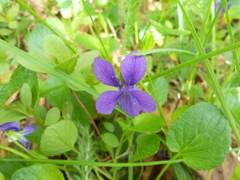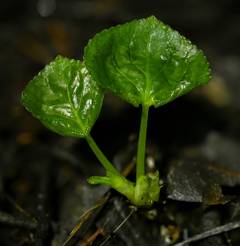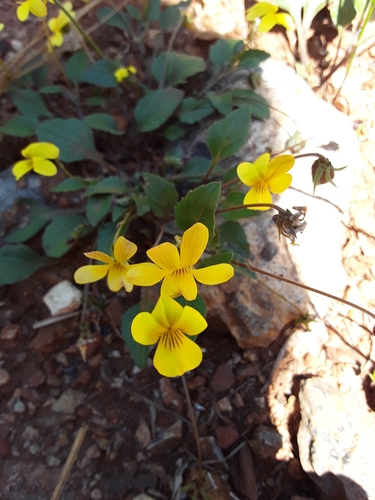
Viola, Genus, purpurea, Species,
- Genus & species
goosefoot violet
Overview
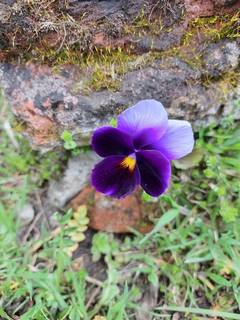
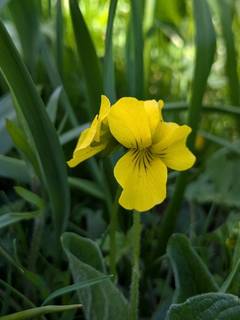
Viola purpurea is a low-growing perennial wildflower reaching 2-8 inches (5-20 cm) tall and spreading 4-10 inches (10-25 cm) wide from a woody rootstock. Despite the common name goosefoot violet, the flowers are yellow, measuring 0.4-0.6 inch (10-15 mm) across, with the backs of the upper petals tinged brownish-purple and the lower petals marked by purple veins near the throat. Leaves are thick and somewhat fleshy, gray-green to green, often with purple undersides, and range from rounded to ovate with shallowly toothed margins. The plant forms compact clumps rather than spreading by runners. Flowering occurs in spring and early summer, tracking snowmelt at higher elevations. It grows on dry, open slopes, gravelly flats, and the understory of pine and sagebrush communities, and tolerates lean, rocky soils. Several subspecies span the range and differ in leaf shape and hairiness. The species needs sharp drainage and full to partial sun; it declines in heavy, wet soils and dense shade, which limits its use in irrigated borders.
Native Range
Viola purpurea is native to western North America, ranging from British Columbia south through California and east into the Rocky Mountain states, including Oregon, Washington, Nevada, Idaho, and Arizona. It grows on dry slopes, gravelly flats, and open coniferous and sagebrush communities from foothills to subalpine elevations.Suggested Uses
Used in rock gardens, gravel gardens, and native plant or alpine plantings on dry, sunny sites. Suited to slopes and lean soils where many perennials struggle. Spaced 8-12 inches (20-30 cm) apart in groups.How to Identify
Appearance
Size & Dimensions
Height2" - 8"
Width/Spread4" - 10"
Colors
Bloom Information
Detailed Descriptions
Foliage Description
gray-greenGrowing Conditions
Sun Requirements
Requires 4-8 hours of direct sunlight daily
• Full Sun: 6+ hours of direct sunlight
• Partial Shade: 3-6 hours of direct sunlight
• Full Shade: Less than 3 hours of direct sunlight
Care & Maintenance
Care Guide
Grow in full sun to partial shade in lean, gravelly, sharply drained soil. This species tolerates drought once established and is adapted to dry montane and sagebrush sites. Heavy, wet, or poorly drained soils cause rot and decline. No supplemental fertilizer is required, and rich soils tend to reduce flowering. It is hardy in USDA zones 5-8 and withstands cold mountain winters under snow cover. Plants are short-lived but self-sow where conditions suit them.Pruning
Remove spent flower stems to keep plants tidy and to limit unwanted self-sowing. Cut back tattered foliage after flowering if it declines in summer heat. No structural pruning is needed.Container Growing
Suitable for container growing
Minimum container size: 1 gallons