Viola, Genus, cucullata, Species,
- Genus & species
marsh blue violet
Overview
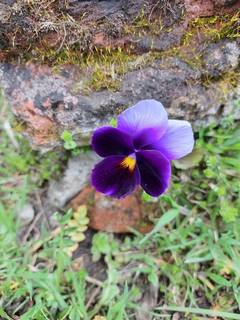
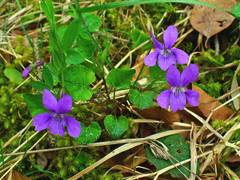
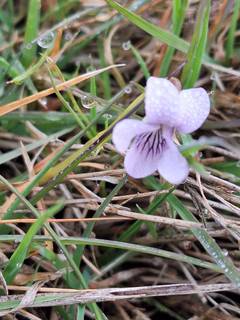
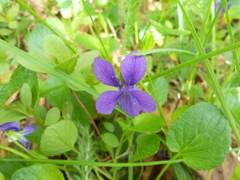
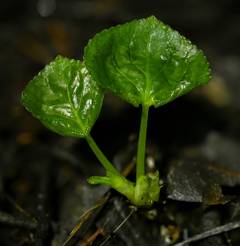
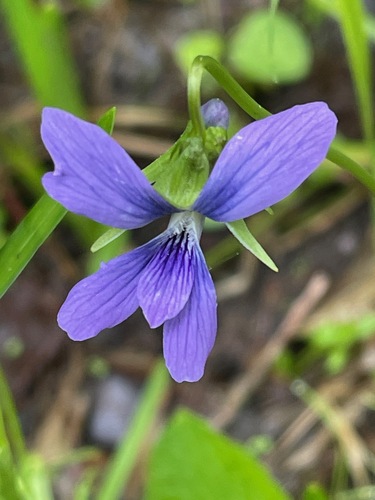
Viola cucullata is a low, clump-forming perennial in the violet family (Violaceae), 4–10 inches (10–25 cm) tall, growing from a stout rhizome without an upright leafy stem. The leaves are basal, heart-shaped with a deeply notched base, finely toothed, and held on long stalks; they enlarge through the season. In spring it bears blue-violet flowers, each about 0.6–0.8 inch (15–20 mm) across, carried on slender stalks that hold the flowers at or above the level of the leaves, with a darker violet throat and a white center marked with narrow veins. Later in the season it also produces self-pollinating flowers that never open, set close to the ground, which form most of the seed. It grows in wet to moist ground — seeps, wet meadows, streambanks, marsh edges, and damp woods — across eastern North America. The flowers stand above the leaves, unlike the common blue violet V. sororia, whose flowers sit among or below them. It spreads by rhizome and seed and can colonize moist lawns and beds where it is hard to remove.
Native Range
Viola cucullata is native to eastern North America, from eastern Canada south through the eastern United States to Georgia and west to the Mississippi valley. It grows in wet, shaded to open habitats throughout this range.Suggested Uses
Viola cucullata is used in rain gardens, woodland gardens, and the moist edges of ponds and streams as a spring-flowering native groundcover. It serves as a larval host for fritillary butterflies and supplies early nectar. It naturalizes into shaded, damp ground.How to Identify
Appearance
Size & Dimensions
Height4" - 10"
Width/Spread6" - 1'
Bloom Information
Blue-violet flowers open in spring, mainly April through June, on stalks held above the leaves. Open flowering lasts about 4–5 weeks. Later, hidden self-pollinating flowers near the ground produce most of the season's seed without opening.
Detailed Descriptions
Foliage Description
greenGrowing Conditions
Sun Requirements
Requires 2-6 hours of direct sunlight daily
• Full Sun: 6+ hours of direct sunlight
• Partial Shade: 3-6 hours of direct sunlight
• Full Shade: Less than 3 hours of direct sunlight
Care & Maintenance
Care Guide
Viola cucullata grows in part to full shade in moist to wet, humus-rich soil and tolerates wetter ground than most violets. It suits rain gardens, woodland edges, and the damp margins of ponds and streams, and stays lush where the soil never dries. It needs no fertilizer in fertile soil and self-sows freely through both open and hidden flowers. In moist lawns and beds it can spread further than wanted and is difficult to dig out once rooted. It tolerates short dry spells but persists where moisture stays steady.Pruning
No pruning is needed. Tattered leaves can be removed in spring before new growth, and spent flower stalks trimmed if self-seeding is not wanted. Plants can be lifted and divided in spring or early autumn.Container Growing
Suitable for container growing
Minimum container size: 1 gallons