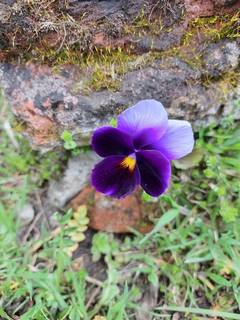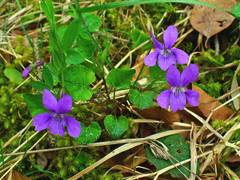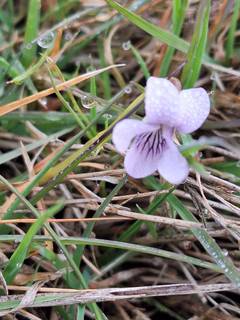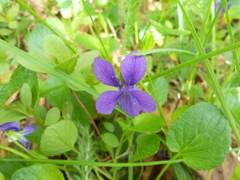
Viola, Genus, praemorsa, Species,
- Genus & species
prairie violet
Western North America: British Columbia to California, east to Idaho
Overview
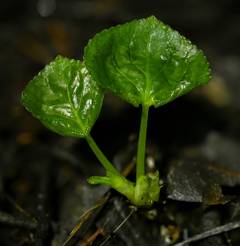
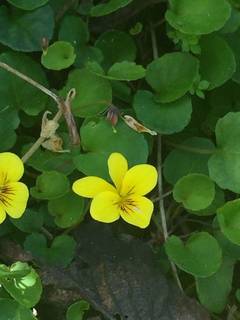
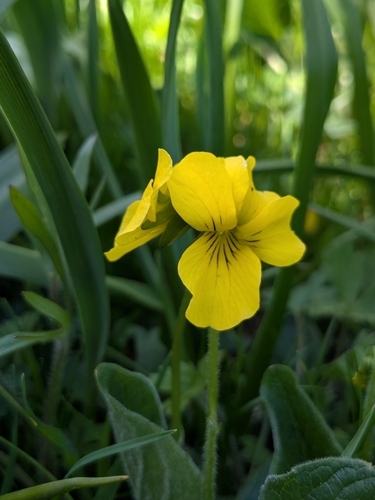
Viola praemorsa is a small herbaceous perennial reaching 2-6 inches (5-15 cm) tall and 4-8 inches (10-20 cm) wide, growing as a single basal rosette from a short stout rootstock. Leaves are oblong-lanceolate to ovate, 1-3 inches (2.5-7.5 cm) long, with subtly toothed margins, narrowed to a winged petiole; foliage is light green to grey-green, glabrous to short-hairy depending on subspecies. Flowers are bright yellow, 0.4-0.7 inches (10-18 mm) across, with brown to purple veins on the lower three petals and the inside of the back two petals; flowers face outward on slender pedicels barely exceeding the foliage from April through June. Capsules ripen 0.3-0.4 inches (8-10 mm) long and split into three valves, ejecting seeds 1-2 feet (30-60 cm) from the parent plant. Cleistogamous flowers in late summer produce additional seed without insect pollinators. Plants do not spread by rhizomes and remain as solitary rosettes 4-8 inches (10-20 cm) wide. Foliage dies back to the rootstock in late summer, often well before first frost in dry sites. V. praemorsa is associated with declining oak-prairie habitat in the Pacific Northwest and is a state-listed species of conservation concern in Washington.
Native Range
Native to western North America from southern British Columbia south through Washington, Oregon, Idaho, and California to the Sierra Nevada. Grows in oak woodlands, prairie remnants, sagebrush meadows, dry rocky slopes, and serpentine grassland at 100-7,000 feet (30-2,100 m) elevation.Suggested Uses
Used in dry meadow plantings, oak savanna restorations, native plant collections, and prairie-style gardens in zones 4-9. Spaced 6-10 inches (15-25 cm) apart in mass plantings. Combines with Camassia quamash, Lupinus species, and Lomatium species in Pacific Northwest prairie plantings. Not suited to standard mixed perennial beds with regular irrigation, where the species succumbs to crown rot within 1-2 seasons.How to Identify
Appearance
Size & Dimensions
Height2" - 6"
Width/Spread4" - 8"
Colors
Bloom Information
April through June across the range; begins late March at low elevations in southwestern Oregon and extends into early July at higher elevations in the Sierra Nevada. Individual flowers last 5-8 days; total chasmogamous bloom period at the plant level lasts 3-5 weeks. Cleistogamous flowers produce seed from late June through August. Plants enter summer dormancy 4-8 weeks after the last open flower.
Detailed Descriptions
Flower Description
Bright yellow with brown-purple veinsFoliage Description
Light green to grey-greenGrowing Conditions
Sun Requirements
Requires 4-10 hours of direct sunlight daily
• Full Sun: 6+ hours of direct sunlight
• Partial Shade: 3-6 hours of direct sunlight
• Full Shade: Less than 3 hours of direct sunlight
Care & Maintenance
Care Guide
Establish in well-drained loam to gravelly loam at pH 6.0-7.5; the species declines in heavy clay, irrigated lawn-edge sites, or compacted urban substrates. Full sun produces the strongest bloom; partial afternoon shade is tolerated in zones 7-9 below 1,500 feet (450 m). Water during the first growing season to establish; mature plants tolerate the natural summer drought of the western North American climate and resent summer irrigation. Few pests trouble the species. Slugs feed on emerging spring leaves in moist gardens but cause cosmetic damage. Plants tolerate division poorly and frequently fail when transplanted from established rosettes; seed sowing is the standard propagation method. Conservation status warrants source verification before purchase; choosing nursery-propagated plants grown from documented seed limits impact on wild populations.Pruning
No annual pruning is required. Yellowing leaves drop naturally as plants enter summer dormancy in late June or July. Removal of cleistogamous capsules in late summer limits self-seeding in formal beds; volunteer seedlings appear in surrounding open soil within 2-3 years if capsules are left.Pruning Schedule
Prune: July–August
summer
Container Growing
Suitable for container growing
Minimum container size: 1 gallons