Image 1 of 10
1 / 10
© No machine-readable author provided. Folini assumed (based on copyright claims)., some rights reserved (CC-BY) · Wikimedia Commons
Viola, Genus, pedunculata, Species,
- Genus & species
California golden violet
Overview
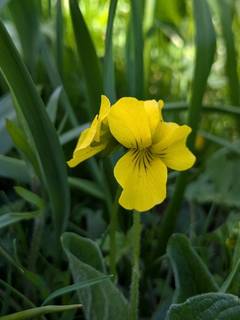
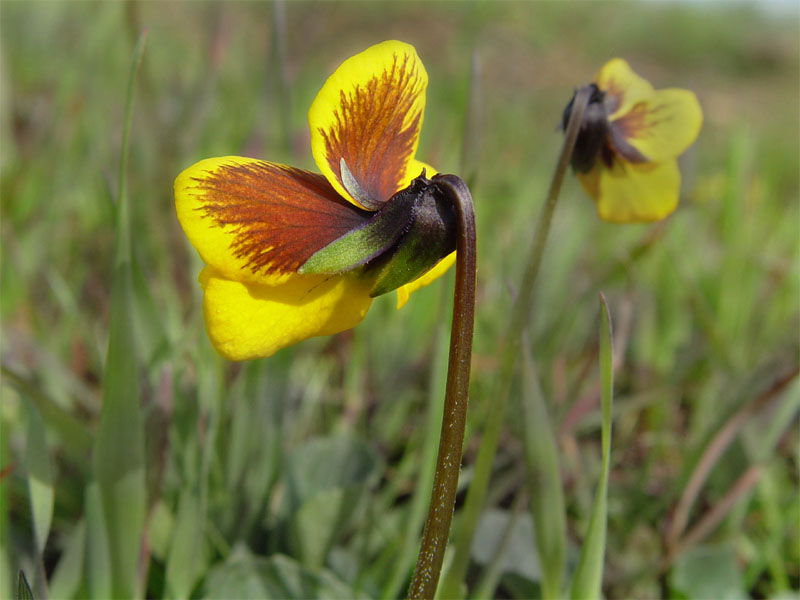
Viola pedunculata is a low perennial in the violet family, native to grasslands and open slopes of California and northern Baja California. Plants grow 4-12 inches (10-30 cm) tall from a deep, woody rootstock, forming loose clumps of oval to triangular leaves with scalloped edges. Unlike many violets, the flowers are held well above the foliage on slender stalks. Each flower spans 0.75-1.25 inches (2-3 cm), with five bright yellow petals; the backs of the upper petals are tinged brown-purple, and the lower petals carry thin dark veins that guide pollinators. Bloom runs from February to May, earlier in the south. The species grows in full sun on clay, loam, and sandy soils that are moist through winter and dry in summer. After flowering, plants go dormant through the dry season, dying back to the rootstock and leaving open ground. It is a larval host for several fritillary butterflies, including the callippe and zerene silverspots. Plants are slow to establish from seed and resprout from the rootstock each winter with the return of rain.
Native Range
Native to California and northern Baja California, from the coast through the inner Coast Ranges and Sierra Nevada foothills. It grows in open grasslands, meadows, and on grassy slopes below 2,500 feet (760 m).Suggested Uses
Grown in native grassland and meadow plantings, rock gardens, and butterfly habitat gardens in California. Spaced 8-12 inches (20-30 cm) apart, plants form low clumps that naturalize by seed. Used in habitat gardens to support fritillary butterfly larvae.How to Identify
Appearance
Size & Dimensions
Height4" - 1'
Width/Spread6" - 1'
Bloom Information
Detailed Descriptions
Flower Description
Bright yellow with brown-purple backs and dark veinsFoliage Description
Green, oval to triangular, scallopedGrowing Conditions
Sun Requirements
Requires 5-9 hours of direct sunlight daily
• Full Sun: 6+ hours of direct sunlight
• Partial Shade: 3-6 hours of direct sunlight
• Full Shade: Less than 3 hours of direct sunlight
Care & Maintenance
Care Guide
Grows in full sun on well-drained clay, loam, or sandy soil that is moist through winter and dry in summer. Water is rarely needed beyond winter rainfall; established plants tolerate summer drought through dormancy. Soils that stay wet in summer rot the rootstock. Plants die back by early summer, so the bare ground can be paired with summer-active companions. Foliage returns with autumn and winter rains. Seed-grown plants take two to three years to flower well and transplant poorly once the rootstock forms.Pruning
Remove spent flower stalks after bloom if self-seeding is unwanted. Leave the foliage to die back on its own into summer dormancy. No other pruning is required.Pruning Schedule
Prune: May
late spring
Container Growing
Suitable for container growing
Minimum container size: 1 gallons