Viola, Genus, palustris, Species,
- Genus & species
marsh violet
Holarctic: cool-temperate Northern Hemisphere
Overview
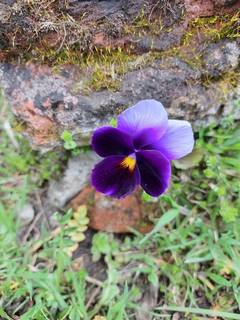
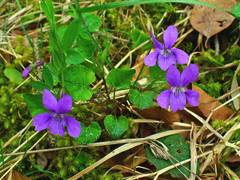
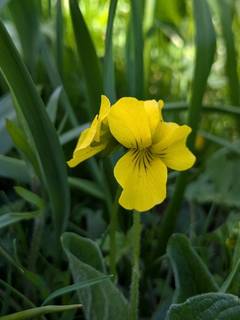
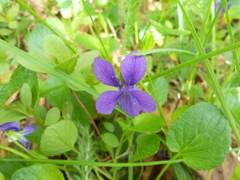
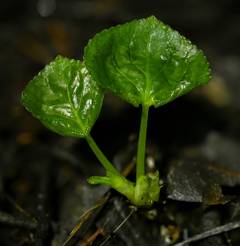
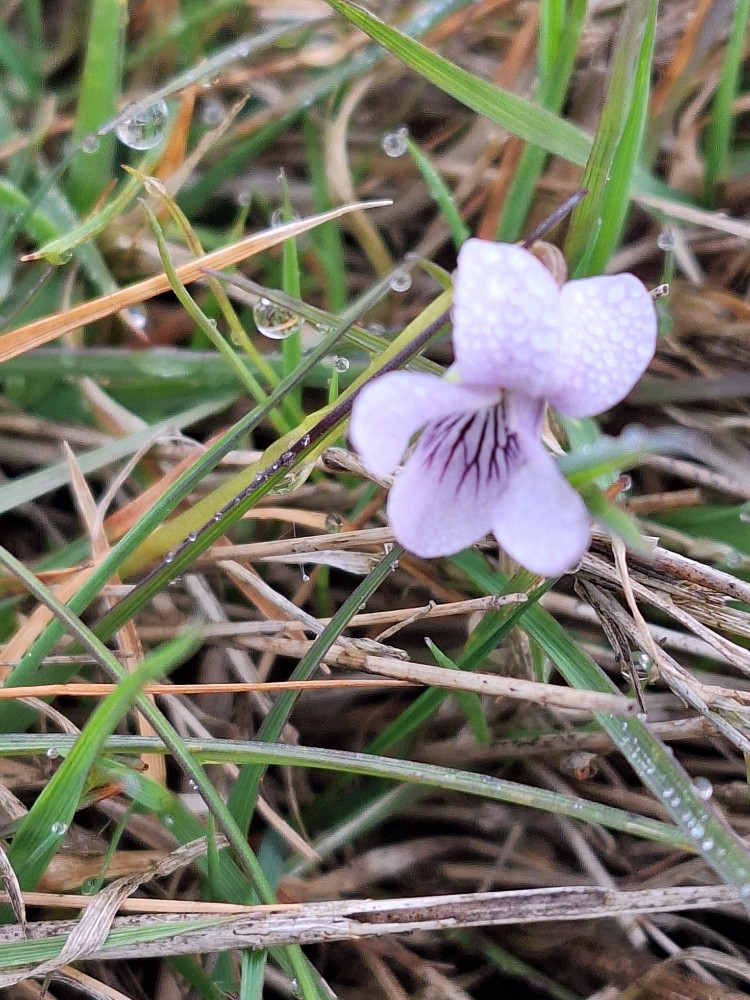
Viola palustris is a small herbaceous perennial reaching 2-6 inches (5-15 cm) tall and 4-8 inches (10-20 cm) wide, forming small colonies from slender creeping rhizomes. Leaves emerge in basal rosettes, kidney-shaped to broadly heart-shaped, 0.6-1.5 inches (1.5-4 cm) wide, glabrous to nearly so, on slender petioles 1-4 inches (2.5-10 cm) long. Flowers are pale lavender to nearly white with darker purple veins on the lower three petals, 0.4-0.6 inches (10-15 mm) across, on slender pedicels equal to or slightly exceeding the leaf petioles, from May through July. Capsules ripen 0.2-0.3 inches (5-8 mm) long and split into three valves, ejecting seeds 1-3 feet (30-90 cm) from the parent plant. Plants spread by both seed and rhizome, forming loose colonies in seasonally wet sites within 2-3 years. Cleistogamous (self-fertile, non-opening) flowers form on basal pedicels in late summer, producing additional seed without insect pollinators. Foliage yellows in October and dies back to the rhizome; new leaves emerge in late winter or early spring. Plants do not tolerate prolonged drought and disappear from sites that dry below 6 inches (15 cm) of soil moisture during the growing season.
Native Range
Holarctic distribution across the cool-temperate Northern Hemisphere; in North America found from Alaska, Yukon, and Greenland south through Canada and the Pacific Northwest to northern California, and across the northern Rockies and Great Lakes states. Grows in seeps, streamside wet meadows, sphagnum bogs, lake margins, and wet forest floors at 0-9,000 feet (0-2,750 m) elevation.Suggested Uses
Used in bog gardens, rain gardens, pond margins, and seasonally wet meadow plantings in zones 3-7. Spaced 6-10 inches (15-25 cm) apart for groundcover function in wet sites; full coverage develops in 2-3 seasons. Combines with Caltha palustris, Carex sedges, and Mimulus guttatus in moist meadow plantings. Not suited to standard mixed perennial borders or dry rock gardens.How to Identify
Appearance
Size & Dimensions
Height2" - 6"
Width/Spread4" - 8"
Bloom Information
May through July in zones 3-7 across most of the range; begins late April at lower elevations in coastal Washington and extends into early August on alpine seeps in the Cascades and Rockies. Individual flowers last 4-7 days; total chasmogamous (open-pollinated) bloom period at the colony level lasts 4-6 weeks. Cleistogamous flowers continue producing seed from late June through September after the open-flowering period ends.
Detailed Descriptions
Flower Description
Pale lavender to nearly white with darker purple veinsFoliage Description
GreenGrowing Conditions
Sun Requirements
Requires 1-4 hours of direct sunlight daily
• Full Sun: 6+ hours of direct sunlight
• Partial Shade: 3-6 hours of direct sunlight
• Full Shade: Less than 3 hours of direct sunlight
Care & Maintenance
Care Guide
Establish in consistently moist to wet acidic to neutral soil at pH 5.0-6.5; plants decline rapidly on sites that dry between rainfalls or on alkaline substrates. Partial shade is suitable in zones 6-8; full sun in those zones causes leaf scorch unless soil is saturated through the growing season. Slugs feed on emerging spring shoots in coastal gardens; damage is cosmetic and does not affect long-term colony health. Few pests or diseases trouble the species. Plants are intolerant of standard garden bed conditions and decline within 1-2 years on dry mineral soil. Self-seeding is modest and depends on adequate soil moisture during seed germination in late winter and early spring.Pruning
No annual pruning is required. Yellowing leaves drop naturally in October; raking spent leaves can be done in late fall to reduce slug habitat but is not required for plant health. Spent flower stems wither and fall away on their own.Pruning Schedule
Prune: November
fall
Container Growing
Suitable for container growing
Minimum container size: 1 gallons