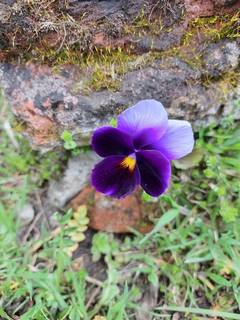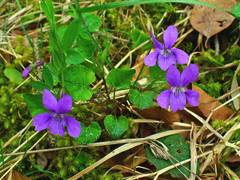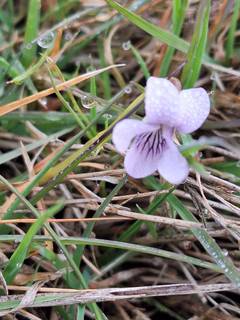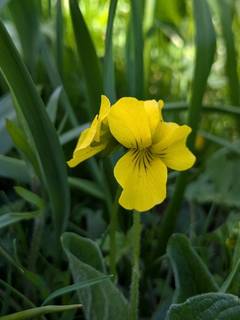
Viola, Genus, communis, Species,
- Genus & species
dooryard violet
Overview
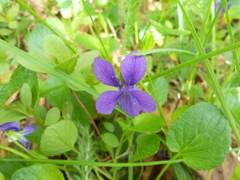
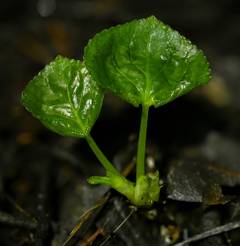
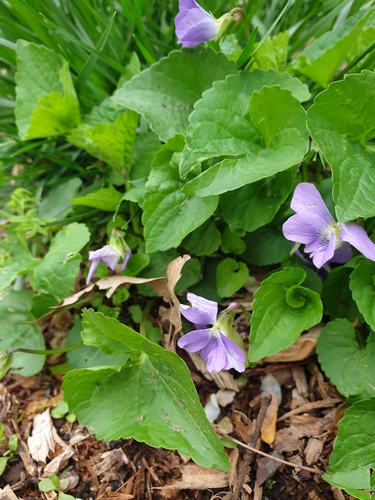
Viola communis is a low, clump-forming herbaceous perennial in the violet family, growing 3-8 inches (7.5-20 cm) tall from short, stout rhizomes. The leaves are heart-shaped to broadly oval, 1-4 inches (2.5-10 cm) long, with scalloped margins and long leaf stalks rising directly from the base. In spring the plant produces five-petaled blue-violet flowers about 0.75 inch (2 cm) across, each on a leafless stalk, with the lower petals often marked by white throats and dark veins. Later in the season it forms self-pollinating closed flowers near the ground that set seed without opening. The species spreads by short rhizomes and abundant seed, forming colonies in lawns, dooryards, moist woodland edges, and disturbed ground across eastern North America. It tolerates mowing and foot traffic, which can make it weedy in turf. The flowers and young leaves are edible. Native bees and small butterflies visit the open spring flowers.
Native Range
Viola communis is native to eastern North America, ranging across the eastern and central United States and into southern Canada. It grows in lawns, dooryards, moist woodland edges, meadows, and disturbed ground from sea level into the lower mountains.Suggested Uses
Used as a groundcover, in woodland and shade gardens, and in naturalized lawns within its range. The low colonies fill shaded ground beneath shrubs and trees. The edible flowers are used fresh in salads and as a garnish.How to Identify
Appearance
Size & Dimensions
Height3" - 8"
Width/Spread6" - 1'
Bloom Information
Blue-violet flowers open from March through May. After the spring display, the plant forms closed self-pollinating flowers near ground level through summer that set seed without opening. This second flush extends seed production well past the visible bloom.
Detailed Descriptions
Foliage Description
greenGrowing Conditions
Sun Requirements
Requires 3-8 hours of direct sunlight daily
• Full Sun: 6+ hours of direct sunlight
• Partial Shade: 3-6 hours of direct sunlight
• Full Shade: Less than 3 hours of direct sunlight
Care & Maintenance
Care Guide
Grows in part shade to full sun, tolerating four to eight hours of light or more. Moist, humus-rich soils support the fullest growth, though the plant adapts to average garden soil and to lawns. Even moisture keeps foliage lush, while drought sends plants into early dormancy. The rhizomes and self-sown seed spread readily, forming colonies that can move into lawns and beds. Division in spring or fall propagates established clumps. No fertilizer is needed in average soil.Pruning
Pruning is minimal. Spent leaves can be tidied in any season, and seed capsules removed before they ripen reduce self-sowing. Mowing keeps colonies low in lawn settings.Pruning Schedule
Prune: June–July
summer
Container Growing
Suitable for container growing
Minimum container size: 1 gallons