Viburnum, Genus, recognitum, Species,
- Genus & species
northern arrowwood
Overview
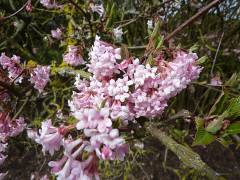
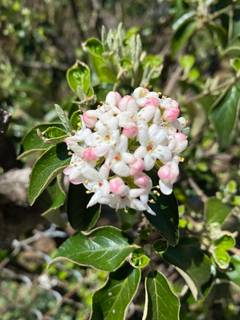
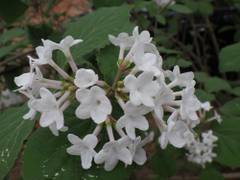
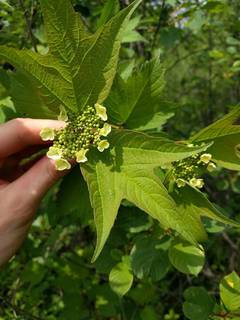
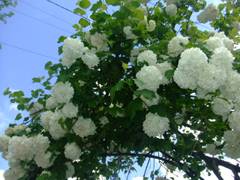
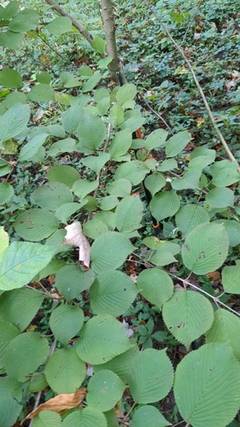
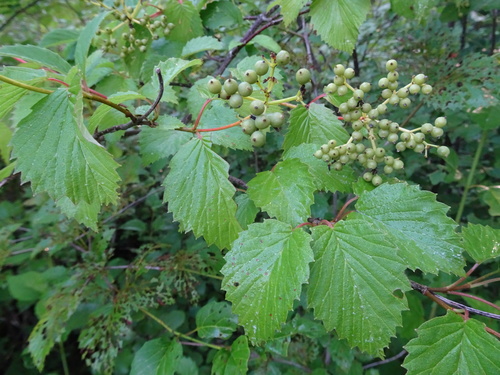
Viburnum recognitum, northern arrowwood, is a deciduous multi-stemmed shrub in the Viburnaceae, growing 6-15 ft (1.8-4.6 m) tall and 6-12 ft (1.8-3.7 m) wide with erect, gray, notably straight young stems. The opposite leaves are broadly ovate, 1.5-4 in (4-10 cm) long, coarsely toothed, glossy green above, and turn shades of red to purple in autumn. In late spring to early summer it bears flat-topped cymes 2-4 in (5-10 cm) across packed with small creamy-white flowers. These are followed by clusters of blue-black drupes about 0.3 in (8 mm) long that are eaten by birds. Viburnum recognitum is native to moist woodland edges, swamp margins, and streambanks of eastern North America and tolerates a wide range of soils, including periodically wet ground. It suckers from the base and can spread into a colony or thicket over time, which suits naturalized plantings but needs control in formal beds. The straight young stems were historically used for arrow shafts, the source of the common name. It is closely related to and often confused with Viburnum dentatum, differing in its mostly hairless leaf undersides.
Native Range
Native to eastern North America, from Maine and Ontario south to Georgia and west to the Appalachians and Great Lakes region. It grows along moist woodland edges, swamp and pond margins, and streambanks.Suggested Uses
Used in hedges, shrub borders, rain gardens, and naturalized woodland edges. Suited to wet or variable soils and wildlife plantings where birds feed on the fruit. Combines with other native shrubs in informal screens.How to Identify
Appearance
Size & Dimensions
Height6' - 15'
Width/Spread6' - 12'
Bloom Information
Detailed Descriptions
Foliage Description
glossy green, turning red to purple in fallGrowing Conditions
Sun Requirements
Requires 4-8 hours of direct sunlight daily
• Full Sun: 6+ hours of direct sunlight
• Partial Shade: 3-6 hours of direct sunlight
• Full Shade: Less than 3 hours of direct sunlight
Care & Maintenance
Care Guide
Grows in full sun to part shade in average to moist, well-drained soil. It tolerates clay, occasional flooding, and soils from pH 5.5 to 7.5, and grows poorly only in very dry sites. Established plants need little care beyond watering during drought. The shrub suckers and forms colonies, so removing root suckers limits spread. No routine fertilizing is needed in average soil.Pruning
Prune immediately after flowering, since flower buds form on the previous season's wood. Remove the oldest stems at the base every few years to renew the thicket. Suckers can be cut or dug out to keep the clump in bounds.Pruning Schedule
Prune: June
summer