Viburnum, Genus, dilatatum, Species,
- Genus & species
linden viburnum
Overview
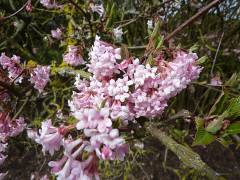
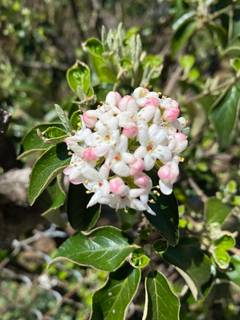
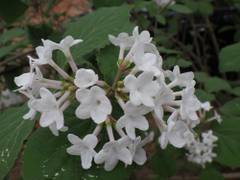
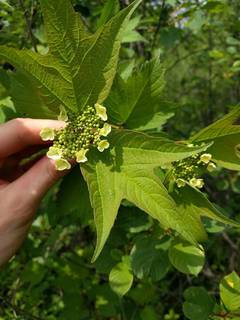
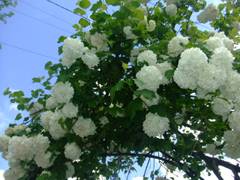
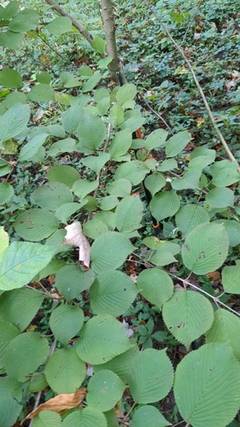
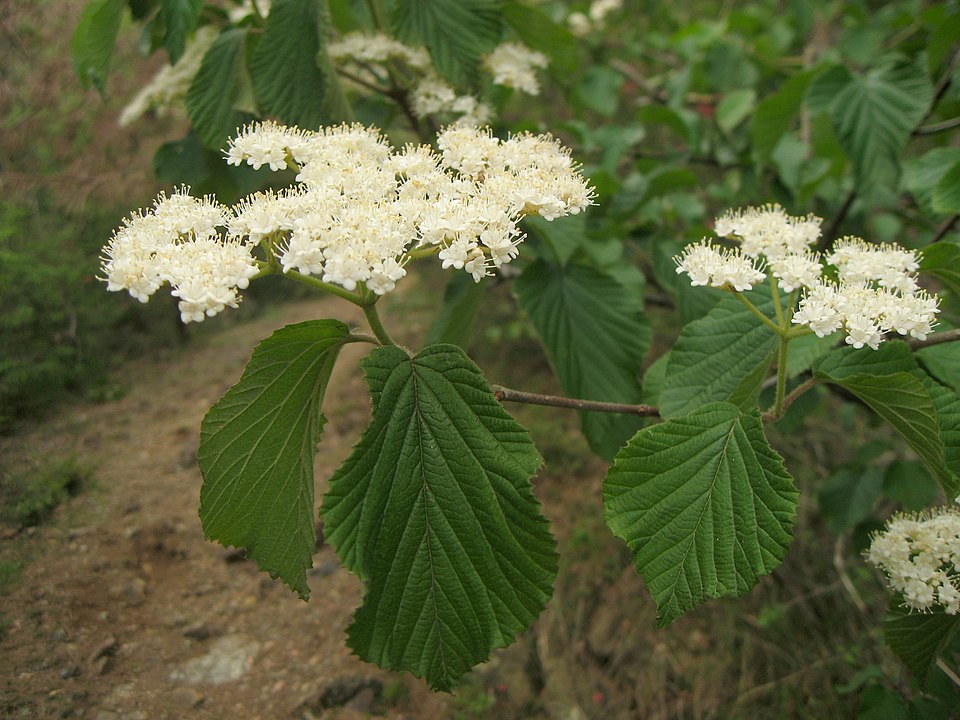
Viburnum dilatatum is a deciduous, multi-stemmed shrub in the family Viburnaceae, reaching 8-10 feet (2.4-3 m) tall and 6-8 feet (1.8-2.4 m) wide with an upright, rounded form. Leaves are opposite, broadly ovate to nearly round, 2-5 inches (5-13 cm) long, with toothed margins, prominent veins, and a coarse, hairy surface. Flat-topped flower clusters (cymes) 3-5 inches (8-13 cm) across open creamy white in late spring, each cluster made of many small five-lobed flowers. The flowers carry a heavy scent that some people find unpleasant at close range. By late summer the clusters ripen into bright red, egg-shaped drupes about 0.3 inch (8 mm) long that persist into winter and are eaten by birds. Fall foliage turns russet-red to bronze. The shrub grows in full sun to part shade and tolerates a range of soils. In parts of the eastern United States it self-sows from bird-dispersed seed and is treated as invasive, escaping into woodlands and forest edges. One limitation is this seeding behavior, which has led to its restriction or removal in several states.
Native Range
Viburnum dilatatum is native to eastern Asia, including Japan, Korea, and central and eastern China, where it grows in woodland margins and thickets in hilly country. It has naturalized in parts of the northeastern and mid-Atlantic United States.Suggested Uses
Viburnum dilatatum is used as a fruiting specimen, in shrub borders, and in informal hedges and screens. Its red fall fruit and foliage extend interest into autumn. In regions where it naturalizes, planting is restricted, and lower-seeding cultivars are used instead.How to Identify
Appearance
Size & Dimensions
Height8' - 10'
Width/Spread6' - 8'
Bloom Information
Flowering occurs in late spring, generally May into early June. The creamy-white cymes open over about two weeks and are followed by red fruit from late summer through fall. The scent is strong at close range during peak bloom.
Detailed Descriptions
Foliage Description
dark greenGrowing Conditions
Sun Requirements
Requires 4-10 hours of direct sunlight daily
• Full Sun: 6+ hours of direct sunlight
• Partial Shade: 3-6 hours of direct sunlight
• Full Shade: Less than 3 hours of direct sunlight