Viburnum, Genus, cassinoides, Species,
- Genus & species
northern wild raisin
Overview
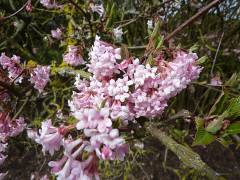
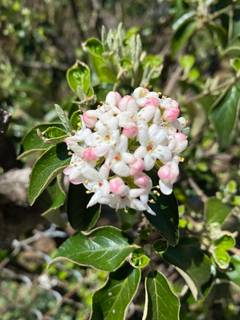
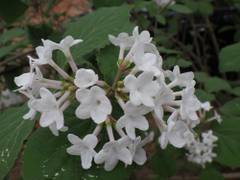
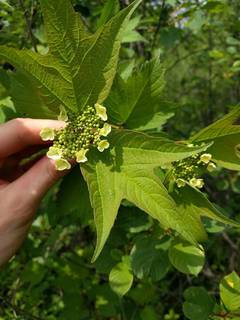
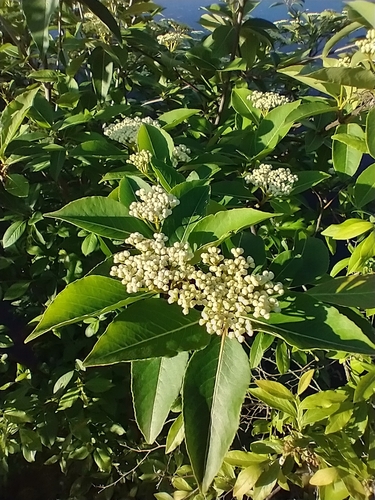
Viburnum cassinoides is a deciduous shrub 5-12 feet (1.5-3.7 m) tall and 4-8 feet (1.2-2.4 m) wide, forming a rounded multi-stemmed mound of upright arching branches. The opposite leaves are oval to elliptic, 2-4 inches (5-10 cm) long, leathery, dull dark green above, with slightly wavy or shallowly toothed margins, turning orange, red, and maroon in fall. Flat-topped clusters of small creamy-white flowers 2-4 inches (5-10 cm) across open in late spring to early summer at the branch tips. Round drupes about 0.3 inch (8 mm) wide follow, ripening through green, pink, and rose to blue-black, often showing several colors in one cluster. Birds strip the ripe fruit through fall. Plants spread slowly by root suckers to form colonies in moist ground. Native to wet woods, bog margins, and stream banks, it adapts to ordinary garden soil where moisture stays steady. One trade-off is its need for acidic, consistently moist sites, since it thins and scorches on dry alkaline ground.
Native Range
Native to eastern North America, from Newfoundland and Ontario south through the Appalachians to Georgia and Alabama. It grows in wet woods, bog and swamp margins, and along stream banks, usually on acidic soils.Suggested Uses
Used in rain gardens, pond and stream edges, woodland borders, and native shrub plantings on moist acidic ground. It is grown as an informal hedge or massed for fruit and fall color.How to Identify
Appearance
Size & Dimensions
Height5' - 12'
Width/Spread4' - 8'
Bloom Information
Detailed Descriptions
Foliage Description
Dull dark green, turning orange, red, and maroon in fallGrowing Conditions
Sun Requirements
Requires 4-8 hours of direct sunlight daily
• Full Sun: 6+ hours of direct sunlight
• Partial Shade: 3-6 hours of direct sunlight
• Full Shade: Less than 3 hours of direct sunlight
Care & Maintenance
Care Guide
Grows in full sun to part shade in moist, acidic, organic soils at pH 4.5-6.5, and tolerates wet ground and short flooding. It holds up in average garden soil where moisture is steady but thins on dry or alkaline sites. Hardy in zones 3-8, it needs little feeding beyond an annual mulch of leaf litter. Fruit set and fall color are strongest in full sun, while plants in shade flower and fruit less. Pruning needs are light, and plants resprout from the base if cut back.Pruning
Pruning is done just after flowering, since flower buds form on the previous season wood. Removing the oldest stems at the base every few years renews the clump. Root suckers can be dug out to limit spread.Pruning Schedule
Prune: June–July
summer